Dawnshard
Dawnshard
A modern alternative to SparkNotes and CliffsNotes, SuperSummary offers high-quality Study Guides with detailed chapter summaries and analysis of major themes, characters, and more.
Summaries & Analyses
Quizzes
NEWReading Tools
Prologue-Chapter 5Chapter Summaries & Analyses
Content Warning: This section of the guide includes discussion of ableism, illness or death, and animal death.
Prologue Summary
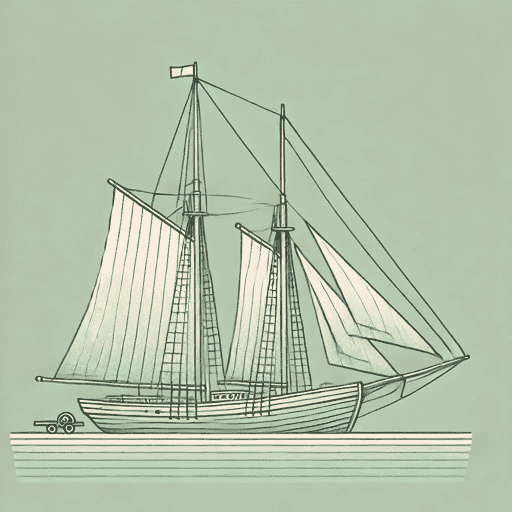
On a scouting vessel, a sailor named Yalb is pranking a new Alethi crewmate, Dok, with a story about a fictional creature called a “sailorspren.” The prank is interrupted when Yalb spots a derelict ship with tattered sails and no visible crew. Yalb’s captain, a woman named Smta, orders him to lead the boarding party, referencing his “special experience” because of rumors surrounding the mysterious disappearance of his previous ship, the Wind’s Pleasure.
Yalb and his team board the vessel, which they identify as the First Dreams, a ship that disappeared five months prior. They find it completely empty, with no sign of the crew, living or dead, or the ship’s log. As they return to their own ship, Yalb anticipates that he will be ordered to help sail the salvaged vessel back to port.
Chapter 1 Summary
Rysn, a Thaylen trademaster who uses a wheeled chair, searches for a new trade mission for her ship, the Wandersail. She is preoccupied with her pet, a sick creature called a larkin named Chiri-Chiri, whose carapace has turned a chalky white. Rysn’s new porter, a man with white tattoos named Nikli, is overeager to assist her, which frustrates her attempts at independence. Rysn also corresponds via spanreed—a magical long-distance communication device—with other women who have lost the use of their legs, exchanging practical advice and learning about designs for assistive tools.
Her work is interrupted by the unexpected arrival of Talik, a man from the Reshi Isles. He explains that Chiri-Chiri is unusually large for a larkin and can only be helped by being taken to her home: Akinah, the lost city on the island of Aimia. Rysn realizes she recently read about Akinah in bulletin about the discovery of the ghost ship First Dreams, which was returning from a voyage to Akinah. The bulletin also mentions that Queen Navani Kholin is seeking a ship to investigate a mysterious storm near the lost city. Seeing a way to save her pet, Rysn decides to travel to the tower-city of Urithiru to answer the queen’s request.
Chapter 2 Summary
Rysn travels to the city of Urithiru and meets with Queen Navani Kholin. Navani explains that the ghost ship First Dreams had a rogue Soulcaster—a person who can use a magical device to transform matter—aboard. Navani needs a ship to investigate Akinah because Windrunner Knights Radiant who have flown near the island have found their powers drained by an unknown force. During the meeting, Rysn’s pet, Chiri-Chiri, flies and drains the magical Stormlight from a lamp, revealing that she is one of the creatures capable of feeding on Stormlight.
Navani offers generous payment for Rysn’s ship, the Wandersail, to transport a scribe to survey the island. Because the voyage may also save Chiri-Chiri, Rysn accepts but negotiates for additional support: a personal request from Queen Fen encouraging her crew to undertake the mission, which would also strengthen Rysn’s authority aboard the ship. Rysn also asks whether Navani is developing platforms that can soar in the air, then looks toward her wheeled chair, letting Navani infer the implication. Navani agrees to send a scribe who is also a fabrial expert to run experiments and show Rysn what is possible. With the terms settled, Rysn formally accepts the mission.
Chapter 3 Summary
The Lopen, a Herdazian Knight Windrunner, arrives late to meet a Reshi delegation at Urithiru after his spren locates them already inside the tower. He grabs their envoy, Talik, and flies him upward along the atrium’s great window. As they talk, the Lopen reassures Talik that the Alethi genuinely want the Reshi Isles as allies despite their political motivations, prompting Talik to reveal that his king sees a spren that burns through objects in treelike patterns and can make the air catch flame. The Lopen identifies this as the Dustbringer order. He advises Talik to discuss the matter with Highprince Dalinar Kholin and not to speak with the existing Dustbringers.
Afterward, the Windrunner commander, Kaladin, assigns the Lopen and his cousin Huio to the Akinah mission, in part because they can swim. Kaladin originally suggests also sending Rock, but Lopen explains that next week is Rock’s wedding anniversary and proposes Cord, a Horneater woman who can see spren, as a substitute. Kaladin agrees and instructs the team to get their final briefing from an ardent named Rushu before departing. Kaladin expresses his unease about the mission, and Lopen promises to ensure everyone’s safe return.
Chapter 4 Summary
Rysn boards the Wandersail and settles into a new, permanent seat bolted to the quarterdeck, designed to give her a full view of the ship’s operations. The ship’s captain, Drlwan, is openly hostile and tells Rysn she should have remained at port. Queen Navani’s team from Urithiru arrives, and the sailors cheer the Windrunners’ presence. When Rysn notices the crew’s unusual reaction, Drlwan tells her that the ship’s pet skyeel was found dead, an event the superstitious crew takes as a bad omen. To ease their fears about the dangerous destination, Rysn announces that any sailor may stay behind without punishment. Three crewmen, including the cook, take her offer.
Afterward, Rysn realizes that Drlwan likely expected Vstim to give her the newly commissioned ship, especially since she had trained with its crew before Rysn received it instead. The crew’s resentment seems tied to their loyalty to Drlwan and their doubts about Rysn’s sudden elevation. Rather than blaming them, Rysn resolves to earn their trust as Vstim had earned theirs. Rysn encourages her porter, Nikli, to integrate with the crew by participating in their “sailorspren” hazing ritual. Because Cord, the Horneater woman accompanying the Radiants, can cook, she is able to replace the ship’s cook. With the crew reorganized, Rysn gives the order to sail.
Chapter 5 Summary
Weeks into the voyage to Aimia, Rysn finds an unlikely bond with the Lopen, who jokes about his former experience as a one-armed man and her paralysis, leaving her relaxed and encouraged. Their conversation helps Rysn realize that humor can ease the discomfort others often bring to interactions about disability. The ardent scribe, Rushu, demonstrates the fabrial technology Navani hopes to adapt for Rysn. Using two magically conjoined ruby hoops, Rushu explains that while they can create hovering platforms, a chair for Rysn would still require a porter to move the controlling lattice, leaving her disappointed that the technology cannot yet provide the independent mobility she had hoped for.
Rushu also explains that Navani has asked her to experiment with aluminum, a metal recently discovered to block spanreed communication. The demonstration is cut short when Kstled urgently reports something to Captain Drlwan. The captain then informs Rysn that a strange phenomenon has been sighted, describing it as “dark Soulcasting” and a bad omen, and tells Rysn she must see it for herself.
Prologue-Chapter 5 Analysis
Rysn’s modifications to her office and ship introduce the novella’s central exploration of disability through accessibility, adaptation, and self-advocacy. By commissioning long benches, she can slide along and a permanent seat bolted to the Wandersail’s quarterdeck, Rysn actively alters her environment to suit her needs. Her efforts are frequently met with the bewildered question, “But why?” (14), a query that reveals how others struggle to understand her determination to maintain control over her own movement and daily work. This approach illustrates Accommodation as a Path to Empowerment, a theme that challenges expectations that disability should be resolved through magical healing. The narrative reinforces this perspective when Rysn confirms her “injury turned out to be too old for healing” (29), directing attention toward the accommodations and adaptations she develops instead. Her correspondence with other disabled women, who share designs for assistive tools like hooks and self-propelled chairs, establishes community and peer innovation as the primary sources of her progress. Even when Queen Navani’s advanced fabrial technology offers the potential for a hovering chair, the solution remains partial, still requiring another person to operate the paired mechanism. This limitation emphasizes that empowerment comes from persistent, practical innovation and self-advocacy, supported by incremental progress and continued experimentation.
The mission to Akinah is catalyzed by the sickness of Chiri-Chiri, Rysn’s pet larkin, whose condition connects Rysn’s personal concerns with the novella’s larger mystery surrounding Akinah. Chiri-Chiri’s chalky white carapace and lethargy reflect the urgency of Rysn’s determination to help her companion, prompting Rysn to leave the routine of her trade work behind. Once a vivid creature, the larkin is now diminished, unable to thrive away from her ancestral home. Likewise, Rysn has exchanged the constant travel of her apprenticeship for the administrative responsibilities of a trademaster, spending much of her time sorting through “mundane” (16) trade deals. Chiri-Chiri’s unique ability to consume Stormlight and fly also establishes that the seemingly fragile creature possesses an importance that extends beyond Rysn’s personal attachment to her. The quest to save Chiri-Chiri by taking her “home” (20) drives both the effort to save the larkin and Rysn’s return to the kind of demanding voyage that first shaped her as a merchant. The expedition gives Rysn an opportunity to exercise her leadership and fulfill her responsibilities as a trademaster despite the physical barriers she continues to navigate.
The open hostility Rysn faces from Captain Drlwan establishes a conflict centered on authority and the friction between formal power and earned respect. Drlwan’s suggestion that Rysn “remain at port” (58) directly challenges her legitimacy as the ship’s owner, or rebsk. The narrative grounds this conflict in competing professional expectations and personal loyalties; Rysn realizes the crew resents her because they expected Drlwan to inherit the ship. The resulting tension reflects the crew’s loyalty to their captain and disappointment over the ship’s transfer. Rysn demonstrates a subtle understanding of leadership by addressing these undercurrents indirectly, employing Change as a Strategy for Survival. She secures a “royal mandate” (37) from the Thaylen queen to bolster her formal authority and acknowledges the crew’s superstitions by allowing fearful sailors to leave without punishment. Her advice that Nikli participate in the sailors’ hazing ritual is another pragmatic compromise, an “imperfect solution for an imperfect world” (68) designed to foster social integration alongside her formal authority.
The novella’s prologue opens with the discovery of the derelict First Dreams, establishing unanswered questions that shape the expedition to Akinah. The vessel, found with its crew and logbook missing, introduces The Dangers of Secrecy as a core theme, presenting the voyage to Akinah as an investigation into events that have been deliberately obscured. This initial secret expands as the mission takes shape. Queen Navani reveals the ship carried a rogue Soulcaster and that a mysterious force near the island drains the powers of Knights Radiant. Concurrently, the Lopen learns from Talik that the Reshi king is secretly developing the powers of a Dustbringer Knight, a politically sensitive fact he is urged to conceal. These layers of withheld information require the expedition to proceed with only a partial understanding of the dangers ahead. Kaladin’s unease and his decision to brief Rushu on “secret details” (53) away from public earshot reinforce the importance of sharing sensitive information selectively throughout the mission.
An unexpected bond between Rysn and the Lopen provides insight into the social experience of disability alongside the novella’s emphasis on physical accommodation. Because both characters have experienced visible physical disabilities, the Lopen, who was formerly one-armed, connects with her through irreverent humor. His absurd jokes, such as pondering why a “no-legged Thaylen” would be unhappy because “she’d been de-feeted” (75), create a sense of familiarity that eases the awkwardness often surrounding conversations about disability. His insight that “it’s nice to make people laugh at you for something you do, and not something you can’t control” (73) connects with Rysn’s frustration that people often “see the chair” (76) before they see her as a person. Their dialogue shows how humor can create mutual understanding while allowing both characters to engage with disability on their own terms. This interaction highlights different ways of responding to other people’s assumptions: Rysn focuses on structural and technological change, and the Lopen uses humor to shape how others respond to him.

Get in-depth, chapter-by-chapter summaries and analysis from our literary experts.
- Grasp challenging concepts with clear, comprehensive explanations
- Revisit key plot points and ideas without rereading the book
- Share impressive insights in classes and book clubs