Endling
Endling
A modern alternative to SparkNotes and CliffsNotes, SuperSummary offers high-quality Study Guides with detailed chapter summaries and analysis of major themes, characters, and more.
Summaries & Analyses
Quizzes
NEWReading Tools
Part 3, Chapters 30-43Chapter Summaries & Analyses
Content Warning: This section of the guide includes discussion of substance use, graphic violence, and death.
Part 3
Part 3, Chapter 30 Summary
During the evening in Kherson, the women work on the trailer’s skylight, and the men pound from inside. Pasha convinces himself the shapes he saw on the bridge were just dumped clothing distorted by light and blames his vomiting on the food. When Sol jogs back toward him, she initially shows no sign of recognition. Pasha says her full name aloud; she admits she remembers him. He privately decides he will pursue her romantically, and their eventual union will make his entire ordeal worth it.
Yeva sends him to the PA microphone in the cab. He lies to the men, promising refunds and a return to Kyiv. One bachelor, Kyle, accuses him of colluding with the women, but Bertrand—still convinced the war is fake—trusts Pasha. The men settle. Sol makes Nastia give Pasha a tube of their food, which looks like edible slime; Yeva tells him to go collect weapons being distributed to civilians. He sets off into the city.
Part 3, Chapter 31 Summary
At night, Yeva waits at the base of the acacia with a beer-soaked rag as bait. Despite her intention not to, she drinks nearly all the lager. She calls Kevin. He warns her of a Russian column advancing on Kyiv and urges her to flee, but she refuses. When he presses what she will do afterward, she reads him the full list of species she has lost and tells him only Lefty remains. When Kevin revisits his romantic interest in her, Yeva tells Kevin she has no interest in sex. He responds without judgment and proposes a relationship in which he may occasionally sleep with others; Yeva, to her own surprise, feels relief rather than jealousy.
The call deteriorates into a political argument, with Kevin claiming the Ukrainians should try to understand the Russian perspective for the sake of making peace. Mid-conversation, Yeva watches a column of Russian tanks roll into the street, one cannon trained on a civilian van, before the convoy moves deeper into the city. She hangs up on Kevin. Nastia then emerges from the lab and suggests placing Lefty directly on the tree to draw out a potential mate by scent.
Part 3, Chapter 32 Summary
Early the next morning, Pasha wanders Kherson, lost, having never located the weapons. Random objects on the street trigger unwanted memories of the bridge. When he approaches a pensioner for directions, she accuses him of being a Russian saboteur marking buildings for airstrikes; nearby men turn hostile, and Pasha flees.
He stumbles into a staged Russian propaganda shoot. White trucks and buses have brought in Russian civilians, and a soldier is filmed declaring the Special Operation a success. Realizing the entire crowd is Russian, Pasha slips away. A Ukrainian couple filming the deception explains that real humanitarian aid is being blocked while the Russians manufacture footage of a liberation. Pasha borrows a phone and calls his parents. They speak to him in Ukrainian—a language they have never used at home—expressing grief for their homeland from a distance but entirely missing that he is physically trapped inside it. Pasha hangs up in frustration. The couple points him back toward the field.
Part 3, Chapter 33 Summary
At the field, Yeva warms Lefty until he wakes and places him on the acacia. Pasha has returned hollow-eyed and empty-handed. Sol checks her phone and reports that soldiers have just taken down the Ukrainian flag from city hall. Lefty begins to crawl upward.
Two Russian soldiers arrive and demand identification: a younger one, Krylov, and a senior one, Ovechkin. They discover the sisters and Pasha hiding behind the trailer and force Yeva to open it, revealing all 12 bachelors. Bertrand, still convinced the war is a performance, taunts the soldiers and waves a gun barrel aside. Ovechkin shoots him twice, killing him.
Pasha improvises, claiming the whole group is stranded extras for the documentary filming nearby. The soldiers call the director, who decides to relocate his production to the field. Yeva glances back at the tree and can no longer see Lefty. The bachelors carry Bertrand’s body behind a large recycling bin while Ovechkin scuffs dirt over the blood trail.
Part 3, Chapter 34 Summary
The Russian military convoy, white buses, and film crew arrive at the field. The Russian civilians aboard consider themselves not tourists or paid extras but pioneers settling land they believe is historically theirs. The director announces the pioneers will play grateful Ukrainians presenting bread and salt to the arriving soldiers for the documentary’s climactic liberation scene.
Part 3, Chapter 35 Summary
The director selects Nastia to present the bread and salt, judging her face ideal for projecting wordless gratitude. Sol and Yeva step in front of her. Nastia talks back, challenging the director’s snail metaphor on the grounds that snails are nearly blind—information Yeva had shared on the road—which sharpens his interest in her. At that moment, Yeva looks to the acacia and spots two C. surculus moving toward each other on the trunk.
Part 3, Chapter 36 Summary
A brief chapter occurs from Lefty’s perspective. He can barely see, but the scent of another snail reaches him—at once new and deeply familiar, recalling an early memory of being carried on his mother’s back. The smell draws him forward.
Part 3, Chapter 37 Summary
Pasha flees the field, consumed by guilt over Bertrand’s death and convinced he has made everything worse. He runs into a public square where Ukrainian protesters face off against soldiers outside the occupied administration building. Watching a baby in the crowd, he receives what feels like a wordless message about chaos and the will to resist it. He turns back toward the field.
Part 3, Chapter 38 Summary
As the director counts down, Nastia weighs the cost of taking the bread: She fears being permanently branded a collaborator and publicly connected to her mother, the activist Iolanta Cherno. She briefly imagines a public act of protest, then releases the idea. Noticing that Yeva has spotted both snails on the acacia, she understands that accepting the bread and holding the crowd’s attention is the best way to give Yeva a chance to retrieve them. She reaches for the loaf.
Part 3, Chapter 39 Summary
Pasha leads the protesters—whom he rallied by giving a speech—toward the field, reciting a poem about soldiers who survive retreat to fight again. A flag-wrapped woman named Olya catches up beside him and says his impromptu speech had genuine feeling beneath its broken grammar. Pasha becomes immediately infatuated with her, mentally setting aside his earlier fixation on Sol.
Part 3, Chapter 40 Summary
From the perspective of the Russian civilians, the liberation scene proceeds as planned. Nastia presents the bread stiffly, a soldier steps forward to embrace her, and the two groups converge in handshakes. The participants experience the moment as authentic, concluding they are not newcomers to this land but its rightful inhabitants.
Part 3, Chapter 41 Summary
While attention is fixed on the staged scene, Yeva climbs the acacia and removes the second snail, slipping it into a breast pocket. Before she can retrieve Lefty, she slips down the trunk. The director then announces that the tree should be set on fire as a symbol of chaos for the camera. Yeva clamps herself to the trunk to stop them, but gasoline is poured around the base and the crowd cheers. Then a column of voices singing a Ukrainian folk song grows louder across the field. Yeva hears one voice lagging a beat behind the rest and suspects it is Pasha. She starts laughing and cannot stop.
Part 3, Chapter 42 Summary
The Russian pioneers watch the approaching crowd with growing alarm. At its head are Pasha and Olya, followed by priests, students, and a pensioner carrying a baby. As the group swells to roughly 100, the pioneers identify them as the hostile nationalists they had been warned about. When soldiers open fire, some pioneers find themselves caught in the shooting and realize the soldiers cannot distinguish them from Ukrainians.
Part 3, Chapter 43 Summary
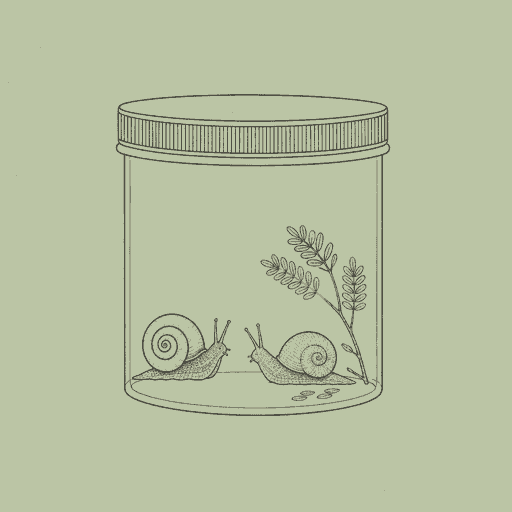
As Yeva drives the mobile lab out of Kherson, Nastia recalls the chaos, including how Yeva and Sol lifted her up to retrieve Lefty from the burning acacia. Yeva repeatedly checks the jar now holding both snails. Knocking from the trailer reveals 11 bachelors have sheltered themselves inside; Pasha is not among them, though Yeva thinks she spotted him in the crowd with a woman.
Nastia calls Masha and reports that Pasha has found love and Bertrand has found peace. The original deal is in ruins. Masha now proposes that if Nastia brings Masha’s grandfather out of Kherson alongside the 11 remaining bachelors, Masha will share what she knows about Nastia’s mother, who has changed her last name. Nastia accepts the detour.
Part 3, Chapters 30-43 Analysis
In this section, the profound isolation the characters experience manifests through failed attempts at long-distance communication. When Pasha borrows a phone to call his parents in Canada, they answer in Ukrainian—a language previously unspoken in their household—to express a distant grief for their homeland. Their focus on suddenly showing how Ukrainian they are touches comedically on The Ambiguous Ethics of Activism, as they’re so busy expressing an identity they previously tried to erase that they ignore the reality of their son’s current suffering. Similarly, Yeva’s phone call with her Hawaiian colleague, Kevin, collapses when he attempts to rationalize the invasion and negotiate the terms of a hypothetical romantic relationship. As she watches a tank train its cannon on a civilian van, she hangs up, realizing that his normal-world logic cannot penetrate the reality of the conflict. Cut off from external understanding, the protagonists’ only sanctuary remains the mobile lab. This retrofitted trailer functions as a fluid symbol, oscillating between a protective shell for Yeva, a literal prison for the kidnapped bachelors, and a desperate vehicle for collective escape. They rely solely on this fractured community, forced to negotiate new terms of survival.
These chapters juxtapose the characters’ personal quests for identity or purpose with the geopolitical theater of the Russian invasion. The arrival of the Russian film crew to stage a documentary about their own “liberation” of Kherson forces the characters into a performance that degrades their people for the sake of survival. Shortly following Kevin’s assertion that Ukrainians should try to “make peace” to stop the battle—an insulting suggestion to Yeva based on the hope that victimhood and innocence will deter an oppressor—the Russians pretend to be Ukrainians making peace, emphasizing how this idea is propaganda. Nonetheless, the women and bachelors can only participate in this lie or risk death. When the director selects Nastia to present ceremonial bread and salt to the soldiers, she recognizes that rejecting the role will brand her a collaborator, yet accepting it makes her the face of a false narrative. As the director reminds the staging crowd to carry a “protective circle always, no matter how dark and frightful the stage” (263), she recognizes that she must sacrifice her own values temporarily to protect her comrades, even if it comes at the expense of her dignity or values.
Amidst the broader destruction and conflict, the narrative continually zooms in on the micro-level survival of the snails, deepening the theme of The Hierarchies of Life and Survival. Yeva’s determination to rescue a mate for Lefty remains unwavering even as military tanks roll past her. By staging the reunion of the two rare C. surculus snails directly adjacent to the Russian military convoy and the burning acacia tree, the text forces a confrontation between vast human violence and the preservation of a single invertebrate. While others focus on the immediate geopolitical crisis, Yeva perceives the potential loss of this species as a tragedy of equal weight. This moment offers a counterweight to the pantomime of the propaganda film, which erases the reality of the Ukrainian experience and reinforces their group’s growing feelings of hopelessness. The ardent dedication to preserving the snails represents the need to sustain something that appears small or insignificant in the face of near-certain destruction. Though the group pretends to accept the invasion, they retain their identity and their resolve to live, inherently rejecting the Russian attempt to erase them.
The escalating violence foregrounds The Struggle to Maintain a Sense of National Identity, forcing Pasha in particular to confront the limitations of his search for identity and divert his efforts toward his community. Previously immobilized by his disconnected identity, he inadvertently leads a mob after receiving what he interprets as a wordless message of resistance from an infant in a public square. While his intent is earnest, a signal of his newfound desire to protect his people, his narration makes clear that elements of his actions are driven by a need to be considered “incontestably useful” after his failure to find supplies and running away. He’s bolstered by a flag-wrapped woman, who remarks, “But when I stopped listening for all mistakes, I heard what you were trying to say. What was under” (274), referring to his flawed grammar in their language. This reorients his relationship with his identity, which has always been made uncertain by insecurity, asserting that he doesn’t need to be “pure” or “perfect” to be Ukrainian. His reconnection with his national identity won’t come from marrying a fetishized bride or from speaking flawless Ukrainian; it exists, and it’s strengthened by reaching out to and fighting for his people.
In the ensuing chaos, Reva utilizes the perspective of the Russian actors to metafictionally explore flawed opinions directed at Ukrainian resistance. The Russians—whom she ironically calls the Peaceful Ones—see the mob of Ukrainians as proof that their invasion is needed. One actor thinks, “[L]ook what those fanatics brought upon themselves, look what they made the soldiers do” (282). This returns to Kevin’s belief that Ukrainians shouldn’t fight back against the invasion, striving for an unattainable idea of innocence to avoid violence. The soldiers immediately undermine these citizens’ staunch patriotism, however, by firing indiscriminately into the crowd, unable to distinguish between Russians and Ukrainians. This scene demonstrates how each country may have unique cultures, but they’re ultimately all humans from a similar region, experiencing a conflict manufactured by political forces, not forced by genuine interpersonal grievances. The differences worth fighting over are the result of the exact type of propaganda they’re participating in, yet they can’t see this until they’re on the receiving end of the treatment they believed the Ukrainians deserved.

Get in-depth, chapter-by-chapter summaries and analysis from our literary experts.
- Grasp challenging concepts with clear, comprehensive explanations
- Revisit key plot points and ideas without rereading the book
- Share impressive insights in classes and book clubs