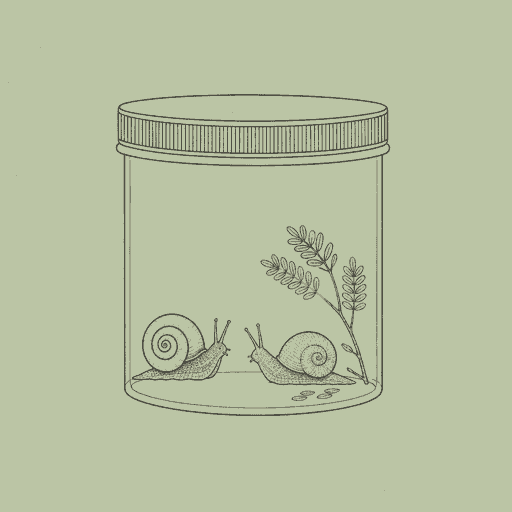
Endling
Endling
A modern alternative to SparkNotes and CliffsNotes, SuperSummary offers high-quality Study Guides with detailed chapter summaries and analysis of major themes, characters, and more.
Summaries & Analyses
Quizzes
NEWReading Tools
Prologue-Part 1Chapter Summaries & Analyses
Content Warning: This section of the guide includes discussion of suicidal ideation, child abuse, gender discrimination, graphic violence, and death.
Part 1
Prologue Summary
Set before the novel’s main events, an unnamed society exists in equilibrium. Urban infrastructure functions reliably, parks are intact, and both human and animal populations remain in balance. Only an occasional bird or a rare meteorite fragment falls from the blue sky into farmland below.
Part 1, Chapter 1 Summary
Yeva, a gastropod conservationist who travels Ukraine in a mobile snail lab, notices a young woman calling herself Anastasia at romance tour events—a girl who appears to be trapped and silently signaling for help. Yeva joined the tours to fund her research after government grants dried up. The agency allows women called brides to earn income through split interpreter fees and redeemable gifts, with no obligation to marry the men paying to take them on dates.
Once deeply passionate about snail conservation, Yeva had developed a close online relationship with a Hawaiian conservationist who helped her design the mobile lab. When he confessed romantic feelings and proposed visiting Ukraine, she cut off all contact, feeling that her asexuality inevitably ruins relationships. In a flashback to her 30th birthday, her mother cycled through theories about Yeva’s single life before Yeva identified herself as asexual, which her mother refused to believe.
In her fifth year on the tours, two disasters struck: a fungal outbreak killed half her snails, and a drunken lapse caused a software failure that flooded a terrarium and killed a breeding colony. She began releasing her remaining snails into the wild. She now has a three-step plan to die by suicide: earn one last paycheck, procure hydrogen cyanide and a wedding dress, and die inside her trailer.
Part 1, Chapter 2 Summary
Anastasia approaches Yeva a second time in the hotel parking lot, interrupting her as she connects a hydrogen cyanide canister to the lab’s exterior hatch. Anastasia asks to rent the trailer for a vacation. Yeva refuses, citing the lab’s value and its hazardous contents. Anastasia reveals her companion is not an agency interpreter but her own sister, Sol, and discloses her plan to take 100 bachelors on an undisclosed romantic getaway. Yeva dismisses this as an organized mugging scheme and declines, though Anastasia departs with an oblique threat involving her unnamed mother.
Part 1, Chapter 3 Summary
Four days before her third approach, Nastia—using her full name Anastasia B. while concealing her identity as the daughter of activist Iolanta Cherno—stands in the hotel banquet hall on Valentine’s Day waiting for the bachelors. Her real purpose is to provoke her mother into returning: Iolanta had promised to stage a dramatic protest on this date before disappearing eight months earlier. Fewer bachelors than usual have come, as foreigners have been leaving Ukraine over the threat of a Russian invasion.
The agency manager Efrosinia runs induction sessions instructing the women to use their name-tag aliases and avoid bonding with one another. The Canadian agency founder, Masha, video-calls from Vancouver to present the agency as a sisterhood. Nastia recalls her mother’s warnings about the industry’s dangers, citing the murders of two women killed after using similar agencies. Sol works as Nastia’s interpreter and essentially invents Anastasia’s personality for each bachelor, while together they run a financial scheme through inflated restaurant bills and redeemable gifts.
Flashbacks reveal the last argument Nastia had with Iolanta before her disappearance, inflamed by the story of 100 Vietnamese brides who vanished and were presumably resold. Valentine’s Day ends at midnight with no sign of Iolanta. Nastia concludes her mother has been stopped by outside forces or repelled by Nastia’s betrayal.
Part 1, Chapter 4 Summary
On Friday, February 18—two days after the predicted Russian invasion failed to materialize—Nastia approaches Yeva a third time, offering money for the lab and Yeva’s services as driver. She admits she cannot drive and insists the operation is not about money but is meant to send a warning.
As Nastia talks, Yeva mentally rehearses her suicide plan and searches for the right wedding dress. In a flashback, her mother called unexpectedly after spotting Yeva’s profile on a romance agency website and responded with hopeful acceptance rather than alarm, forcing Yeva to invent a fictitious American doctor boyfriend.
Nastia names Iolanta Cherno as her mother and outlines her goal to make 100 bachelors disappear and frighten the industry into collapse. Yeva, feigning consideration, demands a formal verbal prospectus the following day, confident that confronting the logistics will make Nastia abandon the idea.
Part 1, Chapter 5 Summary
In the days after Valentine’s Day, Sol suspects Nastia of developing feelings for a bachelor; Nastia lets her believe it. Between dates, she slips into the alley to observe Yeva’s trailer, which she sees as the key to her plan. Unlike the agency’s administrators, the bachelors, or her mother’s appraising gaze, Yeva appears entirely indifferent to Nastia’s body and appearance. This is disorienting but also, Nastia decides, exactly why she wants her.
Part 1, Chapter 6 Summary
The following day, Nastia delivers her plan at a picnic table by a gas station—a rambling verbal sketch with improvised diagrams on receipt paper that she immediately tears up for secrecy. She plans to lure the bachelors into the trailer under the pretext of an Escape Room, film their distress, and release the footage to deter men from visiting Ukrainian marriage agencies. When Nastia proposes burning the trailer afterward to eliminate evidence, Yeva refuses. She also informs Nastia that the real maximum capacity is 12, not 100.
Yeva stalls, citing a four-to-six-week decision timeline. However, Nastia reveals she noticed Yeva shopping for wedding dresses and produces her mother’s white protest wedding dress from her bag. Later, confronted with the physical reality of her own death plan, Yeva feels a third option open up. She calls Nastia back and agrees to lend the lab.
Part 1, Chapter 7 Summary
Yeva establishes four firm conditions: the operation will occur on February 23, no one will be harmed, the trailer will not be destroyed, and the maximum number of hostages is 12. Nastia accepts, reassuring herself that 12 is a symbolically potent number, and turns her attention to selecting the men.
Part 1, Chapter 8 Summary
Pasha Gurka, a 38-year-old Ukrainian-born engineer from Vancouver, stands frozen at the edge of the hotel banquet hall on the first day of the tour. He has traveled to Ukraine hoping to restart his stalled life and find a woman willing to remain in the country rather than emigrate.
In flashback, Pasha recalls being taken from Kyiv to Canada at eight without warning. His parents assimilated aggressively and pushed him toward an artistic career, but he switched to mechanical engineering after art school rejections—practical but disappointing to them. As an adult in Vancouver, he cannot afford housing and has moved back in with his parents. Watching Ukrainian cousins thrive and hearing a colleague praise Kyiv’s transformation deepened his sense of exclusion and led him to browse marriage agency sites, imagining starting over in his birth country.
Back in the present, Bertrand—a charismatic app developer who has already lined up multiple dates—intercepts Pasha and encourages him to stay.
Part 1, Chapter 9 Summary
On the bus home from the prospectus meeting, Nastia reviews bachelor profiles and decides her hostages should be sympathetic and media-worthy. At the apartment, Sol has spent three days baking an elaborate layered cake and is waiting to confront her. She spots their mother’s protest dress in Nastia’s bag, admits she once baked hoping to keep Iolanta from disappearing, then throws the cake into the trash and demands to be involved. Recognizing she still needs Sol to manage the bachelors, Nastia agrees and begins explaining the plan.
Part 1, Chapter 10 Summary
Nastia and Sol arrive at the lab to prepare it for the operation. Yeva objects to Sol’s presence but accepts her. As the sisters dismantle cabinets to create space, Yeva repeatedly intervenes to rescue equipment. The central dispute is a bar fridge—a death cabinet containing preserved specimens of extinct snails and one live hibernating snail—which Yeva plans to padlock. Despite Sol’s concern that a padlocked fridge will alarm the bachelors, Nastia drops the argument after Yeva quietly says the specimens are all she has left. Two days later, the cleanout is complete. Standing outside the trailer, the three debate the painted logo of hands cradling a sprout: Sol suggests a cupid, Yeva wants the hands removed, and Nastia announces the hands are growing on her.
Part 1, Chapter 11 Summary
On the tour’s final Prom Night, Pasha concedes defeat and plans to fly back to Vancouver. Bertrand intercepts him with an exclusive invitation: a woman in an animal mask approached him about a bonus event—a mobile Escape Room delivering them to a pagan fertility party in the woods. In a back room, Bertrand calls Pasha brother with genuine warmth, and Pasha agrees to go. The two men arrive at a trailer in a dark parking lot, where two women in homemade animal masks stand at the door. Pasha finds the setup charmingly improvised.
Part 1, Chapter 12 Summary
Nastia, Sol, and Yeva wait outside the trailer as Bertrand and Pasha approach. Eleven bachelors are already inside, their phones collected in Sol’s velvet bag. Bertrand is their intended 12th hostage; Pasha is an unexpected complication. Yeva objects to taking a 13th man on grounds of capacity, budget, and bad omen. Sol argues that releasing Pasha is impossible now that he has seen the operation. Bertrand refuses to enter without his companion. Without a word, Yeva climbs into the driver’s cab—a signal of reluctant acceptance—and Sol welcomes Pasha inside.
Part 1, Chapter 13 Summary
Two hours into the drive, with all three women squeezed into the front cab and 13 hostages locked in the back, a series of deep cracks and flashes of light erupt near the eastern horizon. Yeva pulls over. The women sit in silence. Sol suggests it might be fireworks. Yeva reaches over and takes Nastia’s hand.
Prologue-Part 1 Analysis
The novel’s opening establishes a stark contrast between fragile societal equilibrium and impending war, utilizing dramatic irony to contextualize the characters’ personal struggles. The Prologue describes a meticulously balanced society where infrastructure holds, and skies remain unbroken, juxtaposed against the characters’ dismissal of Russian troops amassing at the border. Nastia focuses exclusively on her mother’s return, and the bachelors continue their tour undeterred, until the actual invasion shatters this normalcy with “a great bone-deep crack” (104). By positioning the 2022 full-scale Russian invasion at the periphery of the characters’ awareness, the narrative highlights their psychological insulation. This structural choice reframes the central narrative; what begins as a critique of the international marriage industry is abruptly eclipsed by a broader struggle for survival, solidifying the overarching conflict between individual and communal needs.
Within the romance tours, the motif of performance illuminates the theme of The Struggle to Maintain a Sense of National Identity, revealing how characters commodify themselves to navigate systemic economic hardship. The sisters collaboratively fabricate the persona of Anastasia, with Nastia supplying the physical appearance and Sol functioning as a “ventriloquist” to provide the expected personality. Similarly, Yeva performs the role of an available bride to fund her malacology research, maintaining a detached, transactional relationship with the foreign bachelors. The agency environment demands a specific expression of traditional Slavic femininity, which the women simulate to exploit those who fetishize and flatten their culture. This compounds with the expectations set for each protagonist by their families: Yeva’s traditional parents expect her to marry despite her asexuality, while Nastia and Sol’s mother fervently eschews traditional gender dynamics no matter what her daughters feel. Neither position allows for an earnest development of individual identity or engagement with one’s culture; instead, they alienate all three women from Ukrainian society even as they perform a commodified version of it for the bachelors.
Yeva’s malacological work introduces the symbol of the snails, which grounds the theme of The Hierarchies of Life and Survival. Yeva dedicates her resources to saving endangered gastropods, particularly a left-coiling snail named Lefty, while acknowledging that the public dismisses such non-charismatic species in favor of “oversize bumbling toddlers” like pandas (8). Simultaneously, she orchestrates her suicide plan, seeking to end her life alongside her dwindling populations. Yeva’s intense attachment to Lefty—a creature biologically isolated from its peers—mirrors her profound alienation and asexual identity. Like these snails in ever-dwindling natural habitats, she feels lost within a widely misunderstood and commodified culture that dismisses the value of her true passion and leaves no space for her authentic self. This complex, critical approach to the intricacies of Ukrainian culture takes place amid a looming Russian invasion, positing personal needs and identity as equal in importance to external threat to one’s community.
Conversely, Nastia acts explicitly to reconnect with someone—her mother—and embodies a more reactive approach to her lifelong alienation from traditional Ukrainian society. Nastia’s kidnapping scheme explores The Ambiguous Ethics of Activism, demonstrating how ostensibly political acts can be driven by private grievances. While the stated goal is to dismantle the exploitative marriage industry, Nastia admits to herself that the spectacle is primarily designed to provoke her absent mother into returning. She co-opts the aesthetic of radical activism to satisfy a desperate need for maternal attention; in doing so, she partakes in the exact self-serving and shallow form of protest that she resents her mother for supposedly performing. She has no real interest in defending the marriage industry brides or reconnecting with the culture Iolanta isolated her from—she only wants to serve her own goals of instigating her mother into returning.
Pasha’s character arc introduces a separate facet of identity construction, centering on the tension between assimilation and cultural reclamation. Uprooted from Kyiv to Canada as a child, Pasha feels out of place, pressured by his anglicized identity and his parents’ ambitions. He never received the opportunity to embrace his culture or connect with other Ukrainians, leaving him with an inescapable sense of loss. He travels to the romance tour on a one-way ticket, reverting to his birth name and hoping to integrate into modern Ukraine, despite relying on English to navigate interactions. His participation is a desperate attempt to embody a stolen heritage. He seeks a Ukrainian wife as a conduit to authenticity, attempting to perform a reclaimed identity that he feels he does not yet fully possess. The author remains ambiguous at this point on whether his sense of isolation from Ukrainian identity is genuine or simply an insecurity; he only hopes his home country will bring him the sense of belonging he craves. His journey reflects the complexities of diaspora and displacement. As the novel progresses into the reality of war, Pasha’s internal crisis sets the stage for a broader examination of claiming a national identity under existential threat.

Get in-depth, chapter-by-chapter summaries and analysis from our literary experts.
- Grasp challenging concepts with clear, comprehensive explanations
- Revisit key plot points and ideas without rereading the book
- Share impressive insights in classes and book clubs