Endling
Endling
A modern alternative to SparkNotes and CliffsNotes, SuperSummary offers high-quality Study Guides with detailed chapter summaries and analysis of major themes, characters, and more.
Summaries & Analyses
Quizzes
NEWReading Tools
Part 3, Chapters 44-53Chapter Summaries & Analyses
Content Warning: This section of the guide includes discussion of graphic violence and death.
Part 3
Part 3, Chapter 44 Summary
Half an hour into their search, Nastia, Sol, and Yeva locate a five-story Khrushchovka with a blue front door stenciled “SHELTER.” They climb to the grandfather’s landing, where geraniums sit freshly watered outside his solid steel door—welded by the man himself, as Masha had warned. After Nastia knocks, multiple locks disengage, and a white-haired pensioner in thick square glasses peers out, a dripping spoon in hand. Nastia announces they are there to evacuate him in a well-equipped trailer. He asks if his family sent them. When Nastia only smiles, he slams the door.
Part 3, Chapter 44 Summary: “Again”
The scene replays with corrections. When Nastia again delivers the evacuation pitch, and he asks who they are, she is partly honest: Masha sent them, and she is Masha’s colleague. He dismisses this—Masha works alone from an attic. Nastia pivots to Masha’s matchmaking agency; he laughs it off as another of Masha’s fabrications, narrows the door to a crack, chains it, and recounts how similar pretexts were once used to rob an elderly neighbor. The steel door slams shut again.
Part 3, Chapter 44 Summary: “Revisited”
The scene shifts to first person. The visitor is now Masha, and seven years have passed since she and her grandfather last saw each other. He goes pale at the sight of her and hurries her inside, scolding her for the dangerous journey and warning that Russian checkpoints are forming to trap civilians as human shields. Masha takes in the apartment’s familiar smell of old paper, her sister’s childhood school photo, and watercolors painted on the wall.
He makes tea and asks whether she will take the photo albums, rolls of film, and the notebooks in which he has recorded their family history. She agrees to everything, joking they will fold the entire apartment and unfold it somewhere safe. He laughs. She warns him the Russians will bomb the Kakhovka Dam and destroy the dacha; he thinks she has gone “mad.” When she repeats they will take anything he wants, he asks who “we” is and declares he is not going anywhere.
Part 3, Chapter 44 Summary: “Correctly This Time”
The author pauses to question her own account, wondering whether the steel door would truly swing open or only crack ajar. She realizes she cannot recall whether the door even has a chain, despite having worked those bolts herself during childhood visits. She concludes the door does have a chain and states her belief that if she gets every detail exactly right, her grandfather will leave Kherson.
Part 3, Chapter 45 Summary
After the failed attempt, Nastia sits on the concrete floor outside the grandfather’s door while Sol and Yeva alternate between pleading and threatening to leave. The grandfather opens the door, surprised she is still there, and returns with a bowl of mushroom soup, leaving only one lock turned. Nastia reflexively lies that it tastes like her mother’s cooking; he senses the lie and shuts the door. A rocket screams overhead, and she curls up tight; he reappears to explain it is outgoing fire, then goes back inside without relocking the door.
Masha calls with orders, then offers information about Nastia’s mother as leverage: She lives with a marriage-industry client in Nevada with a golden retriever and a young stepdaughter. Nastia insists it is a lie but recalls her mother’s unexplained nightly absences and the small glass figurines she used to bring home. Following Masha’s instructions, she moves toward the door; the grandfather opens it himself.
He brings fresh soup with oil-salted bread, and Nastia understands he is settled in for the duration. When he asks why she is really there, she abandons all pretense and tells him everything: her missing mother, the kidnapping scheme, the deal with Masha. He says the story sounds exactly like a novel Masha mailed him, about a girl who kidnaps foreign men to recover her activist mother—and in the novel’s ending, the mother simply fell in love and then phones to invite both daughters to visit. He asks whether that ending would be believable. Nastia says it would be a start. He acknowledges that a grandfather in the novel also refuses to leave Kherson and suspects Masha wrote it to persuade him. He brings out a stool and sits beside Nastia in silence.
When Nastia finally walks out alone, the mobile lab is waiting: Yeva is cleaning the dashboard while Sol is slumped in her seat. Nastia reflects that the whole scheme has been a childish fantasy Sol indulged. When she climbs in, Yeva asks if she is certain. Nastia says the grandfather is where he feels safe, and they drive away without him.
Part 3, Chapter 46 Summary
The 11 bachelors remaining from the original 13 have unlocked the trailer’s bar fridge using a SIM card ejector tool. No longer hoping to break out literally, they believe they are solving a larger riddle about their ordeal, connecting the fridge to earlier incidents—a dark highway, a burning field, scenes of apparent violence. Whether the surrounding war is real remains disputed. Their later accounts of the fridge’s contents diverge, and they disagree on whether anyone smelled or drank from what was inside. All agree, however, on their subsequent shared realization that the prison they truly needed to escape was their own desire. They joined hands and took a vow of celibacy, planning communal life on a remote steppe. The narrator speculates the vow may not fully hold, but a lasting transnational brotherhood will form, and all 11 will spend their remaining years with a sense of dislocation, feeling that the peaceful surfaces of their lives are illusory.
Part 3, Chapter 47 Summary
The chapter is a dialogue transcript between a mysterious group called the “Yurt Makers” and a restrained woman going by “Mrs. Brown”—revealed to be Iolanta, the mother of Nastia and Sol. She is found zip-tied in a theater tent within a gated Nevada community called Tranquil Tides. The Yurt Makers press her on her dark children’s plays, which no children ever attend, in a local theater tent. Iolanta says she left Ukraine believing she was being surveilled while trying to rebuild her activist group, and that silence protected her daughters. The Yurt Makers inform her that her only pursuers were Nastia and Sol.
She describes meeting Mr. Brown, an American, at a subway kiosk; she already liked him before learning he had come to Ukraine through the marriage industry. He offered her run of the underutilized neighborhood theater tent, and she saw the gated community as temporary protection, but married him instead. She describes life as Mrs. Brown—HOA president, dog owner, desert suburbanite—as her final role and says she performs her plays for an imagined audience of her daughters as they were when small. She questions if her daughters have given up their search for her. Fifty-two hours into the war, she still has not called them. She admits fearing they will not forgive her. Pressed to call, she agrees—once they untie her.
Part 3, Chapter 48 Summary
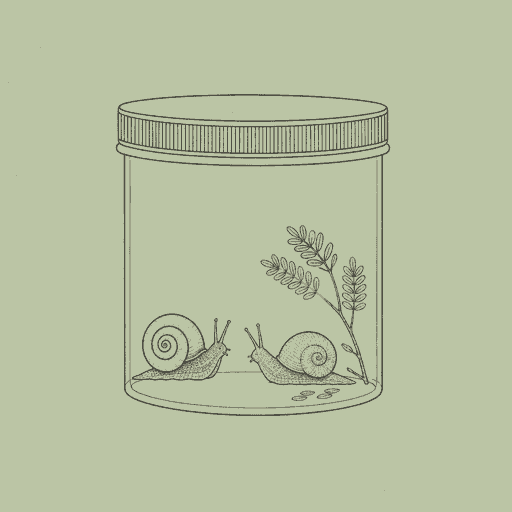
Driving out of Kherson, Yeva hears a faint vibration from the front passenger-side wheel and suspects a loose nut that could eventually cause the wheel to detach. Multiple checkpoints follow: Soldiers strip-search the bachelors at one stop and block civilian traffic for a military column at another. At a later stop, a car is let through and then shot at without apparent cause. Between checkpoints, Yeva glances at the specimen jar and finds the two snails still apart; she catches herself feeling vindicated by their indifference, then scolds herself for projecting human feeling onto creatures without brains. The vibration worsens until Sol and Nastia notice, and Yeva eases off the accelerator.
Part 3, Chapter 49 Summary
Russian soldiers Lyosha and Valik wait beside a stand of willows with no orders, no working radio, and confiscated phones. One of their two tanks cannot move, and the other cannot fire. Lyosha spots the mobile lab stopped on the road and, through his scope, sees Yeva crouching beside the front wheel with a lug nut in hand. His partner Valik holds that the entire civilian population is the enemy; Lyosha feels no such conviction and is simply doing a paid job. He decides to shoot out the lab’s tire and force the occupants to walk. He fires and misses the tire. He turns to find Valik awake and watching. Valik congratulates him on a clean shot, implying something other than the tire was hit.
Part 3, Chapter 50 Summary
Concurrent with Yeva being shot, the two snails in the specimen jar finally mate. One drives its dart into the other’s underside; the second retaliates, narrowly missing a vital organ. After a stunned pause, they couple fully, shells interlocking. The narrator closes by stating that Yeva will persist in the future instincts of their left-coiling descendants, who will have an inherent attraction to stale coffee, sunburned hair, and latex.
Part 3, Chapter 51 Summary
Nastia experiences the shooting’s aftermath in a dissociated state, perceiving each action as a direction issued from above. She climbs out of the cab, finds Yeva on the ground in pooling blood, and lifts her while Sol reaches through the passenger door to pull Yeva onto the middle seat. Nastia kisses the top of Yeva’s head, takes the wheel, and floors the accelerator. The chapter ends with the detail that Yeva had taught her to drive.
Part 3, Chapter 52 Summary
Yeva drifts between consciousness and a waking dream of lying naked in a swamp between Nastia and Sol, insects swarming their bodies, while her mother’s voice repeats its old instruction to think of something nice and let go. She keeps sensing she needs to rise but cannot hold onto the impulse. She cannot determine when the swamp memory happened, realizing the mosquitoes would not have hatched before the spring. The swamp softens beneath her and seems to pull her down.
Part 3, Chapter 53 Summary
Nastia races toward a town 39 kilometers away, hoping for a hospital. Her phone lights up with a long international number. She is instantly certain of two things: her mother is calling, and Yeva will survive. She does not reach for the phone, recognizing that her ability to let the call go marks a fundamental shift in what she values. Sol locates the wound in Yeva’s coat. Nastia points out a decomposing log along the roadside, drawing on Yeva’s teachings about rotten logs as cradles of ecological renewal. She chooses to believe Yeva saw it. She keeps her hand in Yeva’s as her phone screen goes dark.
Part 3, Chapters 44-53 Analysis
The repetition of Chapter 44 exposes the limitations of narrative as a tool for controlling reality amidst the chaos of war. The chapter unfolds in four successive drafts—each attempting to orchestrate the successful evacuation of Masha’s grandfather—before concluding with the author’s admission that the scene is a fabrication and her grandfather remains stubbornly in occupied Kherson. By exposing the seams of the writing process, the text underscores the futility of trying to impose a tidy resolution onto an ongoing trauma. The author-character manipulates variables, such as the door’s locking mechanisms and her own dialogue, believing that if she can manage to get “the details just right, my grandfather will leave Kherson” (297). This desperate negotiation reveals how the intellectual work of commenting on national tragedy functions as a psychological coping mechanism in the face of helplessness. This metafictional technique directly engages the theme of The Ambiguous Ethics of Activism, suggesting that crafting a wartime narrative can be an inherent performance shaped by a desire for authorial control rather than an authentic reflection of the conflict’s intractable reality.
As the crisis deepens, characters subvert their established roles through acts of self-erasure and reinvention. In Chapter 47, the former activist Iolanta Cherno is revealed to have shed her public legacy entirely to become “Mrs. Brown.” Similarly, the captive bachelors in the mobile lab—originally driven by marital desires—experience a collective epiphany, leading them to abandon their privileged social standing and take a vow of transnational celibacy. These transformations highlight how identity can become a prison. For Iolanta, the shift allows her to escape the unbearable pressures of her militant history. However, her identity remains fractured; she continues to stage obscure children’s plays in an empty theater tent, performing her lingering maternal guilt for an imagined audience of her abandoned daughters. The bachelors recognize that their true captivity stems from their own appetites, prompting them to perform a new, ascetic brotherhood. These dramatic reinventions further the novel’s exploration of identity as a construct, showing how individuals discard restrictive roles in pursuit of either safety or a renewed sense of purpose.
The narrative explores in this section how small choices can fundamentally change one’s fate. In a sequence of alternating chapters, a Russian soldier casually shoots Yeva just as Lefty and his companion finally mate within their glass jar. The concurrent timing of the shooting and the mating forces a direct contrast between the destructive impulses of human conflict and the persistent drive for biological survival. The soldier resents what he perceives as Ukrainian arrogance, which his comrade claimed ruined their relationship with the Russians. He believes forcing them to walk will degrade them and remind them of their place, thinking, “[A]ctually they’re our brothers. Our little brothers who lost their way. […] One blown-out tire, and they’ll become brothers again” (320). Through this, Yeva’s life may be cut short, while the existence of Lefty’s species—previously accepted as lost—is suddenly renewed. Without Yeva, Nastia, and Sol, Lefty never would’ve received the opportunity to mate. Even then, Reva expresses how only chance ensures the snails don’t accidentally kill each other while mating. These contrasting scenes demonstrate how easily violence is committed; meanwhile, survival requires ardent will, navigating danger, and sheer luck.
Nastia’s response to Yeva’s injury completes her transition from performative rebellion to authentic connection. Speeding toward a hospital, Nastia ignores a call from her mother in order to keep holding Yeva’s hand. Throughout the narrative, Nastia’s actions have functioned as theatrical pleas for her absent mother’s attention. By ignoring the phone call she has spent months trying to provoke, Nastia relinquishes the fantasy of repairing that maternal bond. She sees her choice as “restructuring of the world around her, a tilting of its balance” (325). Her focus on Yeva, guided by the memory of Yeva’s ecological teachings regarding “rotten logs” and the renewal of life, signals a realignment of her loyalties. As she makes her choice, she thinks, “Love, like those wondrous logs, was a finite resource. Not just her mother’s, but Nastia’s, too” (326), affirming her choice to replace the gap in her life left by Iolanta with Yeva. In doing so, she discards the performative aspects of her identity and chooses a more authentic—and fulfilling—form of connection with others.

Get in-depth, chapter-by-chapter summaries and analysis from our literary experts.
- Grasp challenging concepts with clear, comprehensive explanations
- Revisit key plot points and ideas without rereading the book
- Share impressive insights in classes and book clubs