Endling
Endling
A modern alternative to SparkNotes and CliffsNotes, SuperSummary offers high-quality Study Guides with detailed chapter summaries and analysis of major themes, characters, and more.
Summaries & Analyses
Quizzes
NEWReading Tools
Symbols & Motifs
Content Warning: This section of the guide includes discussion of graphic violence and death.
The Snails
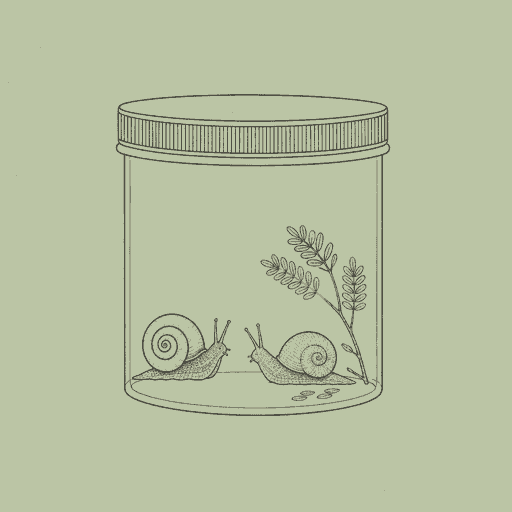
The snails are the novel’s central symbol, embodying themes of extinction, survival, and the arbitrary nature of human value. As malacologist Yeva’s mission reveals, these creatures are overlooked casualties in a world that prioritizes more appealing species. She laments, “Snails weren’t pandas—those oversize bumbling toddlers that sucked up national conservation budgets—or any of the other charismatic megafauna” (8). This contrast underscores the human hierarchy of value, where “un-charismatic” life is deemed expendable, a quiet tragedy that mirrors the political response to Ukraine’s suffering across the West. Ukrainians, deemed less valuable than other white, Western civilizations, are viewed as being expendable, and therefore not worth the more militant or supportive efforts that governments may take to defend different nations.
The term “endling,” referring to the last individual of a species, also applies metaphorically to the characters, who face the potential extinction of their ways of life. Lefty, the rare left-coiling snail, becomes a potent emblem of profound isolation. Biologically unable to mate with his right-coiling peers, his desperate search for a partner reflects the alienation felt by Yeva and others. The eventual discovery of a potential mate for Lefty, even amidst the chaos of the invasion, symbolizes a fragile, almost miraculous hope for connection and continuity in the face of overwhelming destruction, suggesting that the instinct to preserve life persists even when survival seems impossible.
The Mobile Lab
Yeva’s mobile lab is a complex and contradictory symbol, representing Yeva’s personal boundaries and her shifting purpose throughout the novel. Initially, it functions as a “Noah’s Ark” for endangered snails, a self-contained world designed to preserve life against overwhelming odds, directly engaging with the theme of survival. For Yeva, the lab is also a personal shell, a physical manifestation of her self-imposed isolation. She and her conservationist pen pal joke about their monk-like lives, “inseparable from their trailers as snails from their shells” (14). This comparison solidifies the lab’s role as a protective but isolating barrier, mirroring Yeva’s own emotional retreat from the world.
The lab’s meaning undergoes a dramatic shift when it becomes a tool for Nastia’s kidnapping plot, allowing her, her sister Sol, and the bachelors to physically and metaphorically get underneath Yeva’s “shell.” Her halted development as a person suddenly catapults forward, forcing her into conflict and building new bonds that renew her hope for both Lefty’s survival and her own. The trailer becomes a tool of protest, a place of refuge amid the invasion, and a shared space in which the three women complete their character arcs.
Antonivs'kyi Bridge
The Antonivs'kyi Bridge functions as a motif in Endling, recurring across Pasha’s arc to register the shifting meaning of connection in a country whose identity is violently contested. A box girder structure spanning the Dnipro, the river that, as Pasha explains in his interview, “cleaves Ukraine in half” (336), the bridge initially represents the possibility of homecoming. When Pasha first encounters it in Kherson, its “austere Sovietness” tugs at him with a nostalgia he “hadn't realized he possessed” (216), pulling him toward an unadorned past that feels more authentically his than the anglicized life he left behind. In this moment, the bridge seems to promise what Pasha has been seeking throughout the novel: a physical threshold between his displaced self and the homeland he is trying to reclaim.
That promise is annihilated when Pasha discovers the carnage on its surface. The bridge becomes a site of trauma so severe he can process it only through denial, insisting to himself that the bodies were “piles of muddy, crumpled clothes” (221). Yet rather than abandoning the image, Pasha paints the bridge obsessively after settling in Kherson, rendering it repeatedly as it “must have looked before all that happened, when it was just a bridge” (336). His compulsive return to the structure reveals how national identity in the novel is constructed not from stable inheritance but from acts of imaginative restoration. When the interviewer reads the paintings as symbolizing reconciliation between Ukrainians and Russians, Pasha erupts in frustration, exposing how outsiders project false unity onto a structure whose real significance lies in its destruction: first by Ukrainians cutting Russian supply lines, then by Russians preventing Ukrainian advance. The bridge cannot symbolize peace precisely because it has become the contested ground on which identity is both claimed and erased.

Unlock the meaning behind every key symbol & motif
See how recurring imagery, objects, and ideas shape the narrative.
- Explore how the author builds meaning through symbolism
- Understand what symbols & motifs represent in the text
- Connect recurring ideas to themes, characters, and events