Endling
Endling
A modern alternative to SparkNotes and CliffsNotes, SuperSummary offers high-quality Study Guides with detailed chapter summaries and analysis of major themes, characters, and more.
Summaries & Analyses
Quizzes
NEWReading Tools
Part 4-EpilogueChapter Summaries & Analyses
Content Warning: This section of the guide includes discussion of graphic violence and death.
Part 4, Chapter 54 Summary
The narrator, Maria Reva, describes the fantasies she has developed to cope with Russia’s invasion of Ukraine. Having attended early rallies in Vancouver calling for NATO to close the skies, she now imagines fantastical interventions: an impenetrable barrier over Ukraine, a giant sarcophagus sealing Russia off from the world, missiles reversing course and striking their own launch sites. She knows these visions are irrational but cannot stop them.
A flashback to age 11 explains this tendency. A talk show convinced her that the mind holds supernatural power, and an exercise prompted a vision of herself dying at 21 during heart surgery. The prediction never materialized, yet she finds herself, a year into the war, once again believing in the mind’s power.
She then considers her most shameful fantasy that the war exists as material for her writing. This connects to an earlier experience. Four years ago, her closest friend was diagnosed with chronic lymphocytic leukemia at 30—unusual, since the disease typically affects older people. While the friend underwent chemotherapy, the narrator kept a written log, telling herself it streamlined updates for family and friends, but her real motivation was a conviction that framing suffering as a story could make it survivable. The friend recovered, and the log was well received. Reflecting on the word useful, the narrator recognizes she is doing the same thing now and questions whether she is simply making use of a cataclysm.
Part 4, Chapter 55 Summary
Writing on the 600th day of the war, the narrator and her sister are considering another trip to Ukraine. The plan centers on Kyiv, but she privately hopes they might reach Kherson to see her grandfather, even as shelling around his building intensifies. She no longer believes any visit could serve as a rescue.
A flashback to their earlier wartime trip reveals how this clarity developed. Canadian friends had urged her not to go, but once she landed in Ukraine, their concern felt distant and irrelevant. She and her sister got haircuts, attended the opera, ate cake—ordinary pleasures that felt like small acts of defiance. She had believed she could manage how close the war came to her, and she now recognizes people’s shared belief that death can be outmaneuvered as delusional.
Back in the present, she accepts that no matter who appears at her grandfather’s door, the visitor will eventually leave while he stays. He is bound to Kherson. She begins imagining a warm reunion and stops herself, acknowledging she may never see him again. Her sister has said she hopes, if he dies, it will be fast.
By the time the narrator completes revisions, the war has reached day 914. In Kherson, the few remaining residents move cautiously under tree cover, alert to drones that Russian operators use for live-fire practice against people who are often older or have disabilities. The narrator has not returned to Ukraine. She ends with a long-held fantasy: Her grandfather once invited her to stay with him for three months to talk about his life, his reading, and his years under Soviet rule. She imagines sitting and listening to him for hours as the seasons change outside his window.
Epilogue Summary: “Pasha”
The epilogue is presented as a transcript of a CBC radio interview with painter Paul Gurka, recorded October 16, 2023. He immediately asks to be addressed by his Ukrainian name, Pavlo.
Pavlo explains that he had been on a sightseeing tour of Ukraine when the full-scale invasion began and chose to remain rather than return to Canada. He joined protests against the Russian occupation, where he met his future wife. She had just completed an 11-year renovation of her home and had no intention of leaving. Pavlo also bought a house. When the interviewer expresses surprise that people were still renovating and buying property, Pavlo answers that to stop hoping is to give up on life.
His paintings all depict the Antonivs’kyi Bridge, which once crossed the Dnipro River and is now destroyed—first damaged by Ukrainian forces to cut Russian supply lines, then demolished by the Russians during their retreat. He painted it as it looked before the war, reimagined it on a car-free day filled with pedestrians, and rendered it in near-total darkness.
The interview grows tense when the interviewer suggests the paintings symbolize reconciliation between Ukrainians and Russians. Pavlo rejects this and says he would rather provoke genuine dislike than polite approval. He criticizes people in freer countries for squandering their freedom on trivial concerns—decorum, lawn care—which is why he cannot return to Canada. Living in Kherson has made everything feel vivid and immediate. The interviewer notes that Pavlo does have somewhere else to go, implying his intensity is that of a visitor rather than someone truly trapped. Pavlo disputes this, asking where he could actually afford to live. As the interview ends, he says he can hear another blast. The interviewer, speaking from the quiet of a studio, says he cannot.
Part 4-Epilogue Analysis
The final chapters utilize a metafictional structure to interrogate the morality of creating art from national trauma. In Chapter 54, the narrator, Reva, breaks the fourth wall to confess her shameful fantasy that the Russian invasion exists as material for her writing. She contextualizes this impulse by recalling the written log she kept during a friend’s cancer treatment, realizing that framing suffering as a mechanism to make the ordeal survivable. By questioning whether she is exploiting another cataclysm, the narrative shifts from external observation to internal critique. This reflexivity dismantles the authority of the author, acknowledging the inherently flawed nature of people and combating the automatic perception of victims of violence as innocent or infallible resources. The text suggests that the drive to document tragedy is often entangled with self-preservation, complicating the theme of The Ambiguous Ethics of Activism. Writing, rather than serving as a purely altruistic form of advocacy, is revealed as a potentially exploitative act of psychological coping.
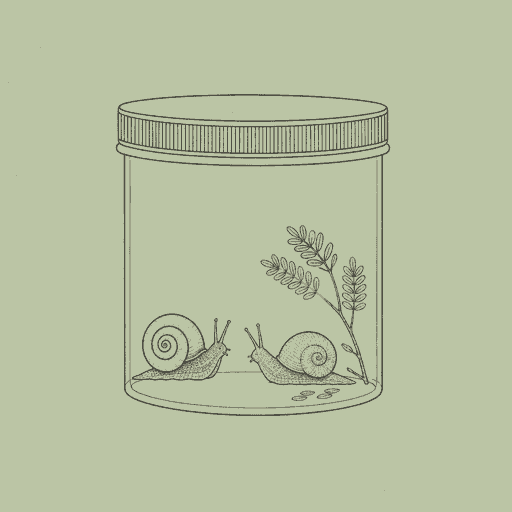
To further illustrate this internal conflict, the text repurposes the symbol of the snails from a subject of ecological conservation to a metaphor for the writer’s craft. Reva questions her compulsion to extract meaning from the conflict, asking if she is “no better than a snail, sniffing out the softest, most rotten part of a log to feast on” (331). Here, the snail’s biological process of consuming decay and excreting nutrients mirrors the author’s process of consuming the horrors of the invasion and producing a literary narrative. This self-indictment reframes the novel’s earlier scientific concerns into an aesthetic and moral problem for the creator. The comparison underscores the theme of The Hierarchies of Life and Survival by suggesting that humans, like gastropods, possess a ruthless instinct to survive by feeding off the wreckage of their environment. By linking the writer’s intellectual labor to a microscopic survival mechanism, the narrative flattens the hierarchy between human art and animal instinct, framing the production of literature as a base, desperate response to overwhelming geopolitical destruction.
The narrative also contrasts the psychological illusions of safety constructed by those outside the war zone with the inescapable realities of the conflict. Recalling an earlier trip to Kharkiv, Reva describes participating in mundane pleasures, such as eating cake and attending the opera, under the belief that she could “control how close [she] came to the war” (332-33). This belief is eventually exposed as a universal peacetime delusion—the assumption that death can be outmaneuvered through careful management. The Epilogue reinforces this disconnect through the Canadian radio interviewer, who speaks to Pavlo from a quiet studio and fails to hear the distant blast sounding in Kherson. The interviewer’s deafness to the explosion auditorily separates the safe observer from the active participant. This gap reflects the broader historical context of the Russo-Ukrainian War, in which international observers frequently struggled to grasp the visceral, immediate reality of the violence. Reva’s acceptance that she cannot rescue her grandfather, who remains bound to his 87 years of history and his dacha, emphasizes that the war is an untamable force that shatters the protective boundaries constructed by outsiders.
The Epilogue finalizes the theme of The Struggle to Maintain a Sense of National Identity by demonstrating how surviving the invasion demands the rejection of sanitized, external expectations. During the CBC interview, the former Canadian engineer insists on being addressed as Pavlo and deliberately antagonizes his interviewer. When the host attempts to project a comforting narrative onto Pavlo’s paintings of the destroyed Antonivs’kyi Bridge, suggesting they represent a yearning for reconciliation between Ukrainians and Russians, Pavlo rejects this interpretation entirely. He criticizes those in freer nations for wasting their lives on trivialities like “politeness and the perfect lawn” (337). Rather than adopting a curated persona to appease a Western audience or play the role of the tragic victim, Pavlo actively subverts these expectations. His refusal to provide a neatly packaged moral for the radio broadcast signifies a complete integration into his reclaimed self. Living under the constant threat of artillery has stripped away his former alienation, making his daily existence intensely vivid and immediate. Consequently, his transformation illustrates that authentic identity is forged not through performative accommodation, but through an unyielding confrontation with the realities of the present.

Get in-depth, chapter-by-chapter summaries and analysis from our literary experts.
- Grasp challenging concepts with clear, comprehensive explanations
- Revisit key plot points and ideas without rereading the book
- Share impressive insights in classes and book clubs