Fallen Gods
Fallen Gods
A modern alternative to SparkNotes and CliffsNotes, SuperSummary offers high-quality Study Guides with detailed chapter summaries and analysis of major themes, characters, and more.
Summaries & Analyses
Quizzes
NEWReading Tools
Symbols & Motifs
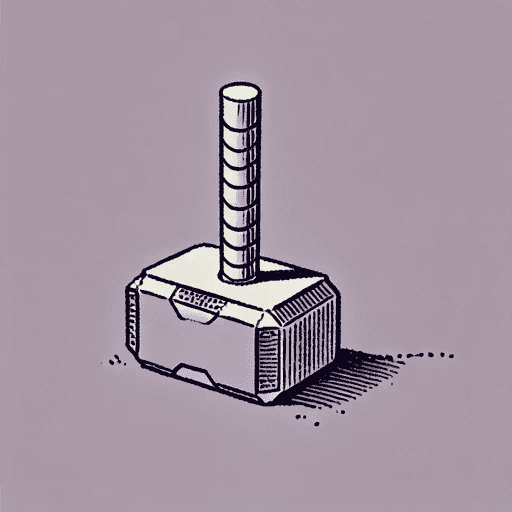
Mjölnir (Thor’s Hammer)
Mjölnir functions as the novel’s central and most potent symbol, representing ultimate power, divine birthright, and the contested history of the war between the Gods and Giants. Its theft and use by the Giants to destroy the Bifrost is the foundational conflict that Odin seeks to reverse. Odin’s obsessive quest to reclaim the hammer, driven by his waning power, embodies the theme of The Weaponization of Familial Duty. He coerces his daughter, Rey, into a life-threatening mission, framing it as her destiny to regain what was taken from them. Mjölnir is thus not just a weapon but the physical manifestation of a legacy of violence and control that the characters must either reclaim or escape. Its immense power makes it the ultimate prize in a war where both sides are morally compromised, and the desire for it corrupts all who seek it.
The hammer’s significance deepens when it is revealed to be a living artifact embedded within Aric, transforming it from an external object of conquest into an internal symbol of his suppressed identity. Mjölnir becomes a part of Aric’s body, a physical representation of the power and heritage he has yet to awaken. As Thor attempts to rip it from him, he screams, “It’s mine, created for me. I am a God!” (385). The hammer’s violent resistance to Thor, its original wielder, suggests that its allegiance is not to a bloodline but to worthiness, a distinction that fundamentally challenges Odin’s tyrannical rule. Aric’s bond with Mjölnir reframes the conflict, suggesting that true power lies not in divine right but in the strength of one’s character, ultimately symbolizing the potential for a new order free from the tyranny of the past.
Sleeping and Waking
The motif of sleeping and waking serves as the novel’s primary conceptual framework, illustrating the conflict between suppressed memory and the violent, liberating nature of self-realization. Most Gods and Giants on Earth exist in a state of magical amnesia, a “sleep” Odin enforced to erase their true identities and traumatic memories of the war. This state of ignorance represents a fragile peace built on a foundation of lies, which characters like Odin and Sigurd exploit to maintain control. Aric’s chaotic and painful “awakening” drives the narrative forward, symbolizing the difficult but necessary struggle to reclaim a forgotten history and authentic selfhood. As Sigurd tells him directly, “You’re awakening, Aric” (104), confirming that this is a recognized and dangerous process. This motif directly explores the theme of The Violent and Liberating Nature of Awakening, portraying consciousness not as a gentle dawn but as a brutal confrontation with a buried reality.
The transition from sleep to waking is physically manifested through the recurring imagery of ice and frost, which appear uncontrollably when Aric’s suppressed powers stir. During moments of intense emotion, his Giant heritage breaks through his dormancy, such as when his candle at the basalt archway becomes “covered in fucking ice” (89). This frost is a physical symptom of his awakening, a force that is both destructive and an undeniable part of his true nature. The motif suggests that the path to liberation is not passive but requires a violent shattering of the self, where suppressed power erupts uncontrollably before it can be understood and mastered.
The Runes
The runes are a complex symbol representing destiny, ancient power, and the suppressed knowledge of the war between the Gods and Giants. Appearing on architecture, in Laufey’s secret note, and on Aric’s body, they function as a fragmented map guiding the characters toward a forgotten truth. Laufey’s note, containing five key runes, is a critical plot device that directly challenges Odin’s version of history and signifies a hidden lineage of resistance among the Giants. This connection to a secret history illuminates the theme of The Ambiguity of Good and Evil in Mythic Conflict, suggesting that the dominant narrative of the Gods is a construct of power that the runes can deconstruct and rewrite. The runes are the language of this hidden world, a script of destiny that promises to unlock the truth for those who can read it. The runes are also a physical manifestation of Aric’s violent awakening, branding his body as his power is forcibly unlocked. The process is excruciating, as the runes are not merely tattoos but are seemingly carved into his flesh by an ancient power. After his harrowing experience in the Hall of Ormir, Aric discovers a new marking, realizing it is the rune “Raido in its simplest of forms. A warning” (124). This forces him to understand that his transformation is an inescapable and painful destiny being written onto his very skin. The runes are the primary mechanism through which the “Sleeping and Waking” motif is made tangible, marking the brutal stages of Aric’s journey from a state of manufactured normalcy to one of mythic, world-altering consciousness.
The Nightfrost Ring Legend
The legend of the Nightfrost Ring symbolizes the tragic and cyclical nature of love within the larger conflict between Gods and Giants. The story, which centers on Thor and the Frost Giant woman Alvaldi, becomes a clear parallel to Rey and Aric’s relationship as descendants of opposing bloodlines drawn together despite generations of violence and betrayal. Rey initially interprets the myth as a romantic tragedy about devotion overcoming division, while Aric views it as a story of betrayal and abandonment. Their conflicting interpretations reveal the unequal historical perspectives inherited by Gods and Giants and reinforce the novel’s theme of The Ambiguity of Good and Evil in Mythic Conflict.
The Nightfrost legend also foreshadows the emotional and political stakes of Rey and Aric’s relationship. Like Thor and Alvaldi, they become figures whose intimacy threatens established power structures and inherited loyalties. The ring itself symbolizes the lingering emotional consequences of the ancient war, as the story survives long after its original participants are gone. By repeatedly connecting Rey and Aric to this myth, the novel frames their romance as part of a recurring historical cycle tied to sacrifice, memory, and Ragnarök. At the same time, their relationship offers the possibility of breaking that cycle by choosing trust and mutual protection over vengeance.

Unlock the meaning behind every key symbol & motif
See how recurring imagery, objects, and ideas shape the narrative.
- Explore how the author builds meaning through symbolism
- Understand what symbols & motifs represent in the text
- Connect recurring ideas to themes, characters, and events