The Great Contradiction: The Tragic Side of the American Founding
A modern alternative to SparkNotes and CliffsNotes, SuperSummary offers high-quality Study Guides with detailed chapter summaries and analysis of major themes, characters, and more.
Summaries & Analyses
Quizzes
NEWReading Tools
Index of Terms
Content Warning: This section of the guide includes discussion of racism, physical abuse, and emotional abuse.
The 1790 Census
The 1790 census was the first official demographic accounting of the United States, which the author presents as a “printed picture” of the nation’s racial reality. The census provided unmistakable evidence that the enslaved population was approaching 700,000 and growing exponentially. This demographic explosion rendered any comprehensive plan for emancipation—especially one requiring compensation for enslavers and relocation of those freed from enslavement—increasingly impractical and financially daunting, effectively closing the window of opportunity to end slavery.
The Backlash Pattern
The “backlash pattern” is the author’s term for a recurring pattern in American history in which every step toward racial equality generates a backlash from a significant portion of the white population. This paradoxical phenomenon, where racism surges when some measure of racial equality becomes foreseeable, is identified as first appearing during the American founding and continuing into the present day.
The Cause
“The Cause” was the term used by the revolutionary generation for the core principles animating the American Revolution. The author traces its evolving meaning, noting that “The Common Cause” began as a call for colonial unity in support of Massachusetts (20), grew to mean unity behind the commitment to independence, and eventually expanded to encompass the egalitarian values the troops were fighting for.
Conquest Theory
Conquest theory was the initial diplomatic and legal justification used by the US in negotiating with Indigenous tribes after the Revolutionary War. This framework asserted that because many Indigenous nations had fought alongside Great Britain, they were a “conquered people” whose lands now belonged to the US by right of conquest, not as a matter for negotiation between sovereign equals.
Enlightened Obfuscation
“Enlightened obfuscation” is the author’s term for James Madison’s distinctively convoluted verbal style when addressing the issue of slavery. This rhetorical strategy used complex syntax and multiple negatives to create a “verbal fog bank” that appeared to condemn slavery while ultimately obscuring his position on the issue (126).
The Ghost at the Banquet
“The Ghost at the Banquet” is the author’s recurring metaphor for the unspoken but pervasive issue of slavery during the founding era (79), especially during debates over colonial unity and the Constitution. Although the topic was often deliberately avoided in formal debate to prevent sectional conflict, its presence shaped political compromises and the limits of what the founding generation was willing to address.
The Great Contradiction
The “great contradiction” is the central tension of the American founding, defined as the simultaneous assertion of universal rights to liberty and the perpetuation of chattel slavery and Indigenous removal. The author frames the book as an exploration of this tragic contradiction between the principles of the American Revolution and these two failures of the founding generation.
The Great Silence
The “Great Silence” is the author’s term for the multi-century period in which the leading intellectual and religious voices of Western civilization failed to condemn the Atlantic Slave Trade. This widespread moral silence, which treated slavery as an acceptable feature of society, was broken beginning in the mid-18th century by Enlightenment thinkers, Quakers, and New Light ministers.
Monticello
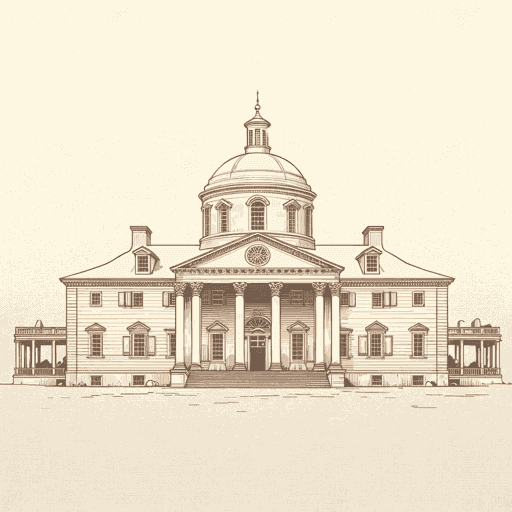
Monticello was the Virginia plantation of Thomas Jefferson and is used by the author to symbolize the Founder’s personal and intellectual immobility regarding slavery. The estate’s “architecture,” which hid the labor of its enslaved workforce while featuring Jefferson’s own biracial relatives as household staff, embodies his failure to reconcile his eloquent condemnations of slavery with his belief that Black and white people couldn’t coexist as equals in a biracial society.
Mount Vernon
Mount Veron was the Virginia plantation of George Washington, which the author treats as a symbol of the Founder’s personal struggle with the legacy of slavery. Unlike Monticello’s legacy, Mount Vernon represents Washington’s regret and his eventual decision to emancipate the people he enslaved in his will. It’s a monument to “the only unavoidable subject of [his] regret” (179-80).
The Perishability of Revolutionary Time
The “perishability of revolutionary time” is a concept, borrowed from historian David Brion Davis (19), describing the brief and finite window of opportunity following the American Revolution, when commitment to its egalitarian principles remained strong. Davis argues that this ideological fervor was unsustainable, making it imperative to act against slavery before the “revolutionary embers” cooled.
Presentism
Presentism is a methodological error, which the author calls the “original sin for American historians” (18), that involves assessing the past using the political and moral standards of the present. The author argues that this “presentistic fallacy” distorts historical understanding by treating the Founders as heroes or villains in contemporary culture wars rather than as people living within the values and prevailing assumptions of their own time.
Prudent Revolutionaries
The author characterizes of the American Founders as “prudent revolutionaries,” contrasting them with the utopian visionaries of other major revolutions. They’re described as an assembly of pragmatic statesmen who were accustomed to compromise and skilled at “negotiating the space between ideals and realities” (34), a disposition that enabled them to create a viable republic while also contributing to their decision to defer action on slavery.
Res Publica
Res publica is a Latin term meaning “public things.” Ellis identifies res publica as the political lodestar of the revolutionary generation. It referred to the long-term public interest, which the Founders believed didn’t necessarily coincide with popular opinion.
The Three-Fifths Clause
The Three-Fifths Clause was a constitutional compromise for determining representation in the House of Representatives that counted enslaved people as three-fifths of a person. Ellis explains that the provision treated enslaved people as part persons and part property for purposes of calculating representation.
The Fugitive Slave Clause
The Fugitive Slave Clause was a provision of the Constitution requiring enslaved people who found freedom in another state to be returned to those who claimed them as property. Ellis identifies it as one of four sectional compromises over slavery incorporated into the Constitution.
Unpainted Pictures
“Unpainted pictures” is a concept referring to significant but often brutal moments of the American founding—particularly those involving African Americans, such as the fate of formerly enslaved people who sought freedom during the Revolutionary War—that were never depicted by the era’s prominent artists. The author argues that the absence of these scenes from the visual record produced an incomplete picture of the founding that emphasized its triumphs while obscuring its tragedies.

Get in-depth, chapter-by-chapter summaries and analysis from our literary experts.
- Grasp challenging concepts with clear, comprehensive explanations
- Revisit key plot points and ideas without rereading the book
- Share impressive insights in classes and book clubs
Related Titles
By Joseph J. Ellis