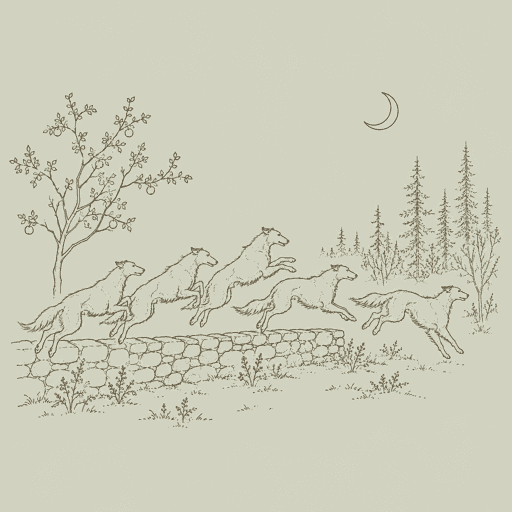
The Hounding
The Hounding
A modern alternative to SparkNotes and CliffsNotes, SuperSummary offers high-quality Study Guides with detailed chapter summaries and analysis of major themes, characters, and more.
Summaries & Analyses
Quizzes
NEWReading Tools
Book Club Questions
Content Warning: This section of the guide includes discussion of gender discrimination and death.
General Impressions
Gather initial thoughts and broad opinions about the book.
1. The novel ends with Joseph’s ambiguous vision of the sisters and Thomas. How did you react to this ending? Do you interpret the girls’ transformation as a literal, supernatural event or a metaphorical escape into freedom, and what made you lean toward that interpretation?
2. What was your experience reading a story grounded in a real-life medical mystery from 1701? How did knowing the “barking sisters” were based on a documented case affect your suspension of disbelief compared to other stories about mob mentality, like Arthur Miller’s The Crucible (1953)?
Personal Reflection and Connection
Encourage readers to connect the book’s themes and characters with their personal experiences.
1. Robin struggles with his desire to be true to his gentle nature and the pressure to participate in the village’s violent, performative masculinity. Think about a time you felt caught between your own values and the expectations of a group. How did you navigate that situation?
2. The five Mansfield sisters share a powerful bond. Can you recall a time when being part of a close-knit family or group of friends gave you strength?
3. Temperance tries to quell the dangerous rumors by appealing to the vicar, but her actions inadvertently make the situation much worse. Have you ever had good intentions lead to unexpected or negative consequences? What did this experience teach you?
4. The Mansfield sisters are treated as outsiders in Little Nettlebed. Have you ever felt like you didn’t quite fit in somewhere? How do you cultivate a sense of belonging in your own life?
Societal and Cultural Context
Examine the book’s relevance to societal issues, historical events, or cultural themes.
1. The villagers are suffering from a drought and economic anxiety, and they channel their frustration into persecuting the Mansfield sisters. This is a classic example of scapegoating. Where do you see similar dynamics at play in the modern world, where marginalized groups are blamed for complex societal problems?
2. What does the novel argue about the relationship between patriarchal power and female independence? In what ways does this idea of punishing women for their strength, unity, and refusal to be submissive resonate with contemporary social issues?
3. How does the character of Dr. Friend and his diagnosis of “erratic animal spirits” gives a veneer of legitimacy to the villagers’ fears. Can you think of examples today where “expert” opinions, whether medical, scientific, or political, are used to justify prejudice or control?
Dive into the book’s structure, characters, themes, and symbolism.
1. Like the Lisbon sisters in Jeffrey Eugenides’s The Virgin Suicides (1993), the Mansfield sisters are primarily seen through a voyeuristic male gaze. How did this narrative choice affect your understanding of the girls?
2. How does the symbol of the River Thames change over the course of the story? What does this transformation represent for the community of Little Nettlebed?
3. The novel presents Pete and Thomas as foils. How does this contrast explore different models of masculinity, and what do their ultimate fates suggest about the consequences of each?
4. In what ways do the novel’s unreliable narrators shape your understanding of the “truth”? How did navigating the narrators’ conflicting viewpoints impact your interpretation of key events, like the “transformation” in the orchard?
5. What is the significance of the dogs and barking motif? How does its meaning shift over the course of the story and inform the resolution?
6. In what ways does Purvis use the drought as an active force that contributes to the novel’s suspense, structure, and theme of Scapegoating Oppressed Communities in Times of Crisis?
Creative Engagement
Encourage imaginative and creative connections to the book.
1. Imagine you are writing a sequel that follows the sisters and Thomas after their escape. Which sister would you choose as the narrator to tell the story of their new life? What challenges would they face, and how would their relationships with each other evolve outside the confines of Little Nettlebed?
2. If you were a modern historian or journalist producing a podcast about the real 1701 case of the “barking girls,” which characters from the novel would you most want to find historical records for? What key questions would guide your investigation to uncover the social and psychological roots of the case?
3. Let’s imagine you’re casting a film adaptation of The Hounding. Which actors would you choose to portray Anne Mansfield’s fierce intelligence, Pete Darling’s resentful rage, and Robin Wildgoose’s gentle, tormented nature? What scene do you think would be the most challenging, yet important, to capture visually to convey the book’s oppressive atmosphere?

Get in-depth, chapter-by-chapter summaries and analysis from our literary experts.
- Grasp challenging concepts with clear, comprehensive explanations
- Revisit key plot points and ideas without rereading the book
- Share impressive insights in classes and book clubs