The Hounding
The Hounding
A modern alternative to SparkNotes and CliffsNotes, SuperSummary offers high-quality Study Guides with detailed chapter summaries and analysis of major themes, characters, and more.
Summaries & Analyses
Quizzes
NEWReading Tools
Symbols & Motifs
Content Warning: This section of the guide includes discussion of bullying, gender discrimination, animal cruelty and death, and graphic violence.
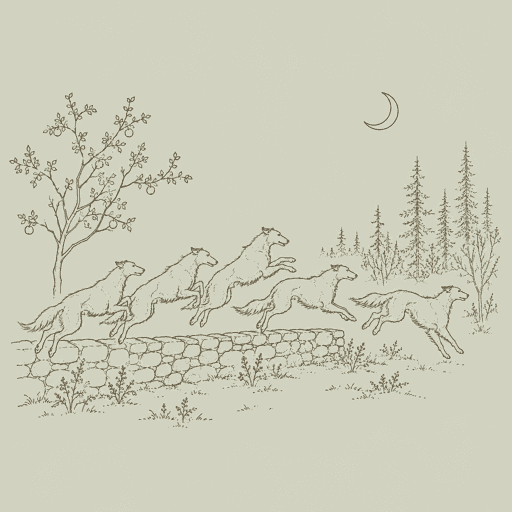
Dogs and Barking
The recurring motif of dogs and barking is the novel’s central metaphor for the patriarchal fear of untamed female power. In the minds of the villagers, the transformation from articulate girls into barking animals shows a terrifying loss of humanity and a regression to a feral, uncontrollable state. This imagined metamorphosis allows the men of Little Nettlebed to justify their escalating violence, as it recasts the sisters’ independence and solidarity not as strengths but as signs of demonic possession. This motif directly illustrates the theme of The Dehumanizing Nature of Patriarchal Control, where women who defy social norms are stripped of their humanity and recast as monstrous threats. The villagers’ fear is so potent that it colors their perception, leading them to believe the girls have “pretty mouths filled with pointed yellow teeth” (1). This vivid, imagined detail reveals that the transformation is a psychological projection, a monster created to validate their own aggression.
The motif evolves from a single, unsubstantiated rumor into a collective certainty that fuels the novel’s tragic climax. What begins as Pete’s dubious claim of seeing the girls change at dusk gains momentum when the vicar, and then others, report similar visions. The villagers’ hunger for a scapegoat makes them eager to believe, and the accusation of being dogs gives them license to hunt the sisters. The barking that interrupts Pete’s wedding is the final catalyst, an ambiguous sound that the crowd immediately interprets as a declaration of war from the sisters. This aural intrusion on a patriarchal ceremony—a wedding—is perceived as the ultimate act of defiance, solidifying the girls’ status as inhuman enemies and unleashing the full force of The Danger of Mob Mentality.
The Drought
The motif of the oppressive heat and drought is a powerful form of pathetic fallacy, mirroring the deteriorating psychological and moral state of the Little Nettlebed community. The relentless, searing sun and lack of rain create an atmosphere of physical suffering and anxiety that makes the villagers irritable, desperate, and prone to irrationality. From the novel’s outset, the environment is characterized by its hostility; Joseph Mansfield senses a smell in the air that is “dusty and brittle” and “smelled like lack” (34). This absence of moisture symbolizes a deeper spiritual and rational void within the community. The heat does not just wither the crops; it “addle[s] people’s minds” (10), creating a feverish, volatile setting where paranoia and rumor can flourish unchecked. The environmental crisis becomes the external pressure that primes the village for an explosion of collective violence.
This motif is central to the theme of Scapegoating Oppressed Communities in Times of Crisis. The failing crops, shallow wells, and the threat to Pete’s livelihood as the river dries up generate a free-floating anger and fear that demand a target. The villagers are angry about their powerlessness in the face of nature, and their persecution of the Mansfield sisters becomes a way to channel that rage into a tangible, controllable focus. The external, uncontrollable crisis of the drought is transposed onto the sisters, who are transformed into an internal, supernatural threat that the villagers believe they can conquer. The arid, cracking landscape is thus a direct reflection of a community breaking under pressure, its social cohesion evaporating just as surely as the water from the riverbed, leaving only scorched earth and simmering resentment.
The River Thames
The River Thames is a dynamic symbol whose meaning shifts in direct parallel with the decay of social order in Little Nettlebed. Initially, the river represents both the village’s connection to the world and Pete Darling’s masculine authority. As the ferryman, the river is his “dominion” (7), a space where he exerts control over who comes and goes. His power is explicitly linked to the river’s vitality. When Anne challenges him by wading across instead of waiting, her act of independence is a direct affront to his control, and his rage signals the beginning of his obsessive need to punish her. This initial confrontation establishes the river as a contested territory where patriarchal power is asserted and defied.
As the drought intensifies, the river’s physical decline symbolizes the community’s moral and rational collapse. Its shrinking waters and eventual transformation into a dry, rocky bed represent the erosion of civilization and the emergence of a lawless, primal landscape. Pete’s fear that “the villagers could walk straight across the bed” (9) is not just an economic anxiety but a premonition of his loss of control. By the end of the novel, the parched riverbed is no longer a boundary but a desolate stage where the villagers, no longer needing Pete to cross, can freely form a mob and hunt the sisters. This barren landscape, littered with the carcasses of fish and husks, becomes the site of Pete’s murder, an act of violence born from the very social breakdown the dead river symbolizes. It is the physical manifestation of a community that has lost its lifeblood.

Unlock the meaning behind every key symbol & motif
See how recurring imagery, objects, and ideas shape the narrative.
- Explore how the author builds meaning through symbolism
- Understand what symbols & motifs represent in the text
- Connect recurring ideas to themes, characters, and events