The Hounding
The Hounding
A modern alternative to SparkNotes and CliffsNotes, SuperSummary offers high-quality Study Guides with detailed chapter summaries and analysis of major themes, characters, and more.
Summaries & Analyses
Quizzes
NEWReading Tools
Summary and Study Guide
Overview
Xenobe Purvis’s debut novel, The Hounding (2025), is a work of historical fiction set in a small 17th-century English village gripped by a scorching summer drought. The story centers on the five orphaned Mansfield sisters, who live in relative isolation with their grandfather. As the heat intensifies and the river runs dry, the sisters become the focus of the community’s mounting fear and suspicion, a hostility that escalates into a dangerous rumor that the girls can transform into a pack of demonic dogs. The novel was selected as a Reese’s Book Club pick.
Drawing inspiration from a historical account of “barking girls” in 1701, the novel is a contemporary feminist allegory. It explores how a small, insular community can weaponize superstition to persecute those it deems outsiders. The narrative examines the themes of The Dehumanizing Nature of Patriarchal Control, The Danger of Mob Mentality, and Scapegoating Oppressed Communities in Times of Crisis. Through the escalating paranoia of the villagers and the sisters’ struggle for survival, The Hounding provides a chilling account of how misogyny can fuel destructive acts of violence.
This guide refers to the 2025 Henry Holt and Company edition.
Content Warning: The source text and this guide contain depictions of bullying, gender discrimination, animal cruelty and death, substance use, addiction, graphic violence, cursing, illness, death, and emotional abuse.
Plot Summary
In the small, isolated village of Little Nettlebed, Oxfordshire, the five orphaned Mansfield sisters, Anne, Elizabeth, Hester, Grace, and Mary, live with their grandfather, Joseph Mansfield, a wealthy landowner who is nearly blind. Their chief antagonist is Pete Darling, the local ferryman, a religious man who harbors a volatile mix of fear and repressed desire for the girls. In an early confrontation, Pete feels that the girls are ignoring him while he transports them, so he halts his ferry mid-river. Refusing to let the man intimidate her, Anne wades to the shore. This act humiliates and enrages him because it demonstrates the young woman’s independence and the river’s shrinking water level, which threatens his livelihood. This animosity deepens when the villagers catch a giant sturgeon in the dwindling river. While they plan a feast, Hester and Mary attempt to return the creature to the water, but Pete kills it by stamping on its head, solidifying his role as an enforcer of the village’s will against the sisters’ perceived strangeness.
A new farmhand, Thomas Mildmay, arrives to work for Joseph and is immediately captivated by Anne despite her initial coldness towards him. The village’s hostility toward the Mansfields escalates when the sturgeon’s entrails are dumped outside their farm as an insult. The tensions erupt into supernatural rumor after an intoxicated Pete tells Temperance Shirly, the publican’s wife, that he witnessed the five sisters transform into dogs on the riverbank at dusk. Though Temperance makes Pete promise not to repeat this story, the rumor spreads quickly, feeding the villagers’ pre-existing suspicions about the girls. The rumor gains traction when a local boy named Robin Wildgoose hears a strange barking in the dark after an unsettling encounter with Anne and Elizabeth. Later, his family’s hens are killed by what appears to be a dog. The villagers, now seeing the sisters through a lens of fear, interpret every unusual occurrence as a sign of their unholy nature.
The situation attracts official scrutiny. The local vicar, having heard the tales, visits the Mansfield farm and believes he sees Anne’s face momentarily change in the dappled light of the orchard, an illusion Thomas witnesses as well. The vicar’s report prompts a visit from Dr. John Friend, a physician from Oxford, who comes to investigate the girls’ “condition.” During his examination, the five sisters begin to howl in unison. Dr. Friend dismisses supernatural causes, instead diagnosing them with a nervous disorder caused by erratic “animal spirits.” He prescribes complete rest and confinement. A distraught Joseph complies, locking his granddaughters in their bedrooms. The family’s two maids, Connie and Amie, terrified of catching the affliction, quit and flee to London, an act that the village takes as definitive proof of the danger within the Mansfield house.
The novel’s climax arrives on Pete’s wedding day. The heat is at its peak, and the village dogs are all locked indoors following a mysterious slaughter of local wildlife. Joseph, taking pity on his imprisoned granddaughters, allows them into the garden while the villagers are at the church. During the wedding ceremony, a loud, mocking barking is heard from outside, disrupting the service. Enraged and certain the sisters are taunting him, Pete abandons his bride at the altar and storms out to find them, with many of the wedding guests following. By the river, he confronts the five sisters and Thomas, who has been watching over them. Pete, brandishing a fresh bite mark on his hand, accuses Anne of the attack. A violent fight breaks out, and Pete overpowers Thomas and strangles him. As Thomas loses consciousness, Robin sees his younger brother, Richard, about to intervene with a knife. To protect both Thomas and his brother, Robin snatches the knife and fatally stabs Pete in the back.
As the villagers arrive and discover Pete’s body, Robin is overcome with guilt and horror. Just as he is about to confess, Thomas steps forward and falsely claims responsibility for the murder. He declares that he killed Pete because he loves Anne and could not stand by while Pete sought to destroy her. The crowd momentarily transfers their long-held suspicion of the sisters to Thomas and seize him. He is taken back across the river and imprisoned in the home of Humphrey Bullock, Pete’s now-grieving father-in-law, to await the justice of the peace. Temperance visits Thomas in captivity. Sensing his innocence and understanding he is protecting Robin, she subtly drops a sharp clamshell on the floor, providing him with the means to cut his bonds and escape.
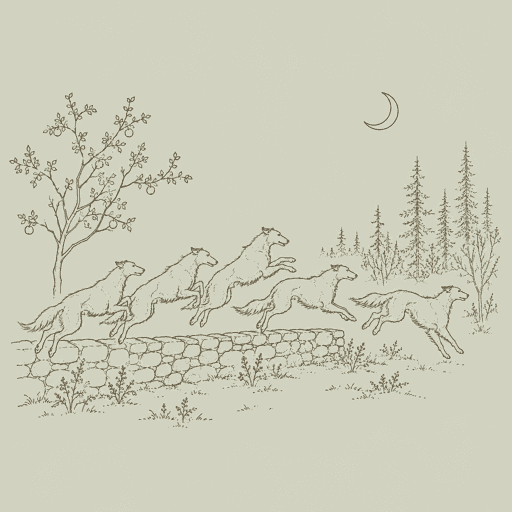
Thomas breaks free and reunites with the sisters at their farm. Joseph, still ignorant of the murder but deeply unsettled by the girls’ strange behavior, lies about Thomas’s whereabouts, and resolves that the family must flee Little Nettlebed at first light. That night, Joseph falls into a deep sleep and has a dream in which his sight is fully restored. In the dream, he walks through the silent house to check on his granddaughters only to find their bedrooms empty. Drawn to the window, he looks out into the moonlit orchard and witnesses five large, powerful dogs and Thomas leap over the garden wall and disappear into the wild woods beyond. Joseph cries out for them to return, but they are gone. He is overcome with a mixture of grief and a surprising gladness, believing that his granddaughters are free. As he stands at the window, he smells the first scent of coming rain, signaling the end of the long drought, just as the sound of an approaching mob led by Bullock reaches the farm at dawn.

Get in-depth, chapter-by-chapter summaries and analysis from our literary experts.
- Grasp challenging concepts with clear, comprehensive explanations
- Revisit key plot points and ideas without rereading the book
- Share impressive insights in classes and book clubs