The Hounding
The Hounding
A modern alternative to SparkNotes and CliffsNotes, SuperSummary offers high-quality Study Guides with detailed chapter summaries and analysis of major themes, characters, and more.
Summaries & Analyses
Quizzes
NEWReading Tools
Themes
Content Warning: This section of the guide includes discussion of bullying, gender discrimination, animal cruelty and death, graphic violence, and death.
The Dehumanizing Nature of Patriarchal Control
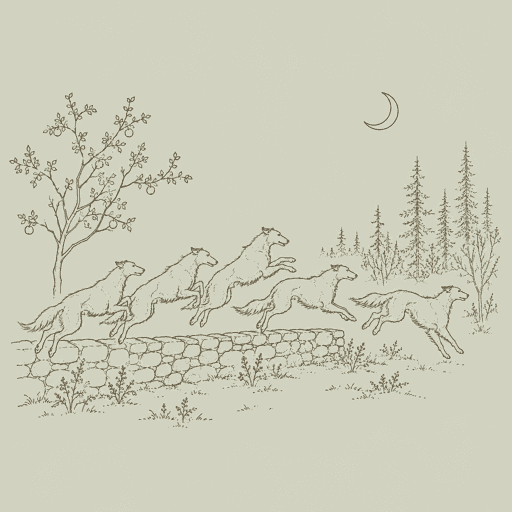
In Xenobe Purvis’s The Hounding, the transformation of the Mansfield sisters into dogs is a psychological projection born from patriarchal anxiety. The novel argues that a society built on male authority perceives female independence as a fundamental threat to its order. In response, the men of Little Nettlebed dehumanize the sisters, recasting their pride, solidarity, and self-sufficiency as something “unholy” and animalistic. This narrative of monstrousness justifies the men’s escalating desire to exert violent control over women who refuse to occupy their designated, subservient place.
As the novel’s primary antagonist, Pete embodies this misogynistic worldview. His obsession with the sisters stems from their refusal to show him deference. He internally seethes about women who “didn’t know their place in the order of things” and feels a rageful “desire to punish” them for forsaking “nice, feminine qualities like meekness and humility” (43). Anne becomes the main target of his general hatred of women after she defies his attempt to strand the sisters mid-river by simply wading to shore. He perceives this act of independence as an assault on his authority as a man. He resents the girls’ “silent disdain” and feels they possess a “cunning power” that can turn a “strong man weak.” For Pete, Anne’s defiance is an intolerable challenge that must be met with suppression and punishment, leading him to instigate the village’s persecution of the girls.
This fear of female autonomy extends beyond Pete to the wider community. Long before the rumors of canine transformation begin, the sisters are viewed with suspicion precisely because they are a self-contained, independent unit. Temperance observes that the girls “had always seemed separate from the goings-on of the village” (11). Their isolation is seen as a public affront. Pete complains that they are a “[w]ild bunch, no discipline at all,” (22) and his greatest grievance is that they “do what they like” (22). Their refusal to seek male approval or participate in village life on its prescribed terms renders them outsiders. This pre-existing mistrust provides fertile ground for the fantastic accusations against them. Their otherness is already established, making it easy for the villagers to believe they are not just different, but fundamentally inhuman.
The mob hunt reveals that the ultimate purpose of the efforts to dehumanize the sisters is a brutal and desperate attempt to enforce patriarchal order. By labeling the sisters as monstrous dogs, the villagers can reframe their violence as a righteous crusade. The Prologue notes the mob feels “safe and enfolding, walking shoulder to shoulder towards a shared enemy” (1). Ultimately, Anne herself recognizes the true nature of their persecution. She explains to her grandfather that their punishment has “nothing to do with the idea of [them] becoming dogs, and everything to do with the fact of [them] being girls” (180). Through the persecution of the Mansfield sisters, Purvis exposes the violence of patriarchal societies that refuse to acknowledge the personhood of women who defy their control.
The Danger of Mob Mentality
The Hounding presents a chilling portrait of how a small, isolated community can descend into collective violence. The novel demonstrates that mob mentality is built on rumor, shared fear, and the alluring promise of a unified purpose. In Little Nettlebed, fragmented anxieties about the drought, personal failings, and mortality are channeled into a singular, vicious obsession with the Mansfield sisters. The formation of a mob offers individuals a sense of safety and righteousness, effectively absolving them of personal responsibility as they participate in acts of escalating cruelty against a common enemy.
The process begins with a single, unverified rumor. Pete’s claim to have seen the sisters transform into dogs spreads “like quick-licking flames” through the village. The story’s power lies in its ability to validate pre-existing suspicions. Villagers quickly add their own “evidence,” suddenly recalling the girls’ supposedly sharp teeth and glowing eyes. Even those who initially doubt Pete find that the story confirms a “dark mistrust of the Mansfields” they already harbored in their hearts (92). The rumor becomes a narrative that the community builds together to make their latent hostility feel justified. This collective storytelling transforms suspicion into certainty, laying the groundwork for action.
The novel uses the badger-baiting scene at the Swan alehouse as a microcosm of the village’s capacity for bloodlust. The event shows how a group of men, fueled by ale and a desire for spectacle, whip themselves into a violent frenzy. The killing of the badger becomes a “matter of manliness,” a test of their collective power. However, after the creature is brutally killed, most of the men stare in a “mute daze” because their lust for violence “hadn’t been satisfied.” This scene foreshadows the hunt for the sisters, suggesting that the mob’s violence is a self-perpetuating hunger that, once awakened, will seek ever-larger targets.
The pursuit of the sisters provides the villagers with a powerful and comforting sense of unity. The Prologue describes the feeling of marching on the girls as “safe and enfolding, walking shoulder to shoulder towards a shared enemy” (1). This sense of shared purpose absolves individuals of moral culpability; their actions are no longer personal choices but participation in a collective will. After Pete’s death, the villagers immediately accept the narrative of the girls as “murderers” without question or investigation. They cease to be individuals and become a single entity, driven by a shared outrage that has been simmering all summer. Their hunt is not for justice but for the catharsis that comes from destroying a shared object of fear and hatred. The Hounding reveals how ordinary people can forfeit their individual reason and consciences in exchange for the dangerous allure of mob mentality.
Scapegoating Oppressed Communities in Times of Crisis
The persecution of the Mansfield sisters is an allegory for how communities under immense pressure scapegoat marginalized groups to rationalize their suffering. The village of Little Nettlebed is beset by a drought, failing crops, and a pervasive sense of powerlessness against forces they cannot control. Rather than confronting the complexities of their environmental and economic hardships, the villagers redirect their rage and anxiety onto the five sisters. The novel illustrates that scapegoating is a social mechanism for creating a convenient enemy in times of crisis.
The narrative explicitly links the villagers’ hostility to their wider anxieties. The Prologue states they are angry “not only about the sisters or the murdered man’s fate” but also “about the weather and their failing crops and shallow wells, alongside all sorts of ordinary things, like the fact that their wives no longer loved them or that they would someday die” (1-2). The relentless, scorching heat becomes a physical manifestation of this social fever, a constant pressure that “addled people’s minds.” The shrinking river, which threatens Pete’s livelihood and the village’s connection to the outside world, directly parallels the rise in paranoia. The environmental crisis creates a desperate need for a simple explanation, and the “unnatural” sisters provide a convenient one.
The Mansfield family is particularly vulnerable to becoming scapegoats because they are already outsiders, marked by both their independence and past economic actions. Joseph reflects that some villagers have harbored a grudge ever since he “made a fine penny selling flour” during a famine years ago (30). This pre-existing resentment, combined with the family’s tendency to “keep themselves to themselves” (21), makes them an easy target. Their perceived social superiority and refusal to integrate fully into village life mean they lack a network of allies. When the crisis of the drought intensifies, this long-simmering animosity easily ignites into open persecution.
The novel examines the dangerous link between scapegoating and confirmation bias, as every misfortune in the village is twisted to fit the established narrative about the sisters. When a large number of wild animals are found dead near the hayfields, the villagers immediately blame the Mansfield sisters of killing the animals in their dog form. Tubb dismisses the possibility of a natural cause, and the event is quickly absorbed into the growing legend of the girls’ demonic influence. By attributing a complex, real-world problem to the supernatural malice of the sisters, the villagers create a foe they believe they can fight and defeat. This act of scapegoating provides a false sense of agency, allowing them to channel their helplessness into the destructive, but momentarily empowering, act of the hunt. Through the story of Little Nettlebed’s persecution of the Mansfield sisters, Purvis challenges readers to recognize ways in which society uses vulnerable groups as scapegoats.

Unlock every key theme and why it matters
Get in-depth breakdowns of the book’s main ideas and how they connect and evolve.
- Explore how themes develop throughout the text
- Connect themes to characters, events, and symbols
- Support essays and discussions with thematic evidence