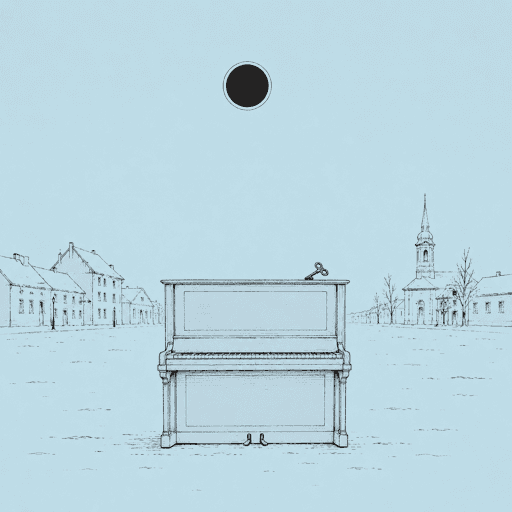
The Melancholy of Resistance
The Melancholy of Resistance
A modern alternative to SparkNotes and CliffsNotes, SuperSummary offers high-quality Study Guides with detailed chapter summaries and analysis of major themes, characters, and more.
Summaries & Analyses
Quizzes
NEWReading Tools
Book Club Questions
Content Warning: This section of the guide includes discussion of death and animal cruelty.
General Impressions
Gather initial thoughts and broad opinions about the book.
1. What was your initial experience reading Krasznahorkai’s prose? Did you find the style immersive, challenging, or something else entirely? How did it shape your understanding of the town’s atmosphere from the very beginning?
2. Krasznahorkai has drawn comparisons to Franz Kafka. If you’ve read works like Kafka’s The Trial (1925) or The Castle (1926), how would you compare the feelings they evoke with the mood of this novel?
3. After finishing the book, which character or image has stayed with you the most? Was it the absurd spectacle of the whale, Valuska’s cosmic dance in the tavern, or the final, clinical description of decay? What makes that element so memorable for you?
Personal Reflection and Connection
Encourage readers to connect the book’s themes and characters with their personal experiences.
1. János Valuska maintains a sense of wonder and sees a “monumental simplicity” in the cosmos, even as the world around him disintegrates. Think about a time you tried to hold on to a positive or beautiful perspective in the face of cynicism or difficult circumstances. What challenges did you encounter?
2. György Eszter responds to a world he sees as fundamentally corrupt by withdrawing into intellectual seclusion. Have you ever felt so overwhelmed by a complex problem that retreat felt like the only viable option? How did you respond to that situation? How might you relate your choice to György’s experience of the limits of intellectual resistance?
3. Mrs. Plauf’s carefully kept apartment is her personal fortress against a chaotic world. What are some of the ways you create a sense of order or sanctuary in your own life when things feel unpredictable? How effective are these personal spaces at keeping the outside world at bay?
4. The silent, menacing crowd that gathers in Kossuth Square is driven by a shared but unspoken sense of fear and anxiety. Think about the dynamics of crowds you’ve been a part of. In what ways can being in a large group change your sense of individual identity or responsibility?
5. Mrs. Eszter sees the town’s decay as an opportunity for a new order. Why do you think some people are energized by chaos while others fail to act because of it? Are there aspects of her character that you relate to?
Societal and Cultural Context
Examine the book’s relevance to societal issues, historical events, or cultural themes.
1. The novel was published in 1989, the year communist rule collapsed in Hungary. How does knowing this historical context of the Rendszerváltás (system change) deepen your understanding of the town’s pervasive fear, failing infrastructure, and power vacuum?
2. The mysterious Prince is a demagogue who gains power by giving voice to the mob’s nihilistic impulses. What does the novel suggest about how fear and uncertainty make a society vulnerable to such figures? Where might you see similar dynamics playing out in the world today?
3. The town’s authorities, like the chief of police, are completely ineffective, creating a void that Mrs. Eszter and the military easily fill. What does this story illustrate about the importance of trust in civic institutions and the consequences when that trust breaks down?
Literary Analysis
Dive into the book’s structure, characters, themes, and symbolism.
1. What is the significance of the giant, dead whale? How does it function as a symbol that means different things to different characters, from Valuska’s awe to the mob’s collective dread?
2. Krasznahorkai uses the complex musical theory of the Werckmeister harmonies as a central motif. How does this intellectual concept help you understand the novel’s larger theme of artificial human systems versus natural chaos? Did you find it to be an effective metaphor?
3. The novel presents three starkly different responses to chaos through its central characters. How do János Valuska’s innocence, György Eszter’s intellectual despair, and Mrs. Eszter’s ruthless opportunism work together to explore the book’s main themes?
4. Let’s discuss the recurring motif of rubbish and decay. In what ways does the physical state of the town, buried under its own frozen filth, mirror the moral and spiritual condition of its citizens?
5. The narrative ends not with a character, but with a detached, scientific description of a body’s decomposition. What was the effect of this final shift in perspective for you as a reader? How does it reframe the human drama you just witnessed?
6. Béla Tarr’s film adaptation, Werckmeister Harmonies, is famous for its use of long, meditative tracking shots. Whether you’ve seen the film or not, how do you imagine Krasznahorkai’s dense, unbroken prose translates to a visual medium? What challenges and opportunities would a filmmaker face in adapting this particular style?
Creative Engagement
Encourage imaginative and creative connections to the book.
1. Mrs. Eszter’s civic cleanup movement is called “A TIDY YARD, AN ORDERLY HOUSE.” If you were tasked with designing a propaganda poster for her campaign, what imagery or slogans would you use to appeal to the frightened townspeople?
2. The Prince’s philosophy is that “ruin is everything,” but we only hear about his ideas secondhand. Imagine you’ve found a page from his notebook. What might he have written to articulate his vision of destruction and chaos?
3. Picture yourself as a journalist who has arrived in town a week after the riot to report on what happened. Who would be the first person you’d try to interview, and what three questions would you be most eager to ask?

Get in-depth, chapter-by-chapter summaries and analysis from our literary experts.
- Grasp challenging concepts with clear, comprehensive explanations
- Revisit key plot points and ideas without rereading the book
- Share impressive insights in classes and book clubs