Summaries & Analyses
Author Insights
Quizzes
NEWReading Tools
Chapters 49-64Chapter Summaries & Analyses
Content Warning: This section of the guide includes discussion of death.
Chapter 49 Summary: “Trapezium”
Wilbur’s Ghost watches a memory of Wilbur taking a phone call from Maggie. She tells him she has broken up with her boyfriend, Edward, and Wilbur asks her on a date. On the date at the Stone House pub, however, Maggie reveals she has just accepted an excellent job offer from a London design firm called Trapezium. Realizing she must move, they both accept that their potential relationship has no future. Wilbur’s plan to take her dancing is abandoned. They share a lingering hug, say they will miss one another, and part ways.
Chapter 50 Summary: “Nineteen Months”
The following 19 months pass in a montage of scenes. Wilbur dedicates himself to working at the bookshop, launching a new children’s section and avoiding Ecclesall Road. His mother, Edith, continues her daily routine. The period ends when Wilbur receives a phone call from Maggie, who is unhappy in London and has decided to come home.
Chapter 51 Summary: “Warm White Wine”
The Ghost watches Wilbur at a reception for the opening night of the Sheffield Crucible Theatre. Wilbur spots Maggie across the room and is struck by the sudden, terrifying realization that he is in love with her. He had assumed she was happy in London and is relieved to see her. She had called him previously to say she was moving back to Sheffield for a new job as the theater’s in-house designer.
Wilbur approaches Maggie, who greets him warmly. She introduces him to her friend Claudette and shows him a program she designed. Maggie explains she left her job at Trapezium because her boss stole her ideas after she rejected his sexual advances and because she felt alienated by the city’s social scene. Wilbur tells her about his own life: Mr. Bagdale is dying and has given him the shop, and Wilbur has bought a house for his mother, where he also lives. They admit they missed each other, and Maggie says returning home feels right.
Chapter 52 Summary: “The Courage It Takes to Love”
After the play, Wilbur and Maggie go for another drink. Later, on a quiet street, she asks him to kiss her, and he does. They spend the night together at his mother’s house. The Ghost watches their relationship blossom through a series of dates as they become inseparable. Love gives Wilbur a new sense of purpose and helps him cope with the persistent grief over his brother, Dougie. One night, he has a vivid nightmare about the accident. Dougie’s body lies at the base of the sycamore, and the tree transforms into a monster, suffocating Wilbur. When Maggie comforts him and asks about the dream, he lies, saying he cannot remember its content. These recurring nightmares eventually cease, and for a period from 1972 to 1974, Wilbur feels that he has finally found happiness. Nevertheless, he continues to avoid driving past the sycamore tree on Ecclesall Road.
Chapter 53 Summary: “Love’s Garden”
The Ghost observes Wilbur meeting Maggie’s father, Alfred, a quiet park keeper. Wilbur, nervous and insecure, talks excessively about the bookshop’s success. After Wilbur mentions losing his father and brother, Alfred expresses sympathy and explains that gardening helps him cope. He then asks if Wilbur truly loves Maggie. Wilbur’s sincere affirmation convinces Alfred, who warns him, “Love is a garden. You have to keep tending to it” (166). The Ghost sadly reflects that his younger self failed to heed this advice.
Chapter 54 Summary: “The Landscape of Life”
The Ghost watches a rapid succession of happy memories. Wilbur and Maggie spend lunch breaks together, she designs an ad for the bookshop, and they paint the walls of their new home. They go on a double date with their friends, Charlie and Claudette. The montage culminates with Wilbur buying an engagement ring and proposing to Maggie on the bench where they had once sat as teenagers. She joyfully accepts.
Chapter 55 Summary: “Flower”
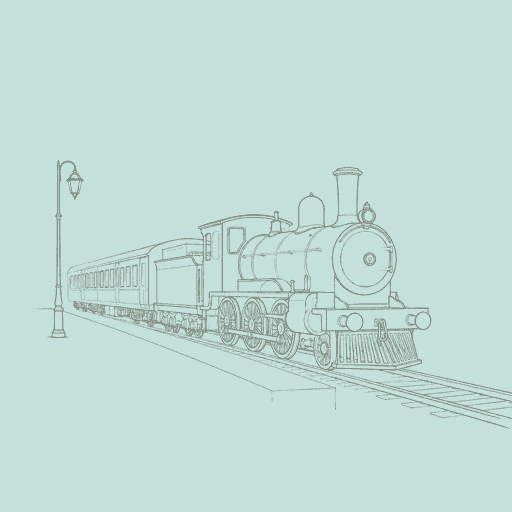
Watching memories of his life with Maggie, Wilbur’s ghost expresses a deep wish that he could have slowed those days down or stopped them from passing entirely. He fantasizes about halting the “train” of time to live forever within a happy moment with her.
Chapter 56 Summary: “Confetti”
In the bookshop’s back office, Wilbur looks at a Venice guidebook while planning his honeymoon. His friend Charlie enters, excitedly showing him a magazine article celebrating Wilbur’s business success. The Midnight Train suddenly arrives, and Agnes explains that happy memories pass quickly because they have less to teach.
The train stops at Wilbur and Maggie’s wedding. The Ghost watches them exit the church into a shower of confetti thrown by their guests, including a proud Alfred and a beaming Charlie and Claudette. The Ghost regrets not having spent more time with his mother that day. Agnes summons him back to the train, promising the next stop is the honeymoon in Venice. She sternly warns him not to interact with his younger self.
Chapter 57 Summary: “Hotel Proserpina”
The train arrives in Venice on August 9, 1974. The Ghost sees his younger self and Maggie arrive by water taxi at the Hotel Proserpina. He notes that his ghostly appearance is identical to how he looked on that day. Awed by the city, they check in with the receptionist, Gabriella. As the couple heads to the reception desk, Wilbur seems to sense his ghost’s presence. The Ghost feels angry at his past self for not appreciating the happiness he had.
Chapter 58 Summary: “Time”
The Ghost observes Wilbur and Maggie on their honeymoon, blissfully happy while drinking wine at a café. They wander through the city, and Maggie sings “Bridge Over Troubled Water,” a song that reminds the Ghost of playing the piano on the day he died. He follows them, soaking in the details of a day he now recognizes as one of his life’s best.
Chapter 59 Summary: “The Summit of Life”
While walking beside a canal, Wilbur tells Maggie he loves her. The Ghost identifies this as the absolute peak of his happiness. Wilbur spontaneously jokes about selling the shop and moving to Venice. The Ghost knows that Wilbur is scheduled to meet with a bank manager, Geoffrey Baxter, about a loan for a second shop upon his return. He whispers unheard warnings to his younger self, begging him to hold onto this feeling. On the Rialto Bridge, Wilbur sees the Ghost and stares in shock. When the train whistle blows, the Ghost defies Agnes’s command and decides to stay.
Chapter 60 Summary: “The Rialto Bridge and the Quantum Wave Function”
The Ghost informs Agnes he is not returning to the train, determined to remain in this happy memory. Nearby, Maggie tells Wilbur he looks like he has seen a ghost. Convinced he can alter the past, the Ghost recalls his friend Charlie’s ideas about quantum physics. Agnes warns him that if he is present when his living self falls asleep, his own eternity will be erased. The living Wilbur will not die but will dream of his future and then, she says, he will probably wake up, though the outcome is uncertain. Seeing a chance to save his younger self by showing him the consequences of his choices, the Ghost runs toward the hotel, ignoring Agnes’s pleas that his actions are dangerously unpredictable.
Chapter 61 Summary: “Titian”
Wilbur and Maggie visit a church to see a Titian painting. The dark church and the art make Wilbur uneasy, and he is further unsettled by the memory of seeing his doppelgänger on the bridge. He urges Maggie to leave. On the walk back to the hotel, Wilbur suddenly declares that he will accept the loan from the Yorkshire Bank to open a second bookshop. Maggie expresses concern that the expanding business will pull them apart. Wilbur dismisses her fears, insisting that financial success will give them more freedom. The Ghost watches in despair, knowing his younger self’s logic is tragically flawed.
Chapter 62 Summary: “The Tune She Was Humming”
Back in their hotel room, Maggie takes a bath while an exhausted Wilbur lies on the bed. He plans to surprise her with a visit to a jazz bar after dinner. As he listens to her humming, he forgets about the strange encounter on the bridge and drifts off to sleep. The Ghost watches over him, waiting.
Chapter 63 Summary: “Death’s Brother”
The Ghost reflects on the link between sleep and death. He feels he is acting as his own protector, sacrificing his afterlife to save his living self from making the same mistakes. He accepts that he is now a brother to himself, filling the role once held by Dougie, and waits to see what will happen now that the barrier between the living and the dead has been crossed.
Chapter 64 Summary: “The Dreamer”
The hotel room dissolves into darkness and is replaced by a train station platform with a sign reading “Wilbur.” The sleeping Wilbur is now lying on a bench. He awakens, sees the Ghost, and calmly accepts that he is dreaming. The Ghost names his younger self “the Dreamer.” A train approaches, and Agnes shouts for them to jump aboard. The Dreamer recognizes the engine as “the Duke of Gloucester,” the train his brother Dougie gave him as a child, before the Ghost pulls him onto the moving train. Inside, the Dreamer recognizes Agnes as Mrs. Bagdale, the former bookshop owner. She explains that he will be shown his actual future, not a dream. To prove it, the Ghost recounts moments when the Dreamer sensed his presence, culminating in the sighting on the Rialto Bridge. The Dreamer finally believes, and as Venice appears outside the train window, the journey into his future begins.
Chapters 49-64 Analysis
Wilbur’s nightmare about Dougie’s death illustrates the theme of Confronting Pain as a Condition for Healing. Maggie offers her husband a chance to open up about his lingering guilt over the accident when she asks him about the dream’s content. However, Wilbur’s claim that he doesn’t remember the nightmare demonstrates his resistance to confronting the painful emotions associated with the incident. The sycamore’s transformation into a suffocating monster in the dream visually conveys the tree’s role as a symbolic manifestation of Wilbur’s suppressed trauma. His inability to confront his brother’s death, signified by his avoidance of driving past the sycamore, ultimately smothers joy from his life. Though his love for Maggie provides a temporary reprieve from his grief, allowing him to feel he has “made their love into a blanket and burrowed deep under it” (162), it functions as an anesthetic rather than a cure. His refusal to share his pain with his wife reveals a fundamental barrier to true intimacy and shows that even at his best, he remains emotionally isolated. Wilbur’s avoidance of pain ensures that his trauma remains unresolved, festering beneath the surface of his happiness.
Wilbur’s first meeting with Maggie’s father, Alfred, highlights the conflict between two value systems. While Wilbur anxiously steers the conversation toward his professional achievements, detailing the bookshop’s rising turnover, Alfred offers the advice that “[l]ove is a garden. You have to keep tending to it” (166), a direct expression of the theme Cultivating Love Through Attention and Care. Wilbur, however, is unable to internalize this wisdom. His focus on business success reveals his belief that material security is the foundation of a good life, a necessary bulwark against the poverty he fears. The Ghost’s regretful commentary emphasizes young Wilbur’s failure to grasp that Alfred wants proof of his kindness, not his wealth. This scene reinforces Pursuing Material Ambition at the Expense of Self as Wilbur’s ingrained response to trauma, one that prevents him from understanding or practicing the sustained attention that love requires.
The narrative structure of Wilbur’s afterlife journey deliberately manipulates time to emphasize moments of critical choice over periods of happiness. Agnes explains that the symbol of the Midnight Train moves quickly through pleasant memories because “happiness has the least to teach us” (170), causing the joyful years of Wilbur and Maggie’s courtship and marriage to pass in a rapid montage. The narrative appears to contradict this logic in its granular examination of Wilbur’s happiest memory, his honeymoon in Venice. However, his description of the trip as “the summit of life’s mountain” conveys this moment as the apex of his achievements before a steep decline (180). By depicting Wilbur’s fateful decision to expand his business as a pivotal precipice, the narrative focuses on the intersection of his greatest joy and his most significant error, framing this period as a case study in how his life went wrong. Wilbur’s ambition demonstrates how past trauma dictates his present choices and prevents him from simply inhabiting a moment of happiness with his new wife.
In these chapters, Wilbur’s journey on the Midnight Train transforms from regretful reflection into an active attempt at redemption. By drawing attention to his presence on the Rialto Bridge, the Ghost defies Agnes’s warnings and intervenes in his own past. This decision to force a confrontation with his younger self—whom he re-christens “the Dreamer”—is a radical act of self-compassion. The Ghost assumes the role of protector, becoming “a brother to himself” and filling the void left by Dougie’s death (194). By sacrificing his own eternity for a chance to alter his past, he reclaims agency over his own story. This plot turn breaks from the fatalistic conventions of many ghost stories, suggesting that the past is not fixed and that healing requires a direct, forceful engagement with the choices that caused the most harm. The Ghost’s intervention is the ultimate expression of confronting pain, as he risks nonexistence to force his younger self to witness the future consequences of his emotional avoidance and unchecked ambition.

Get in-depth, chapter-by-chapter summaries and analysis from our literary experts.
- Grasp challenging concepts with clear, comprehensive explanations
- Revisit key plot points and ideas without rereading the book
- Share impressive insights in classes and book clubs