Summaries & Analyses
Author Insights
Quizzes
NEWReading Tools
Prologue-Chapter 13Chapter Summaries & Analyses
Content Warning: This section of the guide includes discussion of illness and death.
Prologue Summary: “Honeymoon”
In 1974, honeymooners Wilbur and Maggie Budd hold hands and kiss as they cross the Lagoon of Venice. Wilbur assures Maggie that time will never change their love for each other. As they walk through Venice’s streets, Wilbur feels unprecedented happiness and half-jokingly suggests that he could sell his business and they could move there. They approach the Rialto Bridge, and Wilbur sees a semi-transparent man who is his doppelganger. The ghostly figure waves and Wilbur hears the sound of an invisible train.
Chapter 1 Summary: “The Thread”
Fifty-two years later, an elderly Wilbur is at his home in Bedfordshire. After a piano lesson, he feels lightheaded. He begins practicing when the landline phone rings. To his shock, the caller is his ex-wife, Maggie, whom he has not spoken to in decades. During their awkward conversation, he learns she received a Facebook message he sent six years ago but didn’t know what to say. He tells her he has just been playing “Bridge Over Troubled Water,” remembering how she loved it. Maggie mentions she recently had a vivid dream about them being happy together. The call ends with the two agreeing to speak again soon.
Chapter 2 Summary: “A Fragment”
Feeling breathless after his phone call with Maggie, Wilbur feels a sudden need to find the letter she wrote when she left him. He searches his attic, feeling increasingly unwell, and finds the final page. In the letter, Maggie expresses her heartbreak, explaining she is leaving because Wilbur is never fully present. She states that although their relationship is over, she believes their love still exists in memory and concludes, “I will meet you there” (16).
Chapter 3 Summary: “Miles Away”
While reading the last page of Maggie’s letter, Wilbur is overwhelmed by a sharp pain in his neck that spreads down his arm, accompanied by crushing pressure in his chest. He staggers outside, hoping to get the attention of his gardener, Josh, who is on a tractor-mower. Wilbur collapses on the lawn before he can reach him. The page from the letter lies on the kitchen floor inside the house.
Chapter 4 Summary: “The Wilbur Station”
Wilbur does not regain consciousness and dies in the hospital just after midnight. He first experiences a sense of calm within a soft yellow light, which then gives way to the feeling of landing back inside a body. He finds himself on a desolate train platform with a sign that reads “WILBUR.” A small cardboard ticket materializes in his hand for a single journey on the Midnight Train, scheduled to depart at 00:01.
Chapter 5 Summary: “The Midnight Train”
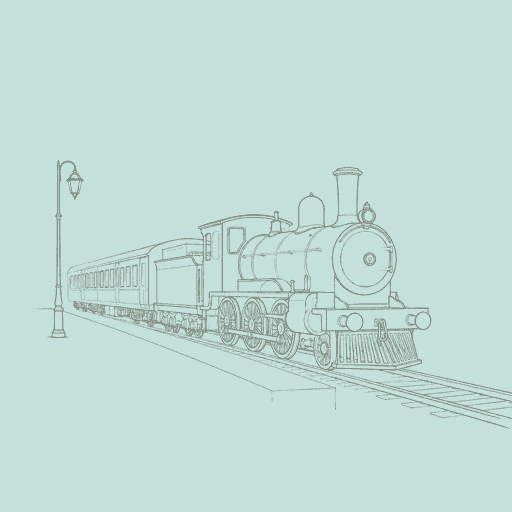
Wilbur realizes his body feels young and healthy, without any of his elderly aches and pains. Looking down, he sees he is wearing the same 1970s-style flared jeans, shirt, and sandals he wore on his honeymoon in Venice. He feels the tight skin and sideburns of his 29-year-old self. A gleaming steam engine named “THE MIDNIGHT TRAIN” pulls into the station. A woman in old-fashioned clothes gets off, introduces herself as Agnes, and says she has been expecting him. Confused and scared, Wilbur demands to know what is happening.
Chapter 6 Summary: “What Agnes Was Talking About”
Agnes reveals that she is Mrs. Agnes Bagdale, the original owner of a Sheffield bookshop Wilbur knew as a child. Wilbur remembers her as the formidable old woman who used to sit in the shop after her son, Arthur, took over. Agnes, however, now appears as she did in her prime in 1921, a year before she opened the shop after her husband died in the war. She promises to explain everything to the bewildered Wilbur.
Chapter 7 Summary: “Agnes’s Choice”
Agnes explains she is a ghost assigned to guide Wilbur through a review of his own life. The Midnight Train, she says, is a journey all souls take after death. His appearance as a 29-year-old signifies the age when he was “closest to his true self” (28). This journey will allow him to revisit his past as an unseen observer before reaching his final destination, eternity, where he can reunite with loved ones like his brother, Dougie, and with Maggie after she dies. She clarifies that his happiness there depends on understanding his past life. After some hesitation, Wilbur hands Agnes his ticket and boards the train.
Chapter 8 Summary: “The Yellow Sky”
Inside an old-fashioned carriage, Wilbur is startled by his reflection, confirming he is once again the 29-year-old man from his honeymoon. Looking out the window, Wilbur sees a strange, shifting landscape under a jaundiced yellow sky, with buildings that seem to float like boats. When he asks where they are going, Agnes corrects him, stating the question is not “where,” but “when.”
Chapter 9 Summary: “True Self”
The sky outside the train window displays scenes from Wilbur’s past. He witnesses his father’s Hurricane plane exploding during World War II—a traumatic event he has imagined his whole life but never saw. Agnes explains these are deep, inherited memories. The vision triggers a sudden, overwhelming grief for the father he never met. The train soon comes to a stop beside a broken wall and an expanse of rubble. Agnes instructs Wilbur to get off, explore his past, and return to the train when he hears it again.
Chapter 10 Summary: “The Time Traveler”
Wilbur steps off the train into 1945, post-war Sheffield. He recognizes the rubble as Glossop Road, the street where he grew up. He sees a group of boys playing football, among them his older brother, Dougie Budd, who is around seven years old. Wilbur calls out to him, but Dougie cannot see or hear him. A football passes directly through Wilbur’s chest, confirming he is a ghost. He watches as Dougie gets into a fight with a larger boy named Bobby Thomas.
Chapter 11 Summary: “The Dead Gazing at Their Past”
Wilbur and Dougie’s mother, Edith, arrives pushing a pram and angrily breaks up the fight. When the baby in the pram cries, Wilbur realizes it is his infant self. He follows his family home and steps through the closed door into his childhood living room, where a steel table doubles as an air-raid shelter. As his mother holds his baby self, Wilbur is stunned when the infant’s eyes lock directly on him.
Chapter 12 Summary: “The Ghost”
Now thinking of himself as “the Ghost,” Wilbur confirms that his baby self can see him. The baby’s eyes follow his movements. Edith tells Dougie she is leaving for her shift at the pub and instructs him to watch the baby. Once she is gone, Dougie comforts the crying infant by showing him a toy train, the “Duke of Gloucester.” He confesses to the baby that he stole the train from a toy shop because it was unfair that Wilbur had no toys. The Ghost is surprised by this revelation and by Dougie’s tenderness. Their moment is interrupted by a hard knock at the door.
Chapter 13 Summary: “Mr. Parkin”
The visitor is Mr. Parkin, the family’s stern landlord. As he questions Dougie about the rent, the Ghost hears the whistle of the Midnight Train arriving on the street but stays to watch the confrontation. When Dougie insists his mother left no money, Mr. Parkin vows to return the next morning. Agnes then appears beside the Ghost, scolding him for not returning to the train immediately. Onboard, Agnes confirms that babies can sometimes perceive ghosts but establishes firm rules for the journey: Wilbur must not meddle, must never speak to himself, and must always return to the train promptly. She insists this discipline is the only way for him to understand his life and reach eternity.
Prologue-Chapter 13 Analysis
By beginning with Wilbur and Maggie Budd’s honeymoon in Venice, the novel opens with a scene of idyllic promise. Maggie’s declaration, “Let’s ignore time. Let’s be Venice” (1), represents a moment of romantic idealism, suggesting that their love can overcome geographical limits and the passing of time. However, the optimistic tone of the Prologue is immediately shattered by the narrative jump of 52 years to the day of Wilbur’s solitary death. His rereading of Maggie’s divorce letter, which explains that she left him because he was “forever somewhere else, even when [he was] right next to [her]” (16), crystallizes the central conflict of Wilbur’s life. The juxtaposition of the joyful honeymoon and Wilbur’s ultimate loneliness frames his story as a retrospective investigation into the causes of his regret. This introduction establishes the novel’s core argument about Cultivating Love Through Attention and Care. Love is presented as a practice of continual care and presence that Wilbur ultimately fails to maintain.
The Prologue’s supernatural phenomena—a doppelgänger watching Wilbur and the sound of a train whistle—serve as early foreshadowing, suggesting that his life is already subject to a form of posthumous review. Upon his death, Wilbur’s arrival at a ghostly station introduces the central symbol of the Midnight Train, a vehicle for navigating memory and identity through introspection. The station sign, which reads “WILBUR,” personalizes the afterlife as a landscape of the self. The guide for this journey, Agnes, explains that Wilbur’s physical form has reverted to his 29-year-old self because this was the age at which he was “most [him].” This detail establishes Wilbur’s honeymoon—a time of connection and spontaneity—as the benchmark for his authentic self: a version of him that existed before he began Pursuing Material Ambition at the Expense of Self. The journey is thus presented as a therapeutic process, an attempt to reconcile the wealthy yet emotionally bankrupt man he has become with the hopeful young man he once was. This premise aligns with Haig’s broader work, which often uses fantastical scenarios to externalize the internal work of healing, framing the afterlife as a structured opportunity for self-understanding.
The train’s journey into Wilbur’s past grounds his personal failings in the broader context of generational trauma and historical hardship. Before the train makes its first stop, the sky outside the window displays the explosion of his father’s wartime airplane, an event Wilbur has imagined but never witnessed. Agnes calls this an inherited memory, one of the “facts pressed deep into you from before you even heard them” (30), directly linking Wilbur’s capacity for emotional suppression to his family’s unhealed wounds. This scene establishes the theme of Confronting Pain as a Condition for Healing. The death of Wilbur’s father is positioned as the foundational loss that shaped his family’s emotional landscape and, by extension, his own. The train’s destination—a bomb-scarred, post-war Sheffield—reinforces this connection. The visual image of rubble-strewn streets and the palpable financial desperation of his mother, Edith, provide the sociohistorical foundation for Wilbur’s later obsessive drive for material security. His ambition is framed as a misguided response to early-life scarcity and instability rather than simple greed.
Revisiting his childhood home allows Wilbur to witness scenes that challenge his established memories and complicate his understanding of his family. As a ghost, he observes his older brother, Dougie, comforting his infant self with a stolen toy train, the “Duke of Gloucester.” Dougie’s confession that he stole it because it was wrong for his baby brother to have no toys reveals a layer of fierce, protective love that Wilbur never knew existed. This revelation destabilizes Wilbur’s entire perception of a troubled sibling relationship that has defined much of his life, demonstrating that his perspective has always been incomplete and self-centered. The peculiar detail that his infant self can see his ghostly adult form implies a state of pre-verbal innocence where perception is purer—a clarity that his journey now seeks to recover. This journey back into his own history is not just about re-seeing events but about fundamentally re-interpreting their meaning from a more informed, emotionally open vantage point.
The narrative establishes a firm structure for Wilbur’s therapeutic journey through the character of Agnes and the rules she imposes. As his guide, Agnes is a figure from his past—the original owner of a bookshop—a detail that links Wilbur’s life review to the act of reading and interpreting a story. Her strict rules for observation—no meddling, no interaction with his past self—align the narrative with the “life review” literary tradition, in which the protagonist is an observer tasked with understanding, not altering, the past. Agnes’s insistence that “without discipline you will never understand your own story” frames the process as a structured, almost academic, exercise in self-analysis (43).

Get in-depth, chapter-by-chapter summaries and analysis from our literary experts.
- Grasp challenging concepts with clear, comprehensive explanations
- Revisit key plot points and ideas without rereading the book
- Share impressive insights in classes and book clubs