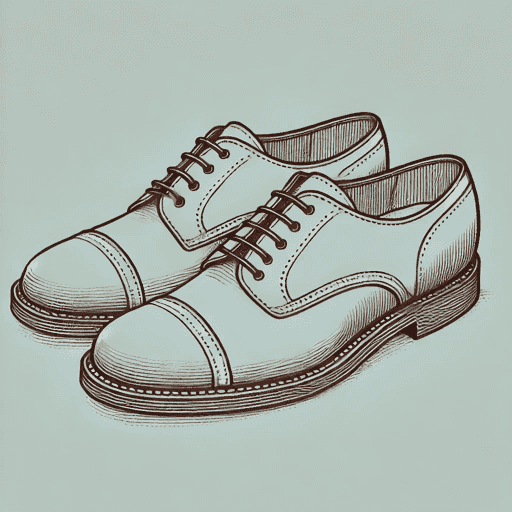
The Shoemaker's Holiday: Or the Gentle Craft
A modern alternative to SparkNotes and CliffsNotes, SuperSummary offers high-quality Study Guides with detailed chapter summaries and analysis of major themes, characters, and more.
Summaries & Analyses
Quizzes
NEWReading Tools
Important Quotes
“One gracious smile, for your celestial breath / Must send us life, or sentence us to death.”
(Prologue, Lines 17-18)
The Prologue includes an appeal from the actors to the ruling monarch (Elizabeth I at the time the play was first performed). This appeal illustrates the power of the monarchy in England during this time, which thus emphasizes the role of the King as he appears at the end of the play. The same monarch whose approval is the difference between life and death to the actors has the power to transcend the social order in a meaningful way. Thus, the play affirms the power and status of the English monarch.
“Ashamed to show his bankrupt presence here,
Became a shoemaker in Wittenberg—
A goodly science for a gentleman
Of such descent.”
(Scene 1, Lines 28-31)
The Earl of Lincoln launches into a passionate condemnation of his nephew’s behavior, revealing The Tensions of Class Mobility. As well as spending all his money and dismissing his staff, Lincoln is particularly incensed that Lacy debased himself by taking on manual labor. By becoming a shoemaker, Lacy lowered himself below his noble station and thus shamed the family far more than by simply spending too much money, with Lincoln revealing his disgust through sarcasm by calling shoemaking “A goodly science for a gentleman / Of such descent.”
“Woman, be patient. God, no doubt, will send
Thy husband safe again, but he must go.
His country’s quarrel says it shall be so.”
(Scene 1, Lines 178-180)
Ralph pleads with Lacy to help him avoid the military draft, only for Lacy to assure Ralph that he must do his duty to his country. This is ironic, given that Lacy is already planning to abscond from his responsibilities in the name of love. Lacy dictates one rule for working class people while he, as a member of the nobility, does not feel bound by the same rules.
“Here as a thief am I imprisonéd,
For my dear Lacy’s sake, within those walls,
Which by my father’s cost were builded up
For better purposes.”
(Scene 2, Lines 11-14)
Rose’s father has worked hard to build his family’s fortunes. They live in a large house and, as the Lord Mayor, he wields much power. To Rose, however, this wealth and status is a reminder of her limitations. She feels trapped by the house (“imprisoned”); in spite of the apparent luxury surrounding her, there is an inherent limit on her social mobility, a limit that is recognized and policed by her father. Her dilemma reflects The Tensions of Class Mobility.
“It is no shame for Rowland Lacy then
To clothe his cunning with the Gentle Craft.”
(Scene 3, Lines 3-4)
Whereas the Earl of Lincoln is ashamed that his nephew took up work as a shoemaker, Lacy himself is less concerned. He explicitly insists that he feels “no shame” in transgressing social class in this manner, while also employing the language of the tradesman—the “Gentle Craft” (3.4)—in such a way to show his sincere engagement with the industry. Lacy may be adopting working-class identity as a disguise, but he respects other social classes more than his fellow nobles, suggesting Labor as Civic Virtue and Alternative Heroism.
“Hodge and I have the vantage, we must drink first,
because we are the eldest journeymen.”
(Scene 4, Lines 85-86)
Social class holds sway over the characters in many ways. Even among members of the same social class, a recognition of internal hierarchy exists. Regardless of the limitations of their status and power, figures like Firk and Hodge seek to maintain what few privileges that they have by exercising their presumed rights as senior members of the profession.
“I hope we shall find better sport today.”
(Scene 5, Line 16)
Master Hammon is introduced mid-hunt, yet the true object of his pursuit is more romantic than game. Later, Hammon shows how he is willing to flirt with Rose even if he has little interest in actually marrying her. For him, this flirtation and this possibility of romance is the real “sport” (5.16). The deer is quickly forgotten as Hammon is distracted by romantic possibilities.
“This Hammon is a proper gentleman,
A citizen by birth, fairly allied,
How fit an husband were he for my girl?”
(Scene 6, Lines 58-60)
Oatley is intrigued by the arrival of Hammon because he believes that Hammon is a more suitable husband for his daughter than Lacy. He tries to will the marriage into existence in spite of both Rose and Hammon being more interested in other people. The contrast between their lack of interest and Oatley’s desire to manifest the marriage shows how Oatley is more invested in preserving class hierarchies than allowing true love to flourish.
“Mine liever broder Firk, bringt Meester Eyre tot den signe van
spannekin.”
(Scene 7, Lines 7-8)
Thanks to his past experiences, Lacy actually speaks Dutch, just as he is actually able to make shoes. He adopts the disguise of a Dutch shoemaker as more than just a pantomime performance of working-class non-Englishness. Instead, his disguise functions as a sincere, respectful, and intelligent recognition of the validity of other identities.
“I saw him shipped, and a thousand eyes beside
Were witness to the farewells which he gave
When I with weeping eyes bid him adieu.”
(Scene 8, Lines 16-18)
The Earl of Lincoln feels betrayed by Lacy, just as he felt ashamed when he learned that Lacy became a shoemaker in Wittenberg to pay his debts. Lincoln’s shame stems from his feeling that Lacy is betraying their social class. Not only has Lacy shown a willingness to perform manual labor, but he has now abandoned his country in a time of need. For Lincoln, this is an affront to his understanding of class identity. More than squandered money or personal betrayal, this refusal of noble duty is what offends Lincoln the most.
“Love loves to sport; therefore leave love, you’re best.”
(Scene 9, Line 18)
The witty banter exchanged by Rose and Hammon reveals a fondness for the more flippant aspects of romance, while also showing why Oatley’s proposed marriage is dead on arrival. Rose and Hammon are simply too interested in other people to fully commit to their flirtation. Their interaction is mechanical and perfunctory, as they swap flirtatious comments and wordplay that is ultimately meaningless.
“Art thou acquainted with never a farthingale-maker,
nor a French-hood-maker? I must enlarge my bum. Ha, ha! How
shall I look in a hood, I wonder?”
(Scene 10, Lines 30-32)
Margery is elevated alongside her successful husband. As Simon Eyre begins to adopt the aesthetics of office, she begins to do the same. She imagines herself in a French hood or with wooden heels on her shoes, both fashionable indicators of wealth and status. Her joking attitude, however, reveals that she still sees herself as the same working-class person. She may dress herself in a wealthy manner, but Margery remains aware of her own class identity.
“’Twas a fair gift of God the infirmity took not hold a little
higher, considering thou camest from France.”
(Scene 10, Lines 63-64)
When Ralph returns to the workshop, he bears the scars of war. Ralph has suffered in the name of his country and this is recognized by the other characters, who wish to treat him with the same respect befitting a colleague without any of the mockery they might direct at others. The workers joke about his injuries, but in a way that elevates his service and imbues Ralph with dignity and honor, reflecting Labor as Civic Virtue and Alternative Heroism.
“I would bestow upon that peevish girl
A thousand marks more than I mean to give her,
Upon condition she’d be ruled by me.”
(Scene 11, Lines 28-30)
Oatley tries to use his wealth and power to influence his daughter but instead is made to recognize his own limitations. He believes that his daughter, as a woman, should be ruled by her father. When she refuses, Oatley realizes that there is little he can do to force her to marry anyone other than Lacy. He also regards money as a weapon of control, vowing he would give “A thousand marks more” to her in exchange for her obedience. His transactional view of relationships contrasts with the sincerity of Lacy and Rose’s love.
“I hate you not.”
(Scene 12, Line 44)
Jane insists that she does not hate Hammon; she refuses to marry him because she does not love him. The respectful way in which she—as a woman mourning the absence of her husband—explains this to the entitled Hammon shows the imbalance in power and station. Hammon, wealthy man from a higher social class, cannot understand why she simply does not reciprocate his interest. He cannot imagine her indifference, as this feels like he is being ignored. Her plight speaks to Sexism and the Under-Valued Role of Women in Business.
“Hark, butter-box, now you must yelp out some sprecken.”
(Scene 13, Line 50)
The term “butter-box” (13.50) is a slang term for Dutch people who, in Dekker’s Britain, were thought to be consumers of large quantities of butter. The way the fellow shoemakers use the term when addressing Lacy (disguised as Hans) shows how class solidarity transcends nationalism. They affectionately refer to Lacy in this manner; though they believe him to be Dutch, they also view him as one of their own.
“Against tomorrow morning I’ll provide
A lusty crew of honest shoemakers
To watch the going of the bride to church.”
(Scene 14, Lines 59-61)
The solidarity among the shoemakers is shown in their readiness to help Ralph. At the beginning of the play, the fellow shoemakers tried to convince people to let Ralph remain at home. After he has returned from war, they leap to his defense again as he seeks the help of “a lusty crew of honest shoemakers” (14.60) to win back his wife. There is never any doubt among the shoemakers (or for Ralph) that they will help.
“Well done. Fit my daughter well, and she shall please thee
well.”
(Scene 15, Lines 33-34)
Oatley looks at Hans but does not see through the disguise. While Rose was able to recognize Lacy at once, Oatley sees only a shoemaker. Oatley’s fixed view of social class means that he does not imagine that the nephew of the Earl of Lincoln would ever debase himself in this fashion. His speech also contains a degree of dramatic irony, as Lacy does indeed “fit [Rose] well” as a match and she does “please [him] well” in return, even though Oatley does not realize the humorous implications of what he is saying.
“Shall I betray my brother? No.”
(Scene 16, Line 95)
When talking about the potential marriage between Lacy and Rose, Firk refuses to give in to their demands for information. While they may be from an elevated social class, Firk does not feel compelled to do as they say. This suggests that the working class of London are not as disempowered as they may seem.
“By mine
honor, Rowland Lacy, none but the king shall wrong thee.”
(Scene 17, Lines 5-6)
Eyre is willing to challenge the conventions of social class in a playful manner, entertaining the fluidity of his own position as well as Lacy’s disguise as a shoemaker. In this respect, however, Eyre is always respectful of the King as the ultimate arbiter of social order. Only the King can wrong Lacy, Eyre declares, revealing the limitations of his solidarity with a fellow shoemaker.
“My masters, as we are the
brave bloods of shoemakers, heirs apparent to Saint Hugh, and
perpetual benefactors to all good fellows, thou shalt have no wrong.”
(Scene 18, Lines 1-3)
The way the shoemakers talk about themselves shows that they have developed their own discreet identity around their trade. They are the “heirs apparent to Saint Hugh” (18.2), forming a familial bond that transcends their professional obligations. Together, they feel empowered enough to take on people from higher social classes such as Hammon while also feeling proud of who they are, reflecting Labor as Civic Virtue and Alternative Heroism.
“But all my doubt is, when we come in presence,
His madness will be dashed clean out of countenance.”
(Scene 19, Lines 11-12)
The King is intrigued by the rise of Simon Eyre, but also aware of the way in which manner people change their behavior around him. The true mark of Eyre’s character, from the King’s perspective, will be the extent to which he remains honest to himself when they meet.
“Let your fellow prentices want no
cheer, let wine be plentiful as beer, and beer as water.”
(Scene 20, Lines 7-8)
Simon Eyre’s means of celebrating remain the same as they did at the start of the play. In the beginning, he encouraged his apprentices to start work with promises of beer and food. Now, in his position as Lord Mayor, he makes good on that promise by delivering them a feast. The continuity of his behavior shows that—in spite of his newfound status—he remains the same Simon Eyre.
“I am content with what your Grace hath done.”
(Scene 21, Line 115)
Throughout the play, Oatley seeks to police The Tensions of Class Mobility by refusing to allow his daughter to marry Lacy. When the King grants his permission and knights Lacy, thus elevating Rose’s social status, Oatley is left without complaint. Since the King is the pinnacle of the social order, Oatley has no argument left to deny his daughter’s marriage and must remain “content” with what has happened.
“When all our sports and banquetings are done,
Wars must right wrongs which Frenchmen have begun.”
(Scene 21, Lines 187-188)
As the play draws to a close, the King reflects on the rise of Simon Eyre and the blurring of the lines between social classes. While these are amusing social distractions for the King, his closing line affirms the importance of the state. They can enjoy their banquets and distractions for now, but the importance of the war against the French has not diminished.

Unlock every key quote and its meaning
Get 25 quotes with page numbers and clear analysis to help you reference, write, and discuss with confidence.
- Cite quotes accurately with exact page numbers
- Understand what each quote really means
- Strengthen your analysis in essays or discussions
Related Titles
By Thomas Dekker
