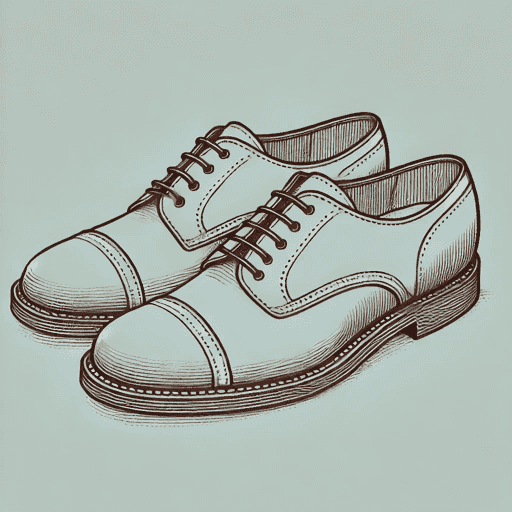
The Shoemaker's Holiday: Or the Gentle Craft
A modern alternative to SparkNotes and CliffsNotes, SuperSummary offers high-quality Study Guides with detailed chapter summaries and analysis of major themes, characters, and more.
Summaries & Analyses
Quizzes
NEWReading Tools
Prologue-Scene 2Scene Summaries & Analyses
Prologue Summary
In a short prologue, an actor takes to the stage and likens himself and his fellow actors to “wretches in a storm” (Prologue.1). He hopes to be rescued, but he is also concerned about how the Queen, who is the presumed audience for his speech, will feel about the forthcoming play. He encourages the audience and the monarch to receive the play in good humor, hoping that their reactions will give confidence to the actors. Condemnation, he warns, could “sentence [them] to death” (Prologue.18).
Scene 1 Summary
The Earl of Lincoln meets with Oatley, the Lord Mayor. They exchange pleasantries, then Lincoln addresses their shared problem: The Earl’s nephew, Rowland Lacy, is in love with Rose, the Lord Mayor’s daughter. Oatley is not pleased by the way his daughter has pursued Lacy, since he believes that she is not from a high enough social class to marry someone of “high birth” (1.11). Lincoln pushes back on Oatley’s criticisms, but Oatley emphasizes his belief in the importance of a strict social order. The spending habits of a nobleman, he claims, would quickly work through his daughter’s money.
Lincoln criticizes Lacy, remembering how he asked for money to spend on his travels. Lincoln sent his nephew away with money and servants, only for Lacy to spend everything so quickly that he needed to “become a shoemaker in Wittenberg” (1.29) to support himself. He agrees that Lacy would spend Rose’s money and suggests that “some honest citizen” (1.36) can be found for her. This pleases Oatley, though he notes in an aside that Lincoln is cunning and self-interested. Lincoln turns the conversation to a new subject: The King of England has given Lacy a position of command in the army in the upcoming invasion of France.
Captain Lovell enters with Lacy and Lacy’s cousin, Askew, in attendance. Lovell reveals that the King has ordered Lacy to set sail for France in four days. Lincoln offers his assurances that his nephew will do as commanded, so Lovell leaves. Lacy discusses how his troops have been assembled across the city and surrounding areas. Oatley offers his own financial support, then exits, which prompts Lincoln to think of the offer as a bribe from Oatley to rid himself of Lacy’s interest in Rose.
Lincoln issues a warning to Lacy to drop his interest in Rose. Lacy is Lincoln’s heir, the Earl says, and his obedience is important. Lacy promises to bring “honor” (1.96) to the family name. The promise is enough to satisfy Lincoln, who offers money to Lacy and Askew before departing so that they may prepare for France. With Lincoln gone, Lacy tells Askew that he will delay his departure for three days so that he may address a personal matter. Askew should take the troops to Dover and prepare to cross the English Channel. He will meet them in Dover, or else in France. Askew remains loyal to Lacy but warns him that Lincoln and others have Lacy under close surveillance. They are waiting for him to make a mistake.
A noisy crowd interrupts the conversation. Simon Eyre, the “mad shoemaker of Tower Hill” (1.127) and loud public figure, appears with his wife, Margery, and two workers from his factory, Firk and Hodge. Ralph and Jane, two young newlyweds, are also in attendance. Ralph is a soldier under Lacy’s command, so Jane pleads with Lacy to “discharge” (1.148) Ralph of his duties. Eyre delivers his own blustering overview of the situation and promises a supply of boots for Lacy’s soldiers, should Ralph be released. Margery, Hodge, and Firk also offer support for Ralph.
Lacy dismisses their request. In a dignified manner, Ralph comes to terms with his fate as Jane cries for him. Eyre loudly praises the young man. Lacy shakes Ralph’s hand, moved by the praise, while Askew promises to take care of Ralph, who is given gifts by the shoemakers who want Ralph to fight for the honor of their profession. In turn, Ralph gives Jane a pair of shoes, made by him especially for her to “remember [him], and pray for [his] return” (1.233). The sound of a drum and the appearance of Dodger, Lincoln’s attendant, summons the characters to muster.
Scene 2 Summary
At the Old Ford, Rose (the Lord Mayor’s daughter) makes a flower garland while thinking of her lover, Lacy. She believes that her father is cruel for not permitting her marriage to Lacy. She feels trapped in her home, though she fears that Lacy is suffering even more because of their separation.
Sybil, Rose’s maid, brings a message from London. Rose ignores her family’s greetings and asks instead about Lacy. Sybil does not approve of Lacy’s arrogant attitude, but concedes that she saw him. Rose refuses to entertain Sybil’s negative view of Lacy, whom she loves. She orders Sybil to travel to London to find out what is happening with Lacy’s departure, offering Sybil a financial incentive if she brings back news. Sybil departs and Rose returns to her state of mournful longing for Lacy’s “lost company” (2.63).
Prologue-Scene 2 Analysis
The Prologue of The Shoemaker’s Holiday is not always included in printed versions of the text. Though the Prologue was included in the first version of the play—as performed in front of Elizabeth I—it was not included in subsequent editions of the play. The inclusion of the Prologue is thus a significant insight into the nature of theater in the Elizabethan age. The opening lines of the play, addressed directly to the ruling monarch and the most significant presence in the audience of the first performance, is an endorsement of the monarchy itself. After speaking of himself and his fellow actors in disparaging terms, the actor admits that the approval (or disapproval) of the Queen could “sentence [them] to death” (Prologue.18). This not only speaks to the power of the monarch over their subjects, but also over the theater itself: Royal approval for a play or an acting troupe was essential for financial and professional success. Thus, the play’s prologue establishes the primacy and power of the monarchy. While the play challenges social class in many ways, the inclusion of the Prologue still errs on the side of caution by upholding the social order.
The opening scene introduces the theme of The Tensions of Class Mobility. The Earl of Lincoln (a member of the aristocracy) and the Lord Mayor of London (a wealthy man, but not a noble) discuss the potential marriage between their children. Oatley is the more insistent of the two, declaring that “poor citizens must not with courtiers wed” (1.12). He disapproves of his daughter falling in love with a man from a higher social class. Lincoln is not as strident in his condemnation, but his discussion of Lacy’s shortcomings reveal that transgression against social class is a major source of his irritation. Lincoln is less concerned about the money that Lacy spent and squandered while abroad and more concerned that he became a manual laborer to support himself. This, for Lincoln, is a shameful transgression of social class. Both men are policing the boundaries of class mobility and thus setting out the obstacles that must be overcome by the lovers.
Lacy is criticized by his uncle for offences to their elevated status, yet it is hypocrisy that is most evident in the opening scenes. Whereas Lacy’s transgressions against social class are discussed passively between other people, his betrayal of his duty is an active decision. While Lacy is assigned a command in the English army in the upcoming war with France, he abandons this duty so that he can remain close to Rose, all while telling the working-class Ralph that he must do his patriotic duty and go to war. Lacy ignores Ralph’s appeals to be excused from the war, then deserts himself. This hypocrisy speaks to Lacy’s desperate desire to remain close to Rose, but also to his sense of aristocratic entitlement. The rules are for other people, he believes, not for him. As such, Lacy shows a willingness to challenge social class, but also shows the sense of prerogative and privilege that affirms his status as a nobleman.

Get in-depth, chapter-by-chapter summaries and analysis from our literary experts.
- Grasp challenging concepts with clear, comprehensive explanations
- Revisit key plot points and ideas without rereading the book
- Share impressive insights in classes and book clubs
Related Titles
By Thomas Dekker
