The Shoemaker's Holiday: Or the Gentle Craft
A modern alternative to SparkNotes and CliffsNotes, SuperSummary offers high-quality Study Guides with detailed chapter summaries and analysis of major themes, characters, and more.
Summaries & Analyses
Quizzes
NEWReading Tools
Symbols & Motifs
Shoes and Clothing
The characters in The Shoemaker’s Holiday recognize the significance of clothing as a signifier of social class and status, transforming shoes and clothes into an important motif. As he rises in the world, Simon Eyre begins to wear a gold chain that represents his newfound status. Likewise, this elevation is reflected in Margery’s choice of clothing. Eyre tells his wife to don her “trinkets” (10.142), with Margery herself joking about donning a fashionable “French-hood” (10.31) to show off to other people how much the Eyres are rising up in the social order of London. In this way, clothing functions as a recognized symbol of wealth and status.
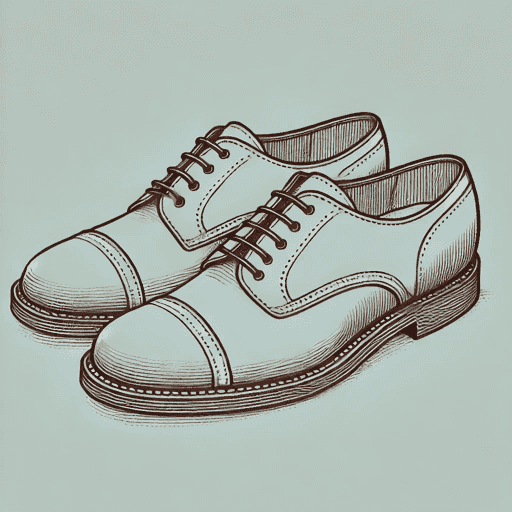
Shoes have a much deeper, more personal symbolism in the play. In the confined and fixed social order of London, the act of making a shoe is somewhat transgressive. Shoemaking is manual labor and thus performed by working-class people, yet people from all social classes need to have shoes made. The shoemakers, therefore, are required to interact with people of higher social classes—and particularly upper-class women—in an intimate fashion. This intimacy is recognized by the characters in the play: Ralph gives Jane a shoe by which to remember him, and then is able to recognize the shape of her shoes immediately.
Shoemaking is also important as a means of constructing identity in the play. Lacy, disguised as Hans, adopts this identity for himself and engages with it in sincere fashion. He shows the level of intimacy entrusted to shoemakers when he visits Rose, then joins with his fellow shoemakers as they celebrate. He may be from a different social class, but his talent as a shoemaker makes him a member of a social identity that is significant in its own right.
The Workshop
The shoemakers’ workshop becomes a symbolic space that embodies an alternative model of social organization. The workshop is first and foremost a workplace, somewhere the shoemakers can practice their trade with dignity and respect. Rather than presenting work as a burdensome necessity, the play imbues shoemaking with energy and purpose, largely through the figure of Simon Eyre. His exuberant leadership transforms the act of labor into a collective celebration, as seen in his repeated calls for the workers to drink and be merry before the workday even begins. This approach establishes a tone of inclusivity and shared enthusiasm that permeates the workshop. The workers refer to one another as “my hearts” (18.213), forging a sense of camaraderie that goes beyond shared economic interest. This stands in contrast to the aristocratic world depicted elsewhere in the play, where status is inherited and relationships are often governed by power rather than mutual respect.
The interpersonal relationships within the workshop further develop its symbolic importance as a model of ideal community. The shoemakers are bound together by a strong sense of mutual responsibility, which becomes particularly evident in their treatment of Ralph. Upon his return from the wars, injured and vulnerable, Ralph is not marginalized but reintegrated into the group, reflecting a collective commitment to the well-being of each member. This dynamic sharply contrasts with the more fragmented relationships among the play’s upper-class characters, where authority figures often seek to control the actions of others, as in the case of Rose’s father.
At a broader level, the workshop functions as a symbolic blueprint for the city of London itself, illustrating the values that the play envisions as essential to civic harmony. The egalitarian spirit of the shoemakers suggests that social cohesion arises from shared participation in meaningful work rather than inherited structures of rank. This idea is reinforced by the way in which the workshop accommodates individuals of varying circumstances, integrating newcomers and supporting those in need. The Dutchman Hans (actually Lacy in disguise) is quickly welcomed into the workshop and integrated into the group, showing the multicultural, inclusive spirit of the workshop and the city as a whole. The emphasis on collective identity over individual distinction aligns with the play’s larger redefinition of heroism, shifting focus from singular acts of valor to the sustained contributions of ordinary people.
London
In the play, London is a symbol of social possibility, economic vitality, and civic unity. The city is portrayed as a living organism in which classes and individuals intersect, creating a complex but harmonious social fabric. The prominence of the shoemaking trade underscores the importance of artisanal labor in sustaining the city’s economy, positioning workers as essential contributors to its success. Simon Eyre’s rise from master shoemaker to Lord Mayor exemplifies the opportunities afforded by this commercial environment, illustrating how economic achievement can translate into social and political power.
At the same time, London serves as a space where different social groups come into contact, creating opportunities for conflict and integration. The interactions between aristocratic and working-class characters reveal the fluidity of urban identity, as individuals navigate and sometimes transcend the boundaries that define their positions. Lacy’s disguise as a Dutch shoemaker allows him to move between social worlds, demonstrating the extent to which identity can be reshaped within the city. This fluidity is further reflected in the relationships that develop across class lines, particularly in the romantic plot involving Rose and Lacy. While these interactions expose the tensions between personal desire and social expectation, they also suggest the potential for reconciliation and unity. London, in this sense, symbolizes a space of negotiation, where traditional hierarchies are challenged but not entirely dismantled.
Though the majority of the play is set in London, Ralph is sent abroad to fight in the war against France. In this sense, London becomes a symbol of martial motivation, representing everything ordinary people like Ralph are fighting for. The civic unity and celebration represented by the play becomes something to defend.

Unlock the meaning behind every key symbol & motif
See how recurring imagery, objects, and ideas shape the narrative.
- Explore how the author builds meaning through symbolism
- Understand what symbols & motifs represent in the text
- Connect recurring ideas to themes, characters, and events
Related Titles
By Thomas Dekker
