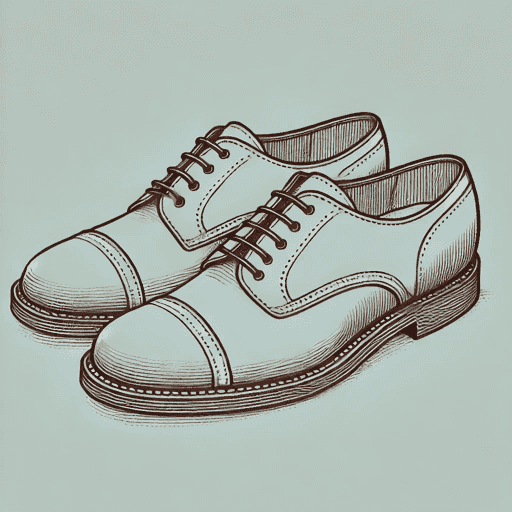
The Shoemaker's Holiday: Or the Gentle Craft
A modern alternative to SparkNotes and CliffsNotes, SuperSummary offers high-quality Study Guides with detailed chapter summaries and analysis of major themes, characters, and more.
Summaries & Analyses
Quizzes
NEWReading Tools
Scenes 9-14Scene Summaries & Analyses
Scene 9 Summary
The Lord Mayor speaks to his nephew, Master Scott. He reveals his plan to arrange a marriage between his daughter and Master Hammon. Scott, he hopes, will be a witness at the wedding.
Rose enters with Hammon; their conversation quickly reveals that they are not fond of one another. Rose rejects his flirtations, his “flattery” (9.7), and his declarations of love, offering only scathing and witty putdowns in response. Hammon intervenes, offering his own declarations of love, but Rose roundly rejects every approach. She would rather be a maid, she says, than agree to her father’s plans for her marriage. Oatley scolds the “obstinate” (9.32) Rose, though Hammon is not offended by the rejection. Privately, Hammon notes that he is much more interested in another woman.
Angry at his daughter and certain that she is still in love with Lacy, Oatley sends her back to Old Ford to be closely watched. Once Rose is gone, Oatley discusses business matters with Scott. Both men are shocked by the sudden rise of Simon Eyre, who has recently made a fortune in the business world. Oatley has asked Eyre to come to the guildhall.
When Eyre arrives, he modestly dismisses himself as a humble shoemaker. Oatley responds that he is debating whether to appoint Eyre to be the sheriff of London. Dodger brings a message from Lincoln, who asks for information about Lacy. Though Oatley claims to know nothing, he offers Dodger money in private to find Lacy and to send him to France.
Scene 10 Summary
Margery is at home, fretting about the recent business dealings that have made her husband a wealthy man. She tells Firk to go to the guildhall and learn whether Eyre has been appointed as sheriff, the latest “worshipful vocation” (10.4-5) that he has taken upon himself.
In the meantime, she speaks to Hodge and Lacy (who is still in disguise as Hans) about recent events. She jokes about the fashionable clothes that she must now wear as the wife of a wealthy man. Ralph interrupts their conversation, having returned home from the war. He has a number of scars and walks with a limp. Hodge welcomes Ralph back, though Margery can barely recognize him. Ralph is only interested in Jane. He asks for her whereabouts. Margery says that she has not seen much of Jane since Ralph’s departure, claiming that Jane seemed to have taken on a more “stately” (10.79) demeanor in recent times. Following a quarrel, Jane and Margery have not been on good terms. She is still in London, Hodge believes. He offers to help Ralph “ferret her out” (10.95).
Firk returns with news that Simon Eyre is now sheriff of London. He recounts the event at the guildhall, referring to Margery as “Mistress Shrieve.” This new title amuses Margery, who gives Firk a coin. Eyre returns, adding further excitement with his elaborate gold chain of office. He promises that his “fine men” (10.132) will receive their own rewards, since their shared profession has led to his elevated status. Putting a French hood on his wife, he names her “a lady.” Then, remembering that he has been invited to dine with the Lord Mayor, he tells the others to prepare a Morris dance to honor the Gentle Craft of shoemaking. He leaves with his wife to attend the feast.
Scene 11 Summary
The Lord Mayor graciously welcomes Eyre and Margery to Old Ford. Eyre, in his loud and charismatic style, makes jokes to the audience of attendants and Rose, promising that he will only be serious when he is required to be.
This amuses Oatley, who then complains about the paucity of suitors for his daughter. He fears that she wants to marry a noble person of decent rank rather than a “proper gentleman of fair revenues / whom gladly [Oatley] would call son-in-law” (11.32-33). Eyre agrees with his comments, suggesting Rose needs to abandon her pursuit of courtly but vapid men. As a tradesman, he claims, he has a better life than such people.
Music plays and Eyre introduces his band of shoemakers, including the disguised Lacy. They perform a Morris dance, much to Oatley’s delight. Oatley and Eyre buy drinks for the dancers.
Meanwhile, Rose recognizes her disguised lover. Lacy, too, spots Rose, but remains in the role of Hans. Rose speaks to him, hinting that she knows his true identity. Oatley departs, heading to London on “urgent business” (11.64), giving Rose the opportunity to tell Sybil what she has learned. Sybil agrees to organize a meeting between Rose and Lacy, possibly even arranging for them to wed. Rose is grateful. She and Sybil travel with the Lord Mayor to London.
Scene 12 Summary
Outside the shop where Jane works, Master Hammon considers his options. He has tried—unsuccessfully thus far—to win Jane’s affections and he fears that “nobody loves [him]” (12.7). Still thinking of Ralph, Jane has consistently refused him.
Pretending to be another customer in need of a seamstress, Hammon enters the shop and begins to discuss products. Eventually, however, he begins to declare his affections for Jane, who politely accepts his praise while continuing to work. Hammon insists that he is serious about loving her and that she is “too coy” (12.36). He wants to marry Jane, he says, but she responds that she is still married to Ralph. He may be far away, but she still loves him.
Hammon produces a letter that, he claims, contains a list of the soldiers “slain” (12.86) in France. He says that Ralph’s name is on the list. Jane reads the list for herself. Believing it to be real, she breaks down with grief. Hammon attempts to comfort Jane by suggesting that she should “love them that are alive” (12.101). Jane insists that she wants to remain loyal to the memory of Ralph. Hammon continues to pressure Jane, who eventually announces that—though she “desires to be alone” (12.120)—she will only marry Hammon if she does remarry. While Hammon sees this as an encouraging development, Jane weeps for her seemingly dead husband.
Scene 13 Summary
The shoemakers work. They share jokes and songs at their benches as Hodge wants them to make up for the work they missed the previous day. Firk tries to cheer the workers with jokes, including recollections of the time at Old Ford. They joke about Rose approaching Hans (since they do not know his true identity) and offering him a drink. They discuss which of the aldermen are sick or dead, a thinning of the authorities that could elevate Simon Eyre even higher. He may even be the next Lord Mayor.
Sybil enters, speaking enthusiastically to the workers as she seeks information about Hans. Her “young mistress” (13.52) is in need of a new pair of shoes, and she has ordered some from Hans. Lacy understands her implication and agrees to speak to Sybil as the other workers go for a meal.
Scene 14 Summary
A servant appears at the shop with an order: A woman is set to marry Master Hammon, so she will require a new pair of shoes. The shoes must be made for the wedding, which will take place the next day at St. Faith’s church. Ralph agrees to make the shoes but, when he is handed the sample shoe to use as a template, he instantly recognizes it as “the very shoe [he] gave [his] wife” (14.34). He is sure that the mystery bride is his own wife and he makes plans to prevent the wedding from taking place.
Firk returns and Ralph tells him what has happened. Ralph hopes that the other shoemakers will go to the church with him and the “lusty crew of honest shoemakers” (14.60) will stop the wedding if he recognizes Jane as the bride.
Scenes 9-14 Analysis
In this section, Oatley is forced to reckon with the limitations of his powers and The Tensions of Class Mobility. Throughout the play, he is a fierce defender of the status quo and this includes the subordination of women to the wishes of men. This is evident in his treatment of his daughter, whom he believes he can order not to marry Lacy. Rose generally ignores her father’s wishes. Though she remains at the family home, as he requests, she does not feel obliged to accept her father’s edict.
The perfunctory interaction with Master Hammon illustrates the limitations of her father’s power. He believes that Hammon is a suitable match for Rose; by introducing them and forcing them to occupy the same social space, he hopes to bring about a more suitable marriage for his daughter. Rose swiftly rejects Hammon’s “flattery” (9.7), while Hammon himself is too preoccupied with thoughts about Jane to switch his romantic attentions to another woman. While Oatley may have enjoyed power and status as Lord Mayor, this power is rapidly diminishing and he is frustrated in his attempts to cling to the power structures he knows best, even within his own domestic space. With Simon Eyre the rising force, soon to occupy the role that has defined Oatley’s life, Oatley’s power and authority have become increasingly limited.
The fading authority of Oatley is contrasted with the rapid rise of Simon Eyre. The shoemaker has quickly become rich, then he is elected as sheriff. Significantly, the majority of this ascension occurs off-stage. Earlier, the business deal was only discussed at the planning stages; Eyre then emerged on the stage having already become rich. A similar process happens as the election is completed and Eyre arrives in the workshop with the “gold chain” (10.129) of his office draped around his neck. There is little ceremony or celebration accorded to Eyre’s ascension. The characters seem more amused than astonished that Eyre has risen so far, so quickly.
The focus on the working-class characters shows how they are the primary concern of the play, leaving Simon Eyre’s rise almost incidental. Added to this, Eyre’s primary concern is his colleagues. Rather than celebrate himself, he calls for his men to stage a celebratory Morris dance to do credit to their profession. This selflessness illustrates why few begrudge Eyre’s rise, since his dedication to his trade and his colleagues makes him an estimable figure in the eyes of all those around him.
The scene where the shoemakers visit the Lord Mayor’s house has elements of farce. Rose feels trapped in the house and forlorn due to her separation from Lacy. The celebrating shoemakers bring Lacy right to her. He appears in disguise, adopting his persona of Hans the Dutch shoemaker, which is accepted by everyone else. Oatley has no idea that Lacy—his nemesis in regard to class mobility—is in his house, nor does he have any idea that this celebration grants his daughter an opportunity to orchestrate her elopement. There is a farcical dramatic irony in Oatley calling for more drinks to celebrate, just as his daughter is plotting with her lover to run away.
This section also addresses the theme of Sexism and the Under-Valued Role of Women in Business through both Margery and Jane. While the success of the shoemaking business is largely attributed to Eyre, Margery’s easy-going rapport with the workers in his absence shows her as a capable and efficient manager of the workshop whenever her husband is away. Likewise, Jane’s work as a seamstress shows how she has her own profession and can run her shop independently while Ralph is away at the war. Despite the clear capabilities and skills of both women, they are still sidelined because of their gender. Margery is still regarded mostly as simply Eyre’s wife, while Jane must contend with Master Hammon’s unwanted harassment while she is trying to work. Their marginalization in the workplace mirrors their social marginalization, reinforcing how gender roles often relegate women to a second-class status.

Get in-depth, chapter-by-chapter summaries and analysis from our literary experts.
- Grasp challenging concepts with clear, comprehensive explanations
- Revisit key plot points and ideas without rereading the book
- Share impressive insights in classes and book clubs
Related Titles
By Thomas Dekker
