The Third Wish
The Third Wish
A modern alternative to SparkNotes and CliffsNotes, SuperSummary offers high-quality Study Guides with detailed chapter summaries and analysis of major themes, characters, and more.
Story Analysis
Content Warning: This section of the guide includes discussion of death.
Analysis: “The Third Wish”
“The Third Wish” by Joan Aiken follows the structure of the traditional three-wish folktale, a form that often exposes human weaknesses through wishes that inevitably lead to unexpected consequences. The King of the Forest highlights this tradition early in the story, saying, “I have yet to hear of the human being who made any good use of his three wishes—they mostly end up worse off than they started” (226). This warning establishes the moral arc of the story while also foreshadowing the difficulties that will arise from Mr. Peters’s wishes. Aiken develops the three wishes into stages of Mr. Peters’s moral awakening. His first wish reflects human desire and idealization; his second one demonstrates love and sacrifice; and his final, unused wish reveals the wisdom he gains through experience.
Aiken sets “The Third Wish” in a detailed natural setting that blends realism and fantasy. The narrative begins “at dusk on a spring evening,” when Mr. Peters hears “a faint crying […] as if somebody was in trouble far away in the trees” (225). This description uses sensory details to immerse the reader in the forest environment while subtly introducing supernatural conflict. The ambiguity of the voice, which is described as “almost human,” foreshadows the revelation that the distressed creature is the King of the Forest. Aiken’s emphasis on the sensory details presents nature as an active presence in the story rather than a simple background setting. The forest and river form a boundary between the human and magical worlds, foregrounding The Impossibility of Suppressing One’s True Self and preparing the reader for the coming conflict.
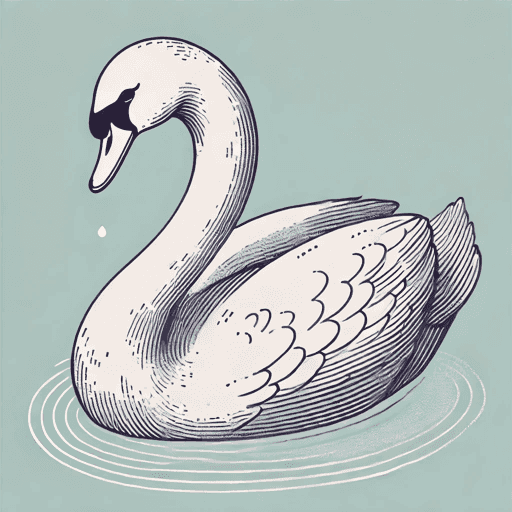
The appearance of the King of the Forest introduces the story’s thematic focus on The Consequences of Desire. After the King transforms from a swan, he immediately warns Mr. Peters that wishes rarely lead to positive outcomes, stating, “I have yet to hear of the human being who made any good use of his three wishes—they mostly end up worse than they started” (226). Mr. Peters demonstrates a preemptive awareness of the King’s identity through his calm insistence, “I expect three wishes, no more and no less,” a request that he delivers “steadily and with composure” (226). He reveals his awareness of the consequences of wishing as he reflects on the anecdote of “the forester who first wished by mistake for a sausage, and then in a rage wished it on the end of his wife’s nose, and then had to use his last wish in getting it off again” (227). His desire to prove himself the exception to this pattern highlights his hubris, as he assumes that he will be able to avoid the consequences of his desire. His decision to prick his tongue with a thorn—“to remind himself not to utter rash wishes aloud” (227)—reflects his belief that careful preparation will protect him from the consequences of his decisions.
The consequences of Mr. Peters wish become apparent as his desire for companionship begins to conflict with Leita’s true nature. At first, the transformation appears successful. The narrator observes that “Leita ma[kes] him a good wife. She [i]s gentle and friendly, busie[s] herself about the house and garden, polishe[s] the bowls, milk[s] the cows and mend[s] his socks” (228). Although she performs these duties faithfully, Leita is visibly unhappy, suggesting that she is the one bearing the consequences of Mr. Peters’s choices. Such moments demonstrate the intersection of the consequences of desire and the impossibility of suppressing one’s true nature, as Leita’s transformation alters her role but does not change her underlying identity.
When viewed through a feminist lens, Leita’s transformation into a human wife can be interpreted as the imposition of male desire onto a female body. After Mr. Peters’s wish grants him a wife, Aiken immediately evaluates her appearance—“the most beautiful creature he had ever seen” (227)—and her willingness to assume a traditional domestic role within the house. When Leita takes time for herself, going to the river while Mr. Peters is away, she feels the need to compensate—“On these rare occasions she was always especially tender and would put out his slippers to warm and cook his favorite dish” (228). These details frame Leita’s value in terms of her adherence to patriarchal, heteronormative roles in a marriage rather than in authentic connection. After Mr. Peters offers to use his wish to return her to her true form, her question, “Who would darn your socks and cook your meals and see to the hens?” (229), demonstrates how deeply social expectations have shaped her decisions as a human.
Mr. Peters’s character arc centers on learning from his mistakes and rejecting patriarchal norms that position his wife as subject to his whims and desires. As he witnesses Leita’s growing unhappiness, he recognizes the harm that his desire has caused. He chooses to sacrifice his desire for companionship in favor of Leita’s true nature and autonomy, emphasizing the text’s thematic emphasis on Overcoming Possessive Models of Relationships. Mr. Peters’s decision to use his second wish to restore Leita’s true form and his refusal to use the third demonstrate his growth. After hearing Leita cry out for Rhea in the night, he fully recognizes that his wish has separated Leita from her true nature: “[H]e knew that it was hopeless and she would never be happy as a human” (229). When others suggest that he might use the third wish to obtain another wife, Mr. Peters refuses, noting, “[T]wo wishes were enough for me […] I’ll stay faithful to Leita” (231). By refusing his final wish and remaining faithful to Leita, Mr. Peters underscores the consequences of desire, demonstrating the humility he has learned.
In its conclusion, “The Third Wish” returns to the natural imagery that frames the narrative. At the beginning of the story, the forest is quiet as evening falls in early spring: “The primroses were just beginning but the trees were still bare, and it was cold; the birds had stopped singing an hour ago” (226). Aiken symbolically contrasts the ending of the story with this opening by setting it in autumn with the return of bird sounds—“All night the song went on, sweet and harsh, sharp and clear” (231). The seasonal movement from spring to autumn reflects Mr. Peters’s experience. Spring, traditionally associated with new growth, symbolically hints at the Mr. Peters’s journey. Autumn, in contrast, symbolizes decline and ending, reinforcing the fact that his story has reached its final stage. The return of the bird song carries symbolic weight, connecting Mr. Peters’s death to the natural world. The final image of him holding the white feather suggests that his bond with Leita endures even beyond his death. Through this symbolism and structural emphasis on natural imagery, Aiken links Mr. Peters’s personal journey from hubris to humility with larger cycles of human nature.

Get in-depth, chapter-by-chapter summaries and analysis from our literary experts.
- Grasp challenging concepts with clear, comprehensive explanations
- Revisit key plot points and ideas without rereading the book
- Share impressive insights in classes and book clubs