The Third Wish
The Third Wish
A modern alternative to SparkNotes and CliffsNotes, SuperSummary offers high-quality Study Guides with detailed chapter summaries and analysis of major themes, characters, and more.
Summary and Study Guide
Summary: “The Third Wish”
“The Third Wish” is a magical short story written by Joan Aiken. The story first appeared in her 1955 short-story collection, More Than You Bargained For. Aiken, known for her imaginative fantasy writing, adapts fairy-tale motifs to tell the story of Mr. Peters, a man who is granted three wishes after rescuing the King of the Forest. Blending elements of fantasy and literary realism, the narrative examines themes of The Consequences of Desire, The Impossibility of Suppressing One’s True Self, and Overcoming Possessive Models of Relationships.
This guide refers to the edition of the story appearing in Not What You Expected: A Collection of Short Stories, published by Doubleday in 1974.
Content Warning: The source material and guide feature depictions of death.
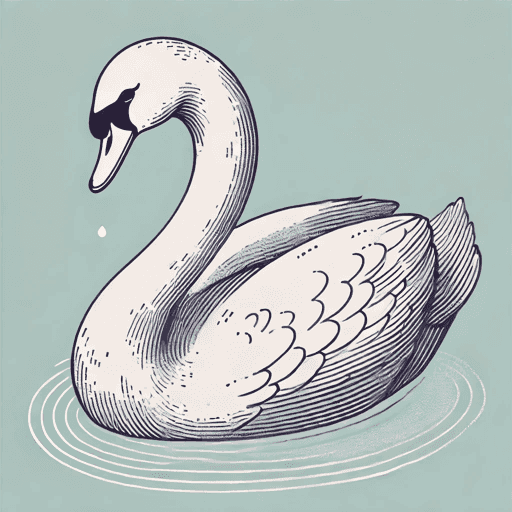
As Mr. Peters drives through a wooded area of Savernake, he hears distress calls coming from near the river. He stops and walks to the water to investigate, finding a swan stuck in a patch of brambles growing along the bank. The bird struggles against the thorns, and as Mr. Peters approaches, the swan thrashes and hisses, “looking at him with hate in its yellow eyes” (225). Despite the bird’s aggression, Mr. Peters untangles it and releases it safely into the water.
The bird swims into the river and begins preening its feathers. As Mr. Peters watches the swan, it returns to the bank and changes into a small, crowned man who introduces himself as the King of the Forest. The King accuses Mr. Peters of helping him only because he expects a reward in return. Mr. Peters acknowledges the remark, stating that he expects three wishes. The King of the Forest argues that humans never use wishes well, but he concedes, offering Mr. Peters wishes in the form of three dead leaves.
Mr. Peters takes the leaves, pocketing two and holding on to the third. The King returns to his swan form and swims away into the river. Left alone, Mr. Peters reflects on the King’s warning. He knows that wishes often come with unintended consequences, remembering the story of a forester who once used his wishes foolishly in a moment of anger.
Before making his first wish, Mr. Peters pricks his tongue with a thorn as a reminder to himself to remain thoughtful when wishing. He drops one leaf into the water and wishes for a wife “as beautiful as the forest” (226). As he walks back toward his car, he hears a swan and assumes that the King of the Forest is laughing at him. Mr. Peters returns to his car and falls asleep.
Mr. Peters awakes to find a beautiful woman walking toward him. He asks if she is his future wife, and she says she is, introducing herself as Leita. The two of them immediately drive to the church, where they are married. Afterward, they return to Mr. Peters’s house, where he shows her around. During a tour of the garden and nearby river, Leita asks if swans ever come to the river. When Mr. Peters tells her they do, she smiles quietly.
At first, Leita appears to settle into her new life. Mr. Peters thinks of her as a “good wife” since she performs the tasks expected of a wife and keeps the house in order. However, he notices that she doesn’t seem truly happy and that she frequently wanders down to the river. One day, he finds her by the river holding a swan. She comes to him, crying, and explains that the swan is her sister, whom she misses deeply.
Mr. Peters realizes that Leita was a swan who was transformed into a human because of his wish. He offers to use his second wish to turn her sister into a human or to return Leita to her swan form, but Leita refuses. She admits that being a human is difficult and strange for her, but she also loves Mr. Peters and wants to stay with him.
Even though they both try to make the best of their situation, Leita continues to struggle. She begins baking food and bringing it down to the river to share with her sister. Mr. Peters also tries to help by building a seat near the water where she can sit and visit with her sister.
Despite both their efforts, Leita’s state continues to decline. Mr. Peters finds her crying out to her sister, Rhea, in the middle of the night. In that moment, he knows that Leita will never be happy as a human. He kisses her in her sleep and then uses his second wish to return her to her swan form. He wakes her and takes her down to the river, where she flies away. The King of the Forest emerges, mocking Mr. Peters for his two failed wishes, and Mr. Peters returns home feeling sad.
The next day, Mr. Peters sees two swans swimming in the river near his garden. One of them wears the necklace he once gave to Leita. The swans continue to visit the river, and the community begins to spread rumors about them. One story claims that the two swans attacked a burglar who broke into Mr. Peters’s home.
Mr. Peters goes on to live a quiet life of solitude into his old age. People sometimes ask if he will ever wish for another wife. Mr. Peters always asserts that two wishes were “enough” and that he intends to remain faithful to his wife, Leita.
One night, people hear swans crying and singing from the river, as though in mourning. The following day, Mr. Peters is found dead in his home. He is smiling peacefully and holding a white feather.

Get in-depth, chapter-by-chapter summaries and analysis from our literary experts.
- Grasp challenging concepts with clear, comprehensive explanations
- Revisit key plot points and ideas without rereading the book
- Share impressive insights in classes and book clubs