The Third Wish
The Third Wish
A modern alternative to SparkNotes and CliffsNotes, SuperSummary offers high-quality Study Guides with detailed chapter summaries and analysis of major themes, characters, and more.
Important Quotes
Content Warning: This section of the guide includes discussion of death.
“He stood a moment waiting to try and discover where the noise was coming from, and presently heard a rustling and some strange cries in a voice which was almost human—and yet there was something too hoarse about it at one time and too clear and sweet at another.”
(Page 225)
The description of the cry as “almost human” signals the presence of the King of the Forest and foreshadows Leita’s transformation from a swan into a human woman later in the story. The contrasting descriptions of the King’s voice as “too hoarse” yet “clear and sweet” hint at the blending of human and animal forms.
“The bird struggled all the more frantically as he approached, looking at him with hate in its yellow eyes, and when he took hold of it to free it, hissed at him, pecked him, and thrashed dangerously with its wings which were powerful enough to break his arm.”
(Page 225)
Aiken’s diction increases the tension of the encounter between Mr. Peters and the King of the Forest through words such as “frantically” and the phrase “hate in its yellow eyes,” which emphasizes the swan’s aggressive fear. The description also uses personification, attributing human-like emotion to the bird, while maintaining realistic imagery of a threatened wild animal. The swan’s vivid hostility foreshadows both its transformation into the King of the Forest and the King’s implied skepticism of Mr. Peters’s intentions.
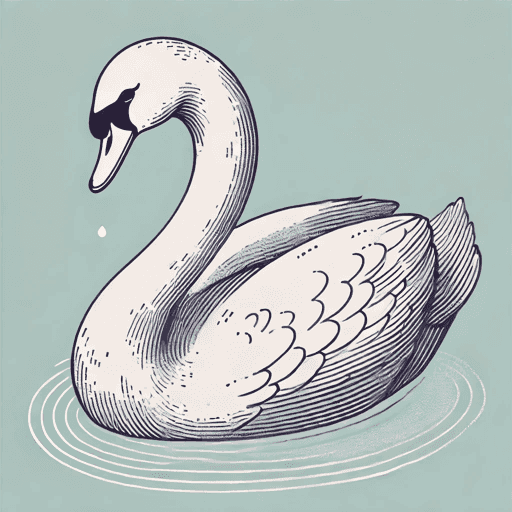
“The swan instantly assumed great dignity and sailed out to the middle of the water, where it put itself to rights with much dabbling and preening, smoothing its feathers with little showers of drops.”
(Page 226)
This passage uses imagery and personification to describe the swan before it transforms into the King of the Forest. Aiken’s choice to describe the bird’s “dignity” emphasizes its graceful presence in the natural environment. Through layered literary devices, Aiken conveys the elegance associated with swans while continuing to foreshadow the bird’s true identity as the King.
“Well, Sir […] I see you are presumptuous enough to know some of the laws of magic. You think that because you have rescued me—by pure good fortune—the King of the Forest from a difficulty, you should have some fabulous reward.”
(Page 226)
The King of the Forest’s tone is marked by sarcasm and suspicion. The phrase “by pure good fortune” introduces the question of whether Mr. Peters’s rescue of the swan was incidental or worthy of reward. This tone establishes tension between the two characters and reinforces the King’s skepticism toward human motives.
“Well, I have yet to hear of the human being who made any good use of his three wishes—they mostly end up worse than they started.”
(Page 226)
Here, the King of the Forest gives a direct warning about the dangers of magical wishes, introducing The Consequences of Desire as a central theme in the story. By claiming that he has “yet to hear” of a human who used wishes wisely, the King frames the outcome as a universal pattern of human nature. His observation foreshadows the difficulties that arise from Mr. Peters’s wish.
“He knew very well that the gift of three magic wishes was one which brought trouble more often than not, and he had no intention of being like the forester who first wished by mistake for a sausage, and then in a rage wished it on the end of his wife’s nose, and then had to use his last wish in getting it off again.”
(Pages 226-227)
The anecdote in this passage illustrates how careless wishes can produce unintended consequences. At the same time, Mr. Peters’s reflection on the anecdote reveals his awareness of these dangers and highlights his belief that he can avoid consequences through discipline and careful judgment.
“Taking a thorn he pricked his tongue with it, to remind himself not to utter rash wishes aloud.”
(Page 227)
The thorn functions as a symbol of Mr. Peters’s attempt to use discipline to avoid consequences. The gesture subtly portrays Mr. Peters as determined early in the story, as he believes that he can avoid the consequences that traditionally accompany the use of magic through sheer force of will.
“Leita made a good wife. She was gentle and friendly, busied herself about the house and garden, polished the bowls, milked the cows and mended his socks. But as time went by Mr. Peters began to feel that she was not happy.”
(Page 228)
Aiken juxtaposes Leita’s fulfillment of domestic expectations with her growing unhappiness. Although she performs the expected duties of a “good wife,” the narrative reveals that these actions do not bring her genuine fulfillment. Viewed through a feminist lens, the contrast highlights how Leita’s role has been shaped by Mr. Peters’s wish and by patriarchal expectations.
“Now he understood that Leita was really a swan from the forest, and this made him very sad because when a human being marries a bird it always leads to sorrow.”
(Page 228)
In this moment, Mr. Peters recognizes Leita’s true identity as a swan, reinforcing The Impossibility of Suppressing One’s True Self. Mr. Peters’s realization becomes the catalyst for his decision to use his second wish to restore Leita’s autonomy. The line demonstrates how his original wish unintentionally suppressed Leita’s true identity and left both of them vulnerable to sorrow.
“Poor Mr. Peters was very distressed on his wife’s account and did his best to make her life happier, taking her for drives in the car, finding beautiful music for her to listen to on the radio, buying clothes for her, and even suggesting a trip round the world.”
(Page 229)
This passage characterizes Mr. Peters as empathetic and attentive to Leita’s unhappiness. Although his initial wish prioritized his own desires, his attempts to comfort her suggest genuine concern for her well-being, highlighting that the story’s conflict arose from unintended consequences rather than deliberate cruelty.
“Then he knew that it was hopeless and she would never be happy as a human. He stooped down and kissed her goodbye, then took another leaf from his notecase, blew it out of the window, and used up his second wish.”
(Pages 229-230)
This scene marks the turning point in Mr. Peters’s character arc. By using his second wish to return Leita to her natural form, he sacrifices his wish for companionship to restore her autonomy. The decision demonstrates his growth from his earlier confidence that he could bypass the consequences of his desires to a humbler recognition of his mistakes and Leita’s true nature.
“Well, my friend! You don’t seem to have managed so wonderfully with your first two wishes, do you? What will you do with the last? Turn yourself into a swan? Or turn Leita back into a girl?”
(Page 230)
The King of the Forest’s rhetorical questions establish a mocking tone as he comments on the failure of Mr. Peters’s wishes. His remarks reinforce the earlier warning that humans rarely use magic wisely. The exchange further characterizes the King as skeptical and critically amused by Mr. Peters’s attempt to avoid the consequences of using magic.
“Human beings and swans are better in their own shapes.”
(Page 230)
This statement overtly reinforces the text’s thematic exploration of the impossibility of suppressing one’s true self. The simple diction gives the line the quality of a moral lesson, resembling the concise wisdom often found in traditional fairy tales. By suggesting that humans and swans belong in their natural forms, the line also speaks to Aiken’s emphasis on overcoming possessive models of relationships, as both Leita and Mr. Peters continue to care for one another after Leita is returned to her swan form.
“Two wishes were enough for me, I reckon. I’ve learned that even if your wishes are granted they don’t always better you. I’ll stay faithful to Leita.”
(Page 231)
Here, Mr. Peters acknowledges that wishes do not always improve a person’s life, demonstrating the humility he has gained through his experience with magic. His decision to remain “faithful” to Leita reflects a form of love that respects her autonomy rather than seeking to possess her.
“One autumn night, passers-by along the road heard the mournful sound of two swans singing. All night the song went on, sweet and harsh, sharp and clear. In the morning Mr. Peters was found peacefully dead in his bed with a smile of great happiness on his face.”
(Page 231)
This closing excerpt brings the narrative to a circular conclusion, echoing the opening spring imagery. While the beginning of the story describes birds falling silent at night, the swans now sing through the night, suggesting an unusual connection between Mr. Peters and the swans. The seasonal shift from spring to autumn carries symbolic weight, marking the end of Mr. Peters’s life.

Unlock every key quote and its meaning
Get 15 quotes with page numbers and clear analysis to help you reference, write, and discuss with confidence.
- Cite quotes accurately with exact page numbers
- Understand what each quote really means
- Strengthen your analysis in essays or discussions