The Third Wish
The Third Wish
A modern alternative to SparkNotes and CliffsNotes, SuperSummary offers high-quality Study Guides with detailed chapter summaries and analysis of major themes, characters, and more.
Symbols & Motifs
Content Warning: This section of the guide includes discussion of death.
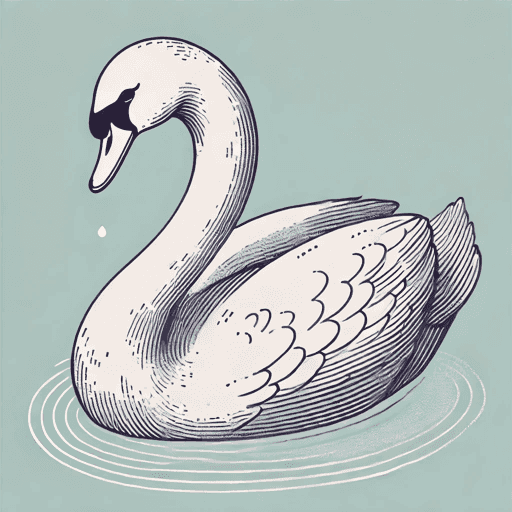
Swans
In “The Third Wish,” the swans introduce the story’s connection to the natural world. The King of the Forest first appears as a swan. His composure—“The swan instantly assumed great dignity and sailed out to the middle of the water, where it put itself to rights with much dabbling and preening” (226)—emphasizes the elegance often attributed to swans. The personification of the swan, who has yet to transform into the King of the Forest, embeds the story’s magical elements within the realistic natural setting.
Leita’s identity as a swan connects “The Third Wish” to the literary tradition of swan-maiden folktales, in which a woman shifts between human and bird form. In Aiken’s story, Leita’s swan form emphasizes the story’s thematic interest in The Impossibility of Suppressing One’s True Self. Although Leita loves Mr. Peters, she continues to long for her “old life in the forest” (228), revealing that though her outward appearance has been altered by Mr. Peters’s wish, her true nature has not changed.
The River
In “The Third Wish,” the river functions as a symbolic boundary between the human and magical worlds. The river is introduced early as Mr. Peters drives through the forest. At the riverbank, the trapped swan transforms into the King of the Forest and grants Mr. Peters his wishes, establishing the location as a point of contact between the natural and supernatural. The river also runs along the edge of Mr. Peters’s property. Although Leita insists that she loves Mr. Peters, she repeatedly returns to the river to visit Rhea. Her attachment to the river demonstrates that, despite her physical transformation, her true identity cannot be overwritten by Mr. Peters’s wish.
Leaves
The King of the Forest gives Mr. Peters “three dead leaves” to represent three wishes (226). The imagery of dead leaves subverts expectations, as magical objects in folklore are often rare or valuable, whereas dead leaves suggest impermanence and fragility. By using ordinary fallen leaves as a magical vessel, Aiken presents the wishes as deceptively harmless, even as the “dead” quality of the leaves foreshadows the negative outcomes of Mr. Peters’s wish. The leaves also reinforce the text’s thematic interest in The Consequences of Desire by suggesting that the magic they contain will lead to loss.
Thorns
Aiken uses thorns to portray the limits of human discipline. Before making his first wish, Mr. Peters pricks his tongue with a thorn “to remind himself not to utter rash words” (227). This act suggests a belief that controlled discipline will allow him to avoid the consequences of using magic. The gesture also reveals a degree of arrogance, as Mr. Peters assumes that his restraint will allow him to control the outcome of his wish when so many others have failed.
When viewed in this context, the earlier image of the swan trapped in thorns near the riverbank—“it was a swan that had become entangled in the thorns growing on the bank of the canal” (225)—takes on symbolic significance. If thorns represent human hubris, then the King’s irritated, sarcastic tone suggests a disgust at being ensnared by human attempts to use magic.
White Feather
The white feather acts as the story’s final image, symbolizing the culmination of the story’s themes. Mr. Peters is found deceased holding “a withered leaf and a white feather” (231). The white feather reflects Leita’s identity as a swan, underscoring the impossibility of suppressing one’s true nature. The feather’s presence alongside the “withered leaf” creates a juxtaposition. While the leaf represents the consequences of Mr. Peters’s earlier desire to control magic, the feather represents the enduring bond that remains after he relinquishes control. The image unites the primary themes of the story, suggesting that although human desire may cause harm, compassion and humility can allow for redemption and connection.

Unlock the meaning behind every key symbol & motif
See how recurring imagery, objects, and ideas shape the narrative.
- Explore how the author builds meaning through symbolism
- Understand what symbols & motifs represent in the text
- Connect recurring ideas to themes, characters, and events