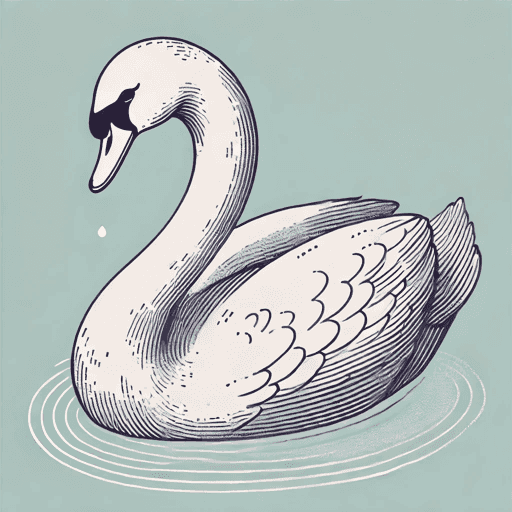
The Third Wish
The Third Wish
A modern alternative to SparkNotes and CliffsNotes, SuperSummary offers high-quality Study Guides with detailed chapter summaries and analysis of major themes, characters, and more.
Themes
Content Warning: This section of the guide includes discussion of death.
The Consequences of Desire
In “The Third Wish,” Aiken explores how human wishes, even when well intentioned, can disrupt the natural order and produce unintended harm. Early in the story, the King of the Forest warns Mr. Peters against using magic for his own gain, noting, “I have yet to hear of the human being who made any good use of his three wishes—they mostly end up worse than they started” (226). The King’s warning foreshadows the difficulties that arise from Mr. Peters’s wish for a wife. The magical wishes are represented by three dead leaves, hinting that the magic they contain will lead to disappointment rather than fulfilling Mr. Peters’s desires.
Mr. Peters’s desire for companionship reflects a universal human need for connection rather than a desire for power or control. The narrator describes the man as “content” but lonely: “The only thing that troubled him was that he was a little lonely and had no companion for his old age” (227). Aiken makes it clear that Mr. Peters is aware of the dangers associated with wishing—“He knew very well that the gift of three magical wishes was one which brought trouble more often than not” (226)—as he reflects on the forester’s failed wishes. Rather than avoid using magic altogether, Mr. Peters’s attempts to use discipline—exemplified through his thoughtfulness and use of the thorn “to remind himself not to utter rash wishes aloud” (227)—suggest that he assumes he will be the exception to the pattern of magical misuse that the King of the Forest insists is universal.
The consequences of Mr. Peters’s desires fall primarily on others. His wish for a wife “as beautiful as the forest” results in Leita’s transformation from swan to human and her separation from her sister, Rhea (227). Although Leita attempts to fulfill the role of human wife, she and Rhea suffer the emotional consequences of Leita’s transformation. Mr. Peters’s wish also imposes the socially constructed demands of a wife’s role onto Leita, as she assumes the domestic responsibilities and care of Mr. Peters as his wife. However, the story clarifies that Mr. Peters does not seek a subservient wife; he responds to Leita’s worry about who will care for him if she returns to swan form by “cheerfully” stating, “I’d do it myself as I did before I married you” (229). This exchange affirms that the harm created by the wish was not deliberate but arose from Mr. Peters’s optimistic assumption that he could use magic to conjure a partner and be free of consequences, in contrast to those who have failed before him.
In the end, Mr. Peters recognizes the damage that his wish has caused and chooses to reverse its effects, accepting the limits of human desire. Ironically, once Mr. Peters relinquishes his attempt to control the outcome of his wish, he gains the companionship he originally desired, as Leita and Rhea continue to visit him. In this way, the story argues that while human desires can produce harmful consequences, humility and compassion allow for redemption and repair.
The Impossibility of Suppressing One’s True Self
Aiken’s story suggests that while magic can alter one’s appearance, it cannot change one’s fundamental identity. The narrative establishes a conflict between human desire and innate identity as Mr. Peters makes his first wish. He wishes for a wife “as beautiful as the forest” (226), directly linking his desire for a wife to images associated with the natural world. However, by attempting to translate the beauty of the forest into a human form, the wish turns a swan into a human wife, creating a conflict between her identity and the role imposed upon her.
Aiken reveals this conflict through Leita’s physical characterization. Although she appears in human form, her description relies on natural imagery. The narrator describes her as “the most beautiful creature [Mr. Peters] had ever seen, with eyes as blue-green as the canal, hair as dusky as the bushes, and skin as white at the feathers of swans” (227). Aiken’s rhetorical choices—referring to Leita as a “creature” and describing her in relation to the surrounding environment—keep Leita’s identity linked to the natural world despite her transformation into a human woman. Even as Mr. Peters’s wife, her underlying identity remains intact in her behavior. She continues to leave the house and return to the river, where she visits Rhea and maintains a connection to her life as a swan. The river functions as a boundary between her domestic life as a human wife and her natural life as a swan. Her physical transformation doesn’t diminish her sense of belonging to the natural world.
Aiken reinforces Leita’s connection to the natural world through her ongoing bond with Rhea. She initially maintains their relationship by visiting Rhea at the river. Later, she bakes and shares food with her sister: “[S]he spent more and more time baking wonderful cakes […] [Mr. Peters] saw her take a basketful down to the river and he guessed that she was giving them to her sister” (229). During her time as a human, Leita consistently attempts to reconcile her human responsibilities with her identity as a swan, unable to shed the latter in favor of the former.
Despite Leita’s efforts to embrace her life with Mr. Peters, she instinctively rejects the fate forced upon her by his wish, underscoring the pull of her true nature. When Mr. Peters offers to use his second wish to give Rhea a human form, Leita declines, not wanting to impose a human life on her sister, who, like Leita, was born a swan. Leita’s identity crisis reaches an emotional climax as she cries out for Rhea in her sleep, unconsciously revealing the unhappiness she’s tried to suppress. In that moment, Mr. Peters recognizes that she “would never be happy as a human” (229), linking her distress to the contradiction between her altered physical form and her true nature.
Through Leita’s arc, Aiken argues that identity cannot be reshaped by external forces such as human desire. Despite Leita’s transformation and her sincere efforts to fulfill her role as a human wife, her persistent longing for the river and her bond with Rhea reveal that her true nature remains unchanged. The narrative rewards Mr. Peters’s ability to recognize this inevitability and restore Leita to her true form by providing him with the connection he’s always sought, as Leita and Rhea remain companions to him for the rest of his life.
Overcoming Possessive Models of Relationships
Mr. Peters’s character arc moves him from a person attempting to claim companionship to one who understands love as the willingness to prioritize the other person’s well-being. His desire to have a wife “as beautiful as the forest” reduces love and beauty to a possession that can be summoned and owned (226). His search for “a companion in his old age” frames Leita’s entire existence as an antidote to his loneliness (225). Her role as a companion quickly expands to include the duties of a traditional wife; she performs domestic tasks and is evaluated for her appearance—“the most beautiful creature” (227)—and her usefulness—“Leita made him a good wife […] busied herself about the house and garden” (228). Leita’s initial role as companion and domestic laborer allows Aiken to explore traditional notions of a woman’s role within a marriage, often defined by possession and function over authentic connection.
Mr. Peters initially tries to ease Leita’s transition by helping her integrate more deeply into the human world. As Leita’s unhappiness becomes visible—“She seemed restless, wandered much in the garden, and sometimes when he came back from the fields he would find the house empty” (228)—Mr. Peters’s understanding of love begins to change. The narrator notes that the man “[i]s very distressed on his wife’s account and d[oes] his best to make her life happier, taking her for drives in the car, finding beautiful music for her to listen to on the radio, buying clothes for her, and even suggesting a trip around the world” (229). His efforts to integrate Leita into the human world reflect both Mr. Peters’s genuine care for her as well as his limited understanding of love beyond the concept of possession.
As his perspective on love continues to develop, Mr. Peters attempts to find a solution that will reconnect Leita to her life as a swan but also allow him to keep her as his wife. He offers to transform Rhea into a human so that the sisters can be together without disrupting his marriage to Leita, suggesting that he still prioritizes Leita’s role as his wife over her well-being despite his high regard for her. Leita’s refusal to impose the same loss of identity on Rhea, even though it means their continued separation, makes it clear to Mr. Peters that Leita will never be happy as a human. He then offers to use his wish to restore Leita to her swan form, but she refuses this as well, choosing to remain with Mr. Peters, whom she insists she loves, despite her unhappiness. Leita’s refusal to use the second wish to ease her burdens frames her understanding of love as self-sacrificing.
The growing love that Mr. Peters feels for Leita moves him to prioritize her happiness over his own, shifting their dynamic away from a possessive model of a relationship to one of mutual care. His understanding of love beyond possession reaches its resolution as he decides to use his second wish to return Leita to her swan form after she cries out for Rhea in her sleep. The fact that he uses the wish while Leita is asleep suggests that he understands that she would continue to sacrifice her happiness rather than leave him. The decision marks the final turning point in his character development, as he relinquishes control and companionship to restore her true nature.
Following Leita’s transformation, the story demonstrates that the couple’s love persists outside of a possessive relationship model. Leita and Rhea stay with Mr. Peters: “Next day he saw two swans swimming at the bottom of the garden, and one of them wore the gold chain he had given Leita after their marriage; she came up and rubbed her head against his hand” (230). Their continued presence—including the rumor that the swans protect him from thieves and mourn the night Mr. Peters dies—reflects their mutual love.
“The Third Wish” makes a clear distinction between the concepts of love and possession. Mr. Peters’s attempt to claim companionship through magic results in unintended harm, while his willingness to let go of his desire for a wife allows for an authentic, lasting relationship. Through this arc, the story suggests that love cannot be sustained through control but requires respect for one another’s autonomy.

Unlock every key theme and why it matters
Get in-depth breakdowns of the book’s main ideas and how they connect and evolve.
- Explore how themes develop throughout the text
- Connect themes to characters, events, and symbols
- Support essays and discussions with thematic evidence