Three Bags Full
Three Bags Full
A modern alternative to SparkNotes and CliffsNotes, SuperSummary offers high-quality Study Guides with detailed chapter summaries and analysis of major themes, characters, and more.
Summaries & Analyses
Author Insights
Quizzes
NEWReading Tools
Character Analysis
Content Warning: This section of the guide includes discussion of death.
Miss Maple
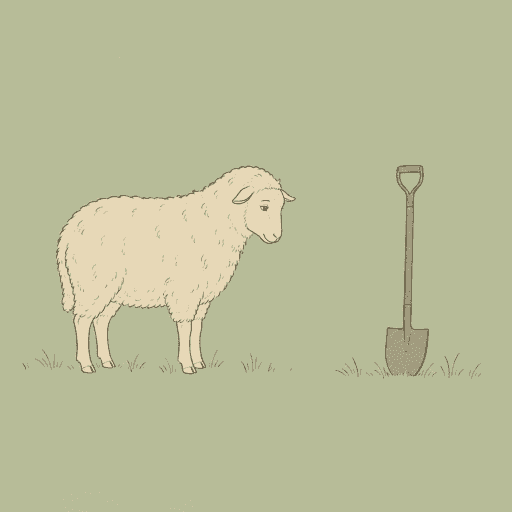
As the central protagonist and lead detective, Miss Maple is a round, static character whose intellect drives the entire investigation. Her name is an allusion to Agatha Christie’s famed amateur sleuth, Miss Marple, signaling her role as an astute, often underestimated, observer who uses logic and deduction to solve crimes that baffle others. Though a sheep, Maple applies a sharp, inquisitive mind to the clues she gathers. She is the first to question the official narrative of George’s death, pointing out that “[s]pades are not an illness” and methodically organizing the flock into an investigative unit (1). Her primary skill is her ability to synthesize the raw sensory data provided by her fellow sheep—such as Maude’s scents or Mopple’s memories—into coherent theories. She demonstrates The Unique Intelligence and Capability of Animals by consistently formulating logical hypotheses that are far more accurate than the fear-driven speculations of the human villagers.
Maple’s leadership is characterized by her sense of responsibility and her persistent drive for justice. While other sheep are prone to panic, distraction, or a desire to forget, Maple remains focused on the central question of the murder. She understands that the flock owes a debt to their shepherd and that finding the truth is essential for their collective peace and safety. This sense of duty compels her to perform unpleasant tasks, such as examining George’s body, and to challenge the flock’s complacency when they wish to abandon the investigation. Her larger role is to hold the community together, providing direction and purpose in the chaotic aftermath of George’s death. She embodies the intellectual core of the flock.
Despite her brilliance, Maple’s understanding is filtered through a distinctly sheep-like worldview, which creates a source of dramatic irony and humor. She and the other sheep grapple with human concepts that they can only interpret through the lens of their own experiences, and her deductions, while often logically sound, are built on premises that reflect this limited perspective, such as her theory that George’s soul was a tangible object the murderer wanted to steal. This combination of intellect and naivete makes her a unique protagonist: She is not an anthropomorphized sheep but a sheep whose natural intelligence is channeled into the framework of a classic detective story, proving that reason and inquiry are not exclusive to one species.
George Glenn
As the murder victim, George is a posthumous character whose life and motivations are gradually reconstructed through the memories of his sheep and the conflicting perceptions of the villagers. He is a round character, revealed to be far more complex than either the sheep or the humans initially believe. To his flock, he was a kind, if eccentric, shepherd who read them stories and cared for their well-being. This intimate, pastoral view of George contrasts with the villagers’ perception of him as a reclusive, misanthropic figure potentially involved in criminal activities like drug dealing. This discrepancy highlights the theme of The Gap Between Perception and Truth, as the sheep’s simple, observational knowledge of George proves more accurate than the gossip-fueled narrative of the human community.
George’s actions, particularly his final act of staging his death, are driven by loneliness and disillusionment with the human world. Melmoth’s story reveals that George has been living with the secret knowledge of Wesley McCarthy’s murder for seven years, a burden that has isolated him from his fellow villagers, whom he knows to be collectively guilty. His dream of taking his sheep to Europe shows a desire to find solace in a simpler, pastoral existence with the only beings he trusts. His nightly reading sessions are revealed to be an attempt to bridge the gap between his world and theirs, sharing human stories with his nonhuman companions.
George’s death is the central puzzle that drives the narrative. His decision to make his death by suicide look like a murder, complete with the spade as a symbolic prop, is a final, cynical trick played on the village he has grown to despise. It is an act designed to create chaos and expose the latent paranoia and guilt simmering beneath the surface of Glennkill. He uses the community’s own murderous history against them, knowing they will suspect each other. His Last Will and Testament is his true final message, a loving and carefully planned provision for his flock that simultaneously is a final rebuke to the greedy villagers. In death, George comes to represent the misunderstood outsider whose true nature is only appreciated by the animals he cherished.
Othello
Othello, the black four-horned Hebridean ram, is a deuteragonist and a key member of the investigative team. A round and largely static character, his name alludes to Shakespeare’s tragic hero in Othello, hinting at his status as an outsider with a traumatic past. Having spent his youth in a zoo and a circus, Othello possesses a worldly knowledge that the other sheep lack. He is brave, cynical, and physically formidable, often acting as the flock’s protector and enforcer. His unique detective skill is his understanding of the human world: the malice, the power of performance, and the mechanics. This insight allows him to perform tasks the other sheep cannot, such as opening gates or walking into the pub and facing down humans without panic. When a wolfhound attacks the flock, Othello single-handedly defeats the predator, demonstrating skills born of his past experiences in dogfights.
His role in the investigation is that of a specialist and a realist. While Miss Maple provides the intellectual strategy, Othello provides the practical skills and a grounded, unsentimental perspective. He offers to graze near George’s body to observe the human investigators, stating, “I spent my youth near the carnivores’ enclosure. A little more blood won’t kill me” (5). This pragmatism, born of trauma, makes him an invaluable operative. His past with Melmoth also provides him with a unique foundation that allows him to understand Melmoth’s lessons on a deeper level than the rest of the flock. He acts as a bridge between the flock’s pastoral innocence and the harsh realities of the world beyond their meadow.
Othello also reveals a capacity for leadership and a commitment to the flock. Though he respects Sir Ritchfield’s authority, he naturally steps into a leadership role when action is required. He leads the final performance at the Smartest Sheep in Glennkill contest, and his decision to align the flock with Rebecca secures their future. Othello’s journey is about finding a place to belong. Having been an outcast his entire life, he finds in George’s flock a community worth protecting, and his quest for “justice” is as much about honoring their murdered shepherd as it is about defending his newfound home.
Melmoth
Melmoth is an archetypal wanderer and mentor figure who returns to the flock after a seven-year absence, during which he was presumed dead. Sir Ritchfield’s long-lost twin brother, he is a legendary figure, a cautionary tale for lambs about the dangers of leaving the flock. His reappearance is a key moment that introduces the flock to a different philosophy, one of survival and self-reliance. He is a round, static character who has been shaped by his solitary travels, and he embodies an alternative to the sheltered, dependent life of a domesticated sheep. His shaggy appearance and the crows that often ride on his back give him a wild, almost supernatural aura, which leads the lambs to mistake him for the “wolf’s ghost.”
Melmoth’s primary role is to provide important backstory that explains George’s isolation and motivations. His detailed account of the night he fled—and of George and Ham discovering McCarthy’s body—is the key that unlocks the entire mystery of Glennkill’s collective guilt. This story reframes George as someone who has been living under the burden of this truth for years. Furthermore, Melmoth acts as a teacher, instructing the flock in “the art of paying attention” (223). He teaches them that their ovine senses, when properly focused, can be formidable weapons against human adversaries. His lessons in herding themselves and facing their fears are instrumental in empowering the sheep to act independently and outwit Gabriel.
Melmoth represents the theme of The Unique Intelligence and Capability of Animals in its most radical form. He argues that a sheep can be self-sufficient and that its natural instincts are a source of power. He is cynical about human beings, viewing them as predictable and easily manipulated. His relationship with Othello, to whom he was a mentor in the past, is one of mutual respect between two powerful individuals who have survived the harshness of the outside world. His eventual departure is as mysterious as his arrival, reinforcing his status as a free spirit who cannot be contained by the comfortable domesticity of the flock.
Mopple the Whale
Mopple is a stout Merino ram and a key member of the sheep detective team. A round, static character, his defining trait is his perfect memory, which positions him as the flock’s living archive. His role as the “memory sheep” is an essential investigative tool; while other sheep forget important details, Mopple retains every word of conversations he overhears. This makes him the designated repository for clues, and Miss Maple relies on his eidetic recall to piece together the timeline and motives of the human suspects.
Beyond his memory, Mopple is characterized by his enormous appetite. His desire for food often drives his actions and inadvertently leads him to important discoveries. His raid on the vegetable garden reveals the missing spade, and his quest for potato chips in the village leads the investigative team to Beth’s house. However, his gluttony also makes him vulnerable, as seen when he develops colic from eating geraniums. This constant hunger provides comic relief but also grounds him in his biological nature, reminding the reader that even as a detective, he is fundamentally a sheep motivated by basic needs. His physical size, which earns him his nickname, is a notable feature, making him both an imposing presence and a clumsy one, as when he gets stuck in the wall of the hay barn.
Despite his general timidity and fear of figures like the butcher, Mopple demonstrates moments of courage. He is the one who confronts the butcher in the mist, an encounter that ends with Ham falling off the cliff. He also faces down the butcher in the pub, overcoming his terror to perform his role in the flock’s final gambit to expose the truth. His journey is learning to use his unique gifts in service of the flock, solidifying his role as an indispensable part of the collective.
Sir Ritchfield
Ritchfield is the flock’s lead ram and a figure that represents tradition and authority. As an elderly sheep, he is characterized by his declining faculties, particularly his poor hearing and failing memory, which he refers to as a hole through which his memories leak. These weaknesses stand in contrast to Mopple the Whale’s perfect recall and serve to highlight the passing of the old guard. However, he retains his good eyesight, a skill that the flock utilizes in their investigation by stationing him as a lookout. He is a static, flat character who represents the established order of the flock, often insisting on proper ovine behavior and worrying about the disruption caused by the murder investigation.
His most significant role in the narrative is his connection to his long-lost twin brother, Melmoth. Ritchfield’s grief and his insistence that “[n]o sheep may leave the flock” are rooted in the trauma of Melmoth’s disappearance seven years prior (67). His emotional reunion with Melmoth provides him with a renewed sense of joy and vitality, and he becomes more playful and less concerned with his leadership duties. This relationship reveals a more personal side to his otherwise formal demeanor. His initial attempts to intimidate Mopple and keep Melmoth’s return a secret stem from a misguided desire to protect his brother, whom he suspects might be involved in George’s death.
Zora
Zora, a Blackface sheep, is a brave and independent member of the flock. She is physically distinguished as the only ewe with horns and possesses a unique skill: [a] “good head for heights” (5), which allows her to perch on a narrow rocky ledge on the cliffs. This position makes her an ideal lookout, providing the flock with a vantage point that no other sheep can access. Her sure-footedness and comfort with looking into “the abyss” from her ledge give her a philosophical and existential outlook; she often contemplates the nature of the world from her solitary post and entertains the idea of becoming a “cloud-sheep.” This adventurous spirit makes her a willing participant in the more dangerous aspects of the investigation.
Her role in the plot is twofold. As an investigator, she acts as a scout and observer. As a character, she shows a connection to the darker aspects of reality. Zora bravely initiates contact with Gabriel’s flock and learns the grim truth about “meat breeds.” Her conversation with the fatalistic ram from Gabriel’s flock introduces a chilling new perspective on the relationship between humans and sheep, revealing that not all shepherds are like George. This discovery shatters the flock’s pastoral innocence and adds a layer of genuine dread to their situation. Zora’s courage and inquisitiveness make her an essential, if sometimes detached, member of the flock.
Rebecca Flock
Rebecca is George’s estranged daughter and the flock’s new shepherdess. A round, dynamic character, she arrives in Glennkill seeking to understand the father she barely knew and is initially met with suspicion by both the villagers and the sheep. She is modern, independent, and intelligent, and she quickly proves to be a formidable presence. Her inheritance of the flock and the land places her at the center of the village’s conflicts, but she refuses to be intimidated by their greed or gossip.
Her primary narrative function is to act as a catalyst for the resolution of the story. It is through her that the sheep are able to secure their future and their trip to Europe, as they unanimously choose her over the menacing Gabriel. More importantly, her reading of Wuthering Heights provides Miss Maple with the final, important clue about ghosts and haunting, allowing the sheep to solve the mystery of George’s death. Rebecca’s journey is one of reconciliation; she comes to understand and admire her father through his legacy—the sheep and his carefully constructed will—and in doing so, she finds a new purpose as their shepherd.
Abraham Rackham (Ham)
Ham, the village butcher, is a secondary antagonist, one of the flock’s suspects. His profession and intimidating physical presence make him, to them, the most obvious suspect in George’s death. The sheep are terrified of him because he “smelled of death” (7), a literal truth that they interpret as a sign of his murderous nature. He is a round, dynamic character who is revealed to be more complex than his fearsome exterior suggests. He is driven by a long-unrequited love for George’s wife, Kate, and fear stemming from his involvement in the cover-up of Wesley McCarthy’s murder.
His drunken confession to the priest reveals him to be a man tormented by guilt, and the idea that the ram must be a manifestation of that contributes to the novel’s exploration of The Absurdity of Human Nature. This vulnerability contrasts with his sometimes brutish behavior, particularly his threatening interactions with Lilly. His arc concludes with a moment of understanding and remorse at the Smartest Sheep in Glennkill contest, where he realizes the depth of George’s loneliness and his own failure as a friend, transforming in the sheep’s eyes from a figure of terror into one of pathos.
Father Will (God)
Father Will, whom the sheep believe is called God because he lives in “God’s House,” is the local priest and another red herring in the flock’s investigation. He is a flat, static character who embodies religious hypocrisy and moral weakness. He presents himself as a spiritual authority but is disliked by George and feared by the sheep. His primary motivation is fear: fear of his past sins being exposed, fear of the villagers’ collective guilt, and a superstitious terror of being haunted by demons. The sheep’s misunderstanding of his identity as God is a source of comedic irony that also emphasizes his inflated self-importance. His confession with the butcher reveals his cowardice and self-pity, making him an example of the flawed and irrational human world the sheep observe.
Beth Jameson
Beth, known to George and the sheep as “Bible-Bashing Beth,” initially appears as a flat, one-dimensional character, a pious woman fixated on saving George’s soul. However, she undergoes a dramatic transformation into a round, dynamic character when she is revealed to be the only one who knows the truth about George’s death. The story she shares emphasizes her lifetime of unrequited, romantic love for George as a justification for agreeing to help him. She provides him with the poison and places the spade in his body, carrying out his final wishes. Her public confession at the Smartest Sheep in Glennkill contest provides the novel’s resolution, reframing the central mystery from a murder to a death that offers cascading revelations around the villagers’ guilt. Her story is an exploration of loneliness and unrequited love, and her ultimate fate—exiling herself to an island to do “good works”—is her form of penance.
The Minor Characters
The supporting cast of sheep and humans serve to flesh out the world of Glennkill and advance the plot. Heather is a young, lively ewe who represents the flock’s more naive and romantic side; her insistence that the mystery is a love story is eventually proven to be a partial truth. Gabriel O’Rourke is a charming but menacing shepherd whose practice of raising a “meat breed” introduces a dark, utilitarian counterpoint to George’s loving stewardship. The trio of villagers—Josh Baxter, Tom O’Malley, and Harry the Sinner—collectively represent the greed, gossip, and paranoia of the human community. Their bumbling attempts to find George’s supposed stash in the caravan highlight the selfish, profit-centered behavior that George came to despise and revealed through his death.

Unlock analysis of every major character
Get a detailed breakdown of each character’s role, motivations, and development.
- Explore in-depth profiles for every important character
- Trace character arcs, turning points, and relationships
- Connect characters to key themes and plot points