Nutshell: A Novel
Nutshell: A Novel
A modern alternative to SparkNotes and CliffsNotes, SuperSummary offers high-quality Study Guides with detailed chapter summaries and analysis of major themes, characters, and more.
Summaries & Analyses
Quizzes
NEWReading Tools
Chapters 1-5Chapter Summaries & Analyses
Content Warning: This section of the guide includes discussion of animal cruelty, animal death, suicidal ideation, sexual content, substance use, and death.
Chapter 1 Summary
The novel’s epigraph is a quote from William Shakespeare’s Hamlet (1609), Act II, Scene 2. Hamlet laments that he could be a “king” of a “nutshell” yet happy in his own small space if not for his “bad dreams” (i).
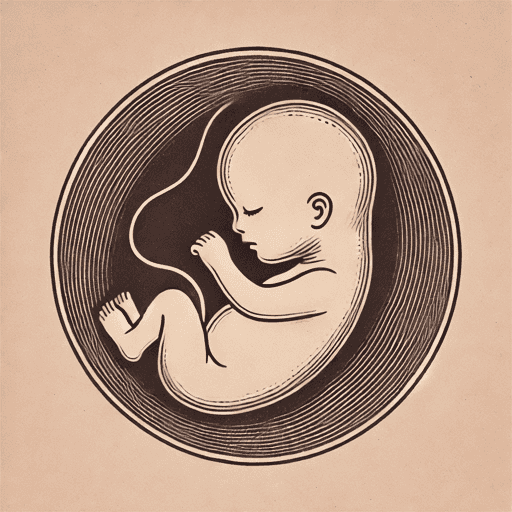
The narrator, an unborn fetus, rests in the womb of his mother, Trudy. He reflects on the moment when he became conscious, sometime around the formation of his spine. Now, just a couple of weeks from birth, he notes that he can hear everything happening on the outside. His mother is part of a “plot” that he plans to “foil” or, if born too late, “avenge” (3). Despite this fact, the narrator is grateful for being born when and where he is, noting the comforts of the modern world and the relative peace of the United Kingdom. He gathers much of his information about the world through the news and podcasts that his mother listens to, as well as her conversations with her lover, Claude.
The narrator discusses his annoyance with Claude’s need to constantly repeat himself. He recounts a recent restaurant dinner at which Claude and Trudy expected a dinner by candlelight, but their table was the only one in the restaurant whose candle wasn’t lit. Claude repeatedly complained about it while also pointing out several annoyances with the menu. However, when Trudy had two glasses of wine, the narrator became content, enjoying the varietal that Claude chose for her.
The narrator then returns to the deed that Trudy and Claude are planning. They never discuss it openly, instead talking in “whispers” and vaguely referencing it. He can tell that they are bothered by it, mostly because of the consequences that could occur if they’re caught; despite this, they plan on going through with it soon.
Chapter 2 Summary
John, the narrator’s father, is a tall, heavyset man. He is a failed poet who owns a publishing company. He is in debt and struggling to make ends meet. Trudy lives alone in his ancestral home, having asked John to move out so that she could have some “space” and consider their marriage. The home is neglected and falling apart. The narrator is annoyed at John’s weakness and his obliviousness, as he fails to understand that his marriage is over and that Trudy is having an affair with Claude. The narrator calls his mother “selfish, devious, cruel” but then quickly retracts the statement (15), noting that he deeply loves his mother despite what she is doing to his father.
One day, John comes over to the house to try to talk with Trudy, as he frequently does. They go into the library, where John recites a poem that he has written for her. The narrator notes his mother’s annoyance and boredom with it, though she prefers poetry to discussing her and John’s separation. As the narrator listens to John read, he is bothered by how oblivious John is to Trudy’s thoughts. After, Trudy escorts John out, insisting that she is too tired from her pregnancy to talk.
Chapter 3 Summary
The narrator decries how “dull” Claude is. Claude seems only to talk about cars and money. The narrator fears what will happen if Claude takes his father’s place, forcing the narrator into a similar life of banality. He even complains about Claude and Trudy’s sex life; Claude typically undresses, complains, and then leaves Trudy unsatisfied after penetrative sex that only lasts a few minutes. After, Claude and Trudy go into the bathroom together, where they whisper about their plan. The narrator struggles to hear over the sound of the water and their low voices.
Hours later, the narrator kicks Trudy awake. She sits and listens to a podcast. The host complains about the state of the world, noting the invasion of Ukraine by Russia, the instability in the Middle East, the United States’ political turmoil, and more. After, the narrator reflects on the host’s “pessimism.” He notes how advanced the world has become, largely eradicating disease and having access to technological advancements far beyond what people would have thought possible. However, he also acknowledges that he has a very limited view of the world.
Claude wakes up and begins whispering about his and Trudy’s plans; the narrator is excited that he can fully hear the discussion. Claude suggests going to see his “brother” and then discusses poetry, causing the narrator to realize that Claude is his uncle. Claude and Trudy then joke about lending John money but not being able to get it back.
Chapter 4 Summary
The next day, Trudy sunbathes and drinks a bottle of wine while Claude goes to speak with John. The narrator agonizes over the fact that he is related to Claude, worried that he will turn out like him if he is raised by him. He is also annoyed by his mother’s decision to drink the whole bottle, even though it makes him feel more detached.
As Trudy makes her way inside, she steps on a piece of glass, cutting her foot and trailing blood through the house to the bedroom. Claude returns, yelling for her and following the blood, and is relieved to find that it is only her foot. As he helps her bandage it, he tells her about his meeting with John. He offered John money and then urged him to continue to give Trudy space. However, John took the money and insisted that he was moving back home to care for her.
The news causes Trudy to become afraid, which the narrator feels through her increased heart rate and the churning in her stomach. Claude insists that they need to act now, reminding her that they will “place the baby somewhere” and have plenty of money (41). He asks Trudy what they will do. After a few moments, she responds with the word “poison.”
Chapter 5 Summary
The narrator obsesses over the two revelations from the conversation he overheard: the plans to put him somewhere and the word “poison.” He laments the fact that he will be put into the foster system, noting in particular the lack of literature and education that he will have access to. He decides that he would rather die by the same poison as his father but then vows to make his mother love him from the moment of his birth so that she will keep him. He contemplates all this while his mother sleeps.
When Trudy wakes up, she goes to the kitchen, drinks from the faucet, and searches for food. She calls Claude, urging him to come over, and cries at the kitchen table. When Claude arrives and asks what’s wrong, she tells him that she has been thinking of her childhood cat, Hector. When she was 15, she was annoyed by Hector and hit him, sending him off the table and to the ground. Later, the family found him dead. Trudy is adamant that she was responsible for his death.
Claude comforts Trudy. Then, he reveals that he has formed a plan. They will give John antifreeze, as it is odorless, tastes better than most poisons, and is easy to get hold of. He pulls a bottle of it from a grocery bag, along with two bottles of wine. He notes that the hardest part will be “disassociat[ing]” Trudy from John’s death.
Chapters 1-5 Analysis
The epigraph from Hamlet immediately establishes an important structural and symbolic framework for the novel. The idea that a person might exist within a confined “nutshell” yet enjoy vast intellectual space parallels the narrator’s physical situation inside the womb. Though he occupies an extremely limited physical environment, his consciousness ranges widely across politics, philosophy, and literature. At the same time, this situation introduces the theme of The Limits of Knowledge and Power. Although the narrator understands that a crime is being planned and even imagines a way to prevent it, his physical condition prevents him from taking meaningful action. The narrative perspective thus turns on the tension between intellectual awareness and practical helplessness, as the narrator is relegated by necessity to the role of observer.
The epigraph also situates the narrative within a tradition of tragic drama, suggesting that the events unfolding around the narrator resemble the moral and familial conflicts that structure Hamlet. As the narrator reflects on his existence, he thinks, “[t]he beginning of conscious life was the end of illusion, the illusion of non-being, and the eruption of the real. The triumph of realism over magic, of is over seems” (3). These words echo Hamlet’s famous line “To be or not to be“ (Shakespeare, William. Hamlet, Folger Shakespeare Library, III.1.64), wherein he contemplates whether the suffering that comes with life outweighs the unknown of death. In Nutshell, the narrator links this idea to his mother’s murder plot: “My mother is involved in a plot, therefore I am too, even if my role might be to foil it. Or if I, reluctant fool, come to term to late, then to avenge it” (3). The narrator’s contemplation of his life and choices, or lack thereof, mirrors Hamlet’s inner turmoil over his uncle’s betrayal of his father, but where Hamlet is emotionally torn over intervening, the narrator is physically limited by his existence in the womb.
The conversation that follows Claude’s meeting with John introduces the theme of The Corrupting Influence of Greed and Desire by revealing the primary motivation behind the murder plot: the desire for financial security and ownership of the ancestral house. Claude argues that once John is gone, he and Trudy will have money and freedom to build a new life together, but the novel’s symbolism undercuts this idea. The house itself, which is described as being in a state of “domestic decay,” is a metaphor for the novel’s intimate relationships, from Trudy and John’s marriage to Trudy’s more superficially happy relationship with Claude. The house’s neglected and decaying appearance foreshadows not only the murder but also the collapse of Trudy and Claude’s relationship after their act, suggesting that evil harms those who perpetrate it along with those who experience it.
At the same time, the narrator’s reaction to his parents’ relationship reveals the moral complexity of his perspective. Although he clearly recognizes that his mother is betraying his father, he struggles to judge her harshly. This hesitation introduces the theme of The Problem of Ethical Judgment and Action, and one of the novel’s primary internal conflicts. The narrator is aware that Trudy’s behavior is harmful and deceptive, yet his connection to her prevents him from viewing her simply as a villain. Indeed, the novel emphasizes that his connection is physical as well as emotional, rendering him dependent on her for his very existence. That Trudy’s plot predates the narrator’s conscious awareness hints at the moral compromise that this dependency entails; the narrator’s existence is bound up in Trudy’s immorality from the start.
His perception of Claude and John as foils further illustrates the unreliability of his ethical perspective. He sees his father as intelligent, associating him largely with his poetic and literary knowledge, while he repeatedly emphasizes Claude’s lack of intelligence. More than this, he frames Claude as a solitary antagonist: “His existence denies my rightful claims to a happy life in the care of both my parents. […] He has entranced my mother and banished my father. His interests can’t be mine” (19). The narrator here acknowledges that he hates Claude primarily because his “interests” conflict with the narrator’s own, but this does not stop him from depicting him as wholly responsible for his parents’ estrangement.
Throughout this section, the motif of wine and alcohol underscores the narrator’s connection to Trudy, as her drinking makes him drunk. This temporarily dulls the narrator’s anxiety about the larger situation unfolding around him in much the same way that the adults use alcohol to ignore or suppress the darker implications of their behavior.

Get in-depth, chapter-by-chapter summaries and analysis from our literary experts.
- Grasp challenging concepts with clear, comprehensive explanations
- Revisit key plot points and ideas without rereading the book
- Share impressive insights in classes and book clubs