Nutshell: A Novel
Nutshell: A Novel
A modern alternative to SparkNotes and CliffsNotes, SuperSummary offers high-quality Study Guides with detailed chapter summaries and analysis of major themes, characters, and more.
Summaries & Analyses
Quizzes
NEWReading Tools
Themes
Content Warning: This section of the guide includes discussion of sexual content, death, and substance use.
The Limits of Knowledge and Power
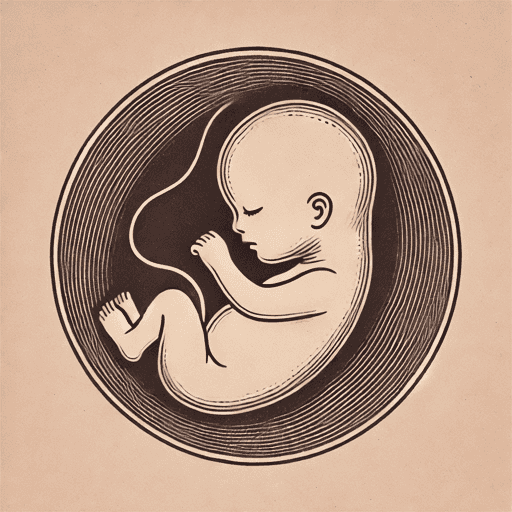
The primary internal conflict in the novel arises from the narrator’s unusual position as an unborn child who is capable of observing, thinking, and understanding the world around him while remaining completely powerless to influence it. Through this unique first-person perspective, the story explores the limits of both knowledge and power, as well as the way the two intersect.
His confinement within the womb allows him to engage intellectually with the world outside, yet his physical limitations prevent him from changing the course of events. Throughout the story, he listens carefully to the conversations between Trudy and Claude, gradually piecing together their plan to murder John. As the plot develops, he becomes increasingly aware of the danger his father faces. However, even when he fully comprehends the details of the poisoning plan, he remains unable to communicate with anyone. His powerlessness is best encapsulated in the kicks he delivers to his mother’s uterine wall: “Like the miser’s cat, I retain a secret scrap of sustenance, my one morsel of agency. I’ve used it in the small hours to inflict insomnia and summon a radio talk. Two sharp, well-spaced blows against the wall, using my heel” (92). Although the narrator values them as a “morsel of agency,” they ultimately amount to nothing, as his mother simply comments on them and then continues to try to get John to drink from the poisoned smoothie. By emphasizing the contrast between what the narrator knows and what he is capable of doing, the novel argues that knowledge alone does not guarantee power or control over outcomes.
The narrator’s reflections on the outside world further emphasize the gap between understanding and influence. Throughout the novel, he contemplates politics, literature, philosophy, and global events, forming complex opinions about subjects far beyond his immediate surroundings. These reflections reveal how detached knowledge is from practical reality. He can analyze international affairs or reflect on philosophical questions, but he cannot alter even the smallest events in his own household. In his words, he has “lungs but no air to shout a warning or weep with shame at [his] impotence” (99). The contrast between the vast scope of his thoughts and the narrowness of his physical environment reinforces the idea that intellectual awareness does not automatically translate into power.
At the same time, the novel explores the limits on knowledge itself and the way those limits structure action. John is, in one sense, a representation of knowledge without action: He is intelligent and thoughtful, but he also strikes the narrator as impractical and even naïve, reading his wife poetry and thinking that he can make her jealous through a new relationship. Conversely, Claude is portrayed as practical yet unintelligent, taking John’s wife and devising a plan to kill him despite his evident lack of imagination. Yet in other ways, the brothers are alike in that both are doomed by what they do not know: John misreads the nature of Trudy’s animosity and consequently acts in ways that inadvertently deepen it, while Claude’s plot overlooks a variety of factors, from Elodie’s perceptiveness to the unworn gloves, that lead the police to his door. Even the narrator is less all-knowing than he appears. Everything he learns is mediated through his mother’s body, and he lacks context—particularly visual—for much of what transpires. His efforts to fill in the gaps are not always successful, as emotions, inexperience, and alcohol (absorbed via the placenta) all distort his judgment.
Despite all of this, the novel ultimately defends the reality and the importance of agency through the narrator’s choice to be born. He triggers his mother’s labor not knowing exactly what will happen, and the novel closes with him predicting a future of “chaos.” Nevertheless, the novel celebrates his choice to act as a necessary step in his development; part of being human, Nutshell suggests, is recognizing that one cannot know or control everything but that one must persevere regardless.
The Problem of Ethical Judgment and Action
The narrator’s response to the unfolding murder plot is complicated by more than mere powerlessness. Rather, the narrator expresses deep ambivalence about whether he would act even if he could, due to both philosophical concerns and his complicated feelings toward John and Trudy.
However, the problem is not simply an abstract one. Rather, the narrator’s knowledge of his dependency on his parents complicates his ability to assess their behavior objectively. Thus, the narrator’s sympathy for his father dims considerably when he concludes that his father has no interest in him, to the extent that he implies that he would not warn John of the plot against him even if he could. Quoting a poem about abandonment, he remarks, “Let it be the last thing you’ll ever hear. Then you’ll know what I mean. Or take the kinder course, live rather than die, hold me in your arms, claim me for your own. In return I’ll give you some advice. Don’t come down the stairs” (83). If only in imagination, the narrator here conditions saving John’s life on John accepting him as his son.
A similar impulse drives the narrator to judge Trudy less harshly than he might otherwise be inclined to. As a participant in the plot to murder her husband, she is undeniably responsible for the crime. However, the narrative repeatedly lingers on her regret and emotional conflict. At times, these contradictions elicit disgust and sarcasm regarding her apparent hypocrisy, yet he also fantasizes about a life in which she does no penance for her actions: “How could she think of giving me away? She’ll need me. I’ll brighten the penumbra of innocence and pathos she’ll want around her. […] I’ll render her immune to prosecution” (131). As the opening question implies, his attitude toward his mother’s guilt has at least as much to do with his anxieties about his own place in her affections as it does with her actions themselves.
These tensions culminate in the narrator’s birth, which he initially instigates to entrap Claude but which ultimately dooms Trudy as well. This is, in the narrator’s words, “not a good end” (196), yet he responds to it with equanimity—possibly because he believes justice has been done but possibly because he is with his mother, and that ultimately is what matters most to him. Through this ambiguity, the novel highlights the broader questions that surround ethical judgment. The narrator may be uniquely dependent on his parents for his very survival, but he is not unique in his emotional entanglement with others, and this complicates any attempt to judge them.
The Corrupting Influence of Greed and Desire
The events of Nutshell are driven largely by the characters’ desire for wealth, comfort, and personal fulfillment. Through the relationship between Trudy and Claude, the narrative demonstrates how greed and personal desire can distort moral judgment and lead individuals to justify actions that they might once have considered unthinkable.
The quintessential example of greed in the story involves the house that Trudy and John once shared. The property equates to financial security and social status, and control over it represents the possibility of a different life for Trudy and Claude; the desire to claim ownership of it contributes directly to their willingness to eliminate John. In this way, the house represents the material aspirations that drive Trudy and Claude toward increasingly unethical decisions. After John is killed, the house becomes a point of dispute between the two; Claude wants to sell it as quickly as possible, while Trudy wants to get as much money as they can. The narrator hears them arguing, as Claude insists that they should only ask “four and a half million […] in case things go wrong,” prompting Trudy to ask, “Why should I trust you?” (159). Once John is gone, greed infiltrates their relationship, leaving them unfulfilled and arguing even with all apparent obstacles to the relationship removed.
Similarly, the romantic relationship between Trudy and Claude illustrates how desire can cloud moral judgment. Their attraction to one another initially appears to provide excitement and emotional escape from their existing circumstances. However, after John’s death, their passion deteriorates. As the narrator observes, they have quick, dispassionate sex immediately after John’s death and then begin to bicker and argue, resulting in emotional and physical distance from each other. In the narrator’s words, “[H]is voice, his touch and his kisses are corrupted by what they’ve done” (124). Trudy’s apparent remorse following John’s death underscores this idea, introducing the possibility that her physical desire for Claude clouded her thinking, leading her to overlook the ramifications of committing murder.
Ultimately, the novel portrays greed and desire as forces that erode moral boundaries. What begins as a longing for comfort, wealth, or romantic fulfillment ends in a willingness to commit violence. Through the tragic consequences of Trudy and Claude’s choices, the story warns that unchecked appetite—for wealth, for sex, etc.—can lead individuals to lose sight of the values that once guided their behavior.

Unlock every key theme and why it matters
Get in-depth breakdowns of the book’s main ideas and how they connect and evolve.
- Explore how themes develop throughout the text
- Connect themes to characters, events, and symbols
- Support essays and discussions with thematic evidence