Nutshell: A Novel
Nutshell: A Novel
A modern alternative to SparkNotes and CliffsNotes, SuperSummary offers high-quality Study Guides with detailed chapter summaries and analysis of major themes, characters, and more.
Summaries & Analyses
Quizzes
NEWReading Tools
Character Analysis
Content Warning: This section of the guide includes discussion of death by suicide, death, and sexual content.
The Narrator
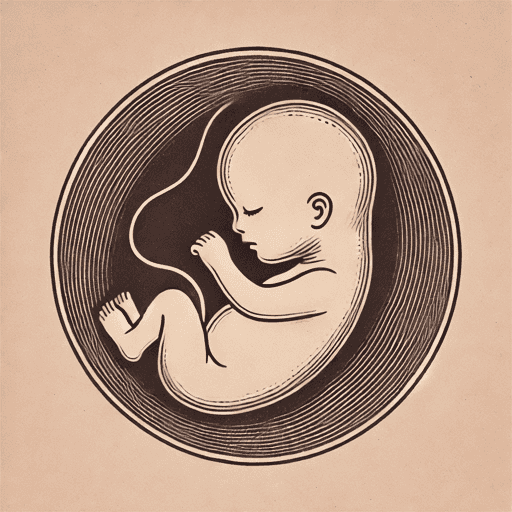
The narrator is an unborn child who observes the events of the novel from within his mother’s womb. Through his first-person perspective, he contemplates his mother, Trudy, and her lover, Claude, who plan to kill the narrator’s father, John, who also happens to be Claude’s brother. Despite his physical state, the narrator possesses an extraordinarily developed intellect and awareness of the world around him. Via his mother, he listens to conversations, news broadcasts, and podcasts, forming opinions concerning both his family and the larger outside world. His environment is physically limited yet intellectually expansive, embodying the symbolic nutshell that constricts movement but not the mind. His perspective allows him to act as an observer in the story’s central crime, the murder of his father, but his narration is unreliable due to the limits on his knowledge (he can hear the world but cannot see it), his entanglement with the murderers and victim, and his self-centered worldview.
The narrator’s development centers on his growing awareness of the gap between knowledge and action. Early in the story, he primarily functions as a curious observer who attempts to interpret the conversations he hears. As the plot unfolds and he begins to understand the murder plan more clearly, his emotional involvement deepens. He develops sympathy for his father and increasingly worries about the consequences of the conspiracy. However, he realizes that his understanding does not grant him any meaningful influence over events. As he contemplates, “What then are my chances, a blind, dumb invert, an almost-child, still living at home, secured by apron strings of arterial and venous blood to the would-be murderess?” (53). This situation directly reflects the theme of The Limits of Knowledge and Power, as the narrator frequently possesses more insight into the truth than any other character yet remains unable to stop what is happening.
The narrator’s reflections also reveal his emerging moral consciousness, as his thoughts demonstrate a gradual transition from observation into ethical judgment. As he listens to Trudy and Claude justify their actions, he attempts to understand how individuals can commit acts of betrayal and violence while still viewing themselves as good people. However, his ethical musings are complicated by his relationship to his mother in particular. Dependent on her for his very existence, he harbors a possessive love for her that colors his interpretation of her actions in complicated ways; he wishes to see her in the best possible light, yet he is also acutely attuned to any suggestion that she may shirk her maternal role. His efforts to navigate this relationship are key to the work’s exploration of The Problem of Ethical Judgment and Action.
The narrator’s first act of true agency occurs when he deliberately triggers his own birth by puncturing the amniotic sac. After spending most of the novel confined to observation, he finally chooses to intervene in the course of events. His decision prevents Claude from escaping easily and forces the situation into the open, which he frames as an act of sacrifice: “I thought the murderers should escape, for the sake of my liberty. This may be too narrow a view, too self-interested. There are other considerations. Hatred of my uncle may exceed love for my mother. Punishing him may be nobler than saving her” (183). His contemplation and his choice to stop Trudy and Claude’s escape highlight his acceptance of the ethical complexities of action and is itself an ambiguous choice that spans his commitment to justice, his desire for revenge, and his ambivalent, often selfish, love for his mother.
Trudy Cairncross
Trudy is the narrator’s mother, Claude’s lover, and one of the central figures responsible for the murder of John. At the beginning of the novel, she is presented as a woman who feels trapped within a deteriorating marriage and increasingly dissatisfied with her life. Her relationship with John has grown distant, and as far as the narrator can tell, she became involved with Claude because the relationship is sexually exciting. This relationship becomes the catalyst for the central external conflict in the novel: the plot against John that will allow Trudy and Claude to begin a new future together after selling John’s home.
For the narrator, Trudy’s character is defined by emotional complexity and moral contradiction. Unlike Claude, she is not consistently confident in the plan to murder her husband. At various moments throughout the story, she expresses doubt, nostalgia, and regret about her past relationship with John and her decision to go through with his murder. For example, immediately after killing John, Claude celebrates. However, Trudy scolds him, stating that he is “stupid” for not realizing how she feels about losing “[t]he man [she] once loved, and who loved [her], and who shaped [her] life, gave meaning to it…” (119). Whether her grief is genuine or an attempt at manipulation is left ambiguous; the narrator frequently frames Trudy as a puppet in Claude’s hands, yet he also remarks sardonically on her hypocrisy. Certainly, she shows a deep capacity for deception and self-preservation in her conversations with the police and with Elodie, lying about her husband’s emotional state before her death and fabricating the story around John’s actions on the day of his death. Ultimately, this ambiguity reflects the narrator’s troubled relationship with Trudy, whom he both adores and mistrusts.
Claude Cairncross
Claude is John’s brother and Trudy’s lover, making him one of the primary architects of the murder plot and the novel’s clearest antagonist. From the beginning of the novel, the narrator portrays Claude as opportunistic, resentful, and driven by a desire for wealth and status. Unlike John, who has devoted much of his life to poetry and intellectual pursuits, Claude is primarily concerned with financial success and material comfort. His involvement with Trudy is implied to derive not only from romantic attraction but also from the opportunity to gain control of the valuable house that she shares with John. These motivations connect to the theme of The Corrupting Influence of Greed and Desire, which shape many of his decisions throughout the story.
Claude approaches the murder plan with a level of cool practicality that distinguishes him from Trudy. While she occasionally expresses hesitation or regret, he remains focused on the logistical details required to carry out the crime and avoid suspicion. Though the idea to use poison is Trudy’s, it is Claude who carefully considers how to do so, as well as how to manipulate evidence and present the situation as a convincing death by suicide. This contrast becomes clearest during the narrator’s birth. He initially refuses to call for medical help and tries to flee, stopping only once he realizes that he cannot escape without his passport and reluctantly agreeing to assist in delivering the baby; the narrator remarks of this episode that Claude believes he “could get this over with and catch a later train” (194-95). This moment highlights how thoroughly greed and self-interest have shaped his behavior; he remains a largely unchanged, static character, maintaining a complete disregard for moral responsibility and personal relationships at the novel’s end.
John Cairncross
John is the narrator’s father and the victim of the murder plot that drives the novel’s central conflict. He is portrayed as a thoughtful and introspective man who has devoted much of his life to poetry and literary expression. He serves as a foil to his brother, Claude, who values financial success and material comfort and whom the narrator consistently characterizes as boorish. The contrast between the two thus illuminates more than the narrator’s hatred of Claude as an interloper and murderer; rather, it helps establish the ethical weight the narrator places on intellectual life—particularly poetry as a means of exploring emotional complexity and the nuances of human experience.
At the beginning of the novel, John’s marriage to Trudy has deteriorated. Although the exact reasons for their estrangement are not fully explained, it is evident that the relationship has become distant and strained. Trudy’s affair with Claude intensifies this conflict, but John does not initially respond with open hostility or aggression. Instead, he approaches the situation with a mixture of sadness, resignation, and reflection. His relatively calm demeanor contrasts with the secrecy and manipulation surrounding the plot against him in a way that the narrator at times views with disdain; though sympathetic to John’s situation, he also views his father as complicit in his own emasculation. Whether John is as ineffectually well-meaning as the narrator suggests is left ambiguous, but this belief is one way in which the novel telegraphs the narrator’s immaturity and potential unreliability; he idolizes his father’s intellect but simultaneously wishes that he were more a man of action, possibly overlooking John’s real actions (an affair with Elodie, a feigned affair to make Trudy jealous, etc.) in the process.

Unlock analysis of every major character
Get a detailed breakdown of each character’s role, motivations, and development.
- Explore in-depth profiles for every important character
- Trace character arcs, turning points, and relationships
- Connect characters to key themes and plot points