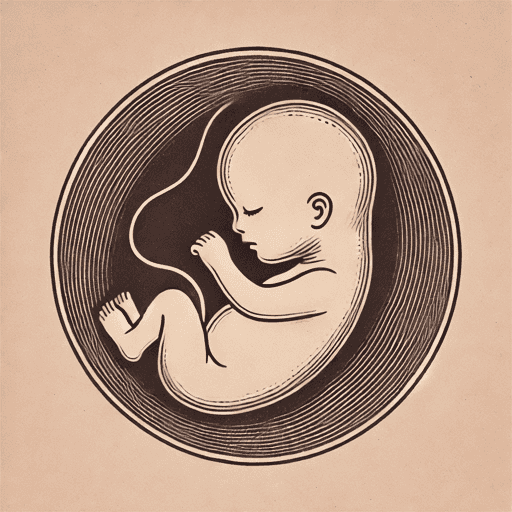
Nutshell: A Novel
Nutshell: A Novel
A modern alternative to SparkNotes and CliffsNotes, SuperSummary offers high-quality Study Guides with detailed chapter summaries and analysis of major themes, characters, and more.
Summaries & Analyses
Quizzes
NEWReading Tools
Chapters 16-20Chapter Summaries & Analyses
Content Warning: This section of the guide includes discussion of child abuse, sexual content, substance use, death by suicide, and death.
Chapter 16 Summary
As Elodie reflects on John’s poetry, Trudy comforts her yet keeps affirming that John often hid his true emotion, depicting him as a tortured genius. The narrator wonders what Elodie is truly doing there. He considers whether she is talking about his poetry to comfort Trudy, to grieve, or to try to figure out the truth of John’s death. Eventually, Elodie begins to believe the lies about John.
Trudy invites Elodie to John’s library to choose a book. She hesitates, but Trudy insists that John would want her to. After she chooses one, the doorbell rings, and their food arrives. As Trudy escorts Elodie out, Elodie reveals that she is supposed to speak with the police the next morning. Trudy urges her simply to “tell them everything [she] know[s]” (154). Feeling relieved, Trudy eats, and then the narrator falls asleep.
Chapter 17 Summary
The narrator wakes in the night. He thinks of everything that has happened but, more importantly, that he has no power over anything. He still considers himself “cowardly.”
The narrator wakes up again in the early morning. Trudy and Claude argue with each other. She blames him for the murder, yet he repeatedly points out her own involvement. She is adamant that they get the highest price for the house that they can, while he argues for selling it quickly. The narrator is uninterested, wondering only what will become of him.
When Trudy showers, the narrator is overwhelmed with a feeling of hope and happiness. He considers his impending birth, delighted at the chance to finally experience the world. Shortly thereafter, however, he scolds himself for forgetting about his father. As his mother prepares for the day, he notes that Elodie likely has finished her statement and that the police have already decided whether to pursue the investigation of John’s death. In that moment, the narrator is overcome with a feeling of protectiveness toward his mother, not wanting her to be punished and hoping that they can remain together without Claude.
Chapter 18 Summary
In the afternoon, Inspector Clare Allison calls to say that she will be coming to interview Claude and Trudy. The two are instantly on edge, reciting their rehearsed story and questioning whether this means that there is going to be a murder investigation. As Trudy becomes upset, reciting their story incorrectly, the narrator kicks her three times to help her focus.
Inspector Allison arrives with one of the officers who came to the home immediately after John’s death. Everyone sits in the living room. She asks them questions about their morning with John, noting that there had been a fight and that they shared coffee in the kitchen. She asks about John’s hat and whether either of them had ever borrowed it, and they both answer no. When Inspector Allison tells them that it is being tested for DNA, the narrator recognizes that Claude gave the wrong answer; the DNA will show his hair in the hat, so he should have said that he borrowed it once.
When Inspector Allison asks more about John’s mental state, Trudy uses the word “confused,” noting that they were unsure whether he was still in love with Trudy or not. She brings up Elodie, noting that her relationship with John was a ruse. However, Inspector Allison denies this, stating that their relationship was “complicated” but offering no further information. Inspector Allison then asks if the house is being sold. Trudy claims that it isn’t, but Allison notes that it is already listed on the market.
As the conversation continues, the narrator wonders what Allison’s goal is. He convinces himself that she is just being thorough and trying to impress her superiors.
Chapter 19 Summary
While Inspector Allison looks over the house with Claude and the officer, Trudy waits in the sitting room to avoid using the stairs. The narrator senses that she is calm and wonders if it is because she is confident or because she is resigned to her fate.
When Allison returns, she stops to look at the boxes in the hallway. Trudy notes that John was moving some of his things in, mostly books, and Allison looks through them. After, she tells the group that there is only one thing about the case that confuses her: There were no prints on the smoothie cup or on the glycol bottle. Trudy points out that John wore gloves frequently, as he was embarrassed about psoriasis on his hands. Allison produces a picture of the gloves, asking if he had any other pair, and Trudy insists that those were his only ones.
Just before leaving, Allison reveals that they got information back from forensics on the gloves. Inside the finger was a nest of spiders, so there is no way they were worn recently. Allison cheerfully tells Trudy and Claude goodbye, promising to come back with more questions.
Chapter 20 Summary
The narrator contemplates whether there is a way to save his mother, whom he truly loves, while still convicting his uncle. He had always hoped that the three of them could be free, despite his need for revenge; now, he is certain that he wants his uncle to suffer.
Trudy and Claude discuss their options in the kitchen while drinking scotch. After Claude has several glasses, they decide that they need to act. They move quickly around the house, packing their things and preparing to flee to Brussels. They already have money and their passports ready. The train they hope to catch is only an hour away, so Claude rushes her out the door. However, Trudy hesitates, wanting to bring along a picture of her mother but unable to get it out of the frame. In this moment, the narrator decides to act. He uses his fingers to puncture his amniotic sac.
Claude tries to ignore Trudy’s water breaking, insisting that they can deal with it once they are on the train. However, the narrator forces himself into the birth canal, beginning his mother’s contractions. Trudy lies on the bed and urges Claude to call an ambulance, but Claude insists that he is leaving. He demands his passport, and Trudy tells him that she hid it. She tells him that if he will not call for help, he will need to deliver the baby; she then begins issuing instructions. After hesitating, Claude comes over to the bed. The narrator realizes that Claude hopes that the baby can be delivered quickly enough that they can still escape.
The narrator’s world warps as he is born. He feels the immense pressure from his mother’s pushes, awed at her strength. Finally, he emerges, lifted up by Claude and placed into his mother’s arms. Exhausted, both the baby and Trudy sleep.
Sometime later, Claude wakes them up, announcing that four police officers are at the door. Trudy looks directly into the narrator’s face. He is awed by her beauty and the love that he has for her. He hopes that their “prison cell” will not be “too small” and that he will find “meaning” on the other side of its door.
Chapters 16-20 Analysis
The visit from Elodie, who seeks relief from her grief over John’s death, twists the motif of poetry, associated throughout with John’s character. Here, however, Trudy uses his poetry as a tool to further the narrative that John died by suicide. The novel and narrator may at times raise doubts about whether John was a good poet, but the mere fact that he was one serves as a sign of his decency—his ability to entertain complexity, to empathize with others, and to seek to understand rather than destroy. Within the novel’s moral framework, this constitutes a significant betrayal that underscores her ruthlessness in self-preservation: Trudy uses something associated with humanity to serve her murderous agenda.
The narrator’s Chapter 17 reflections on the murder he witnessed intensify the novel’s exploration of constrained agency through the lens of physical and existential limitation, developing the theme of The Limits of Knowledge and Power. His description of himself as “cowardly me” (157) implies that he could act but has chosen not to, pointing to a tension that runs throughout the novel: The narrator obviously lacks agency yet has an inflated sense of responsibility, contributing to his characterization as grandiose and self-centered. At the same time, the novel does not deny the pathos of his position. His recognition of his complete lack of power underscores the irony of being intellectually sophisticated yet physically incapable of action.
The police interview, where the reader and the narrator know things that Trudy and Claude do not, explores the theme from a different angle. As the investigator asks questions, the narrator perceives and reflects on cracks in Trudy and Claude’s story before the characters themselves fully grasp their implications. For example, the mention of the hat and its DNA is preceded by Inspector Allison asking if Claude had ever worn the hat; when he responds with no, the narrator immediately recognizes the mistake. In other words, it is now Claude and Trudy, not John, whose power is limited by incomplete knowledge. In a further instance of irony, however, these shifting power dynamics do the narrator little good, as he has now decided that he wants to save his mother. He thus remains in the same position he has occupied throughout the novel: knowing virtually everything yet unable to act. Instead, he witnesses the downfall of his mother and Claude before they even realize it is happening.
The novel’s climax brings both the external plot and the narrator’s internal conflicts to a crisis point. As Claude and Trudy realize that the police know they murdered John, they begin frantically packing and initiating their escape plan. At the same time, the narrator comes face-to-face with his conflict over both his mother’s culpability and his own complicated relationship to agency. Both conflicts are resolved through the narrator’s first autonomous act, as he instinctively acts to stop their escape: By puncturing the amniotic sac, he disrupts the trajectory of events that previously rendered him powerless. Just as importantly, in entering the world, he accepts the weight of agency—previously an abstraction that he could philosophize about without having to seriously engage with.
Trudy and Claude’s actions in these final moments underscore the theme of The Corrupting Influence of Greed and Desire. Their actions throughout the novel are driven by their desire for wealth and freedom. However, this ultimately leads to their undoing. Their hurried packing, reliance on alcohol, and frantic decision-making reveal how their initial crime has escalated into desperation, stripping away any remaining sense of control. Claude’s insistence on continuing to the train despite Trudy’s labor underscores the extent to which self-interest overrides empathy, while Trudy’s refusal to hand over the passport signals her willingness to condemn him not to save herself but merely out of spite. Their relationship, built on lust and greed, is quickly discarded once self-preservation intervenes.
The closing image of the narrator gazing at Trudy encapsulates the emotional complexity of the story. His love for her persists despite his awareness of her actions, emphasizing the enduring power of their familial bond, yet the nature of that bond is ambiguous. His thought that “our prison cell—I hope it’s not too small” may simply convey his acceptance of the consequences to come (197), but it also hints that he does not regard the situation as catastrophic. Though the narrator previously expresses a desire to spare Trudy imprisonment, he has also been deeply preoccupied with her evident lack of interest in a maternal role. Now, he feels that he has gotten what he always wanted: his mother’s undivided attention. The novel’s resolution thus reinforces the theme of The Problem of Ethical Judgment and Action; the narrator has finally acted, but whether he has acted morally is left open to interpretation.

Get in-depth, chapter-by-chapter summaries and analysis from our literary experts.
- Grasp challenging concepts with clear, comprehensive explanations
- Revisit key plot points and ideas without rereading the book
- Share impressive insights in classes and book clubs