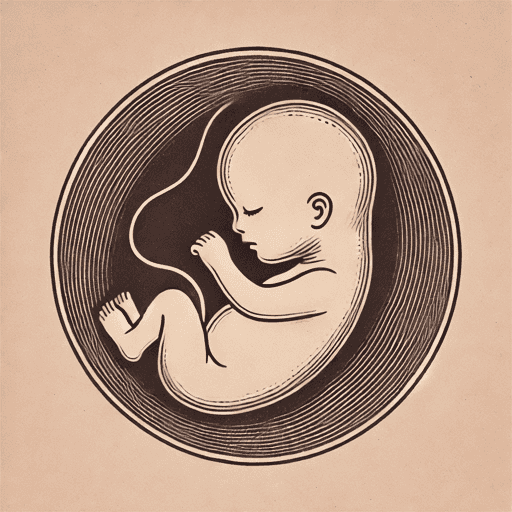
Nutshell: A Novel
Nutshell: A Novel
A modern alternative to SparkNotes and CliffsNotes, SuperSummary offers high-quality Study Guides with detailed chapter summaries and analysis of major themes, characters, and more.
Summaries & Analyses
Quizzes
NEWReading Tools
Chapters 11-15Chapter Summaries & Analyses
Content Warning: This section of the guide includes discussion of death by suicide, suicidal ideation, child abuse, sexual content, substance use, and death.
Chapter 11 Summary
The narrator becomes fully aware of his mother’s plan. John would drink the smoothie and then go to his car, where he would die. The police would find the empty smoothie cup, the empty antifreeze bottle, several bank statements showing massively overdrawn accounts, and negative reviews of poems that John published. There would also be a receipt for the smoothie and the hat that Claude wore to buy it, concealing his face.
After John leaves, Claude and Trudy listen tensely as he tries to start his car. After several failed attempts, it starts. Claude and Trudy then go to the bedroom, have sex, and fall asleep. As they sleep, the narrator has his “first dream, in full colour and rich visual depth” (104). He dreams of riding through the countryside and into the city. There, he sits with a man in a bar. The man reads him something that he wrote, wanting his approval. Then, a bell in the city begins to toll, signaling someone’s death.
The toll of the bell becomes the sound of the doorbell. Trudy makes her way downstairs, where two policemen are at the door. They ask her to sit down and then reveal that they found John dead; they are ruling it a death by suicide. She tells them that she and John fought that morning and blames herself for letting him leave. The officers assure her that it was not her fault. As she makes her way upstairs to Claude, the narrator notes that he can feel his mother’s surprise and even regret that their plan worked.
Chapter 12 Summary
Trudy wakes up Claude and tells him the news. Although he is happy that their plan worked, Trudy expresses fear that the police did not believe her act and that they will return. Claude tries to plan their next steps, noting that they have to tell the same thing to the police about their fight with John that morning, what it was over, and when John left. However, Trudy interrupts him, insisting that he is being insensitive, given she has just lost her former love. In response, Claude mocks her, insisting that she was the one who put their plan into action and did all the work.
The narrator notes that he “understand[s]” his mother. She now regrets what she did. At the same time, however, she deeply loves Claude. The narrator wonders which emotion she will give in to: her regret or her love.
Chapter 13 Summary
Claude and Trudy continue to fight as he addresses practical matters and she grieves her husband. Trudy insists that she won’t sell the house, but Claude threatens to turn them both in to the police. Trudy then claims that she hates him. However, Claude then approaches her, and they have sex, prompting the narrator to question the relationship between “[g]rief and sex” (126). The narrator attempts to wrap the umbilical cord around his own neck, not wanting to be born and neglected. However, as he begins to lose consciousness, he releases the cord and recovers. Later, he reflects on how grateful he is that his attempt failed, as he truly wants to be born and experience life.
Trudy shifts from grief to practicality. She goes into the kitchen to begin covering up the murder. She and Claude want to remove all traces of the smoothie and ensure that the coffee cups are the only thing left from their meeting with John. Claude orders food, saying that he wants to eat before they do anything else. Trudy argues that they need to act quickly, as the police could return at any time. At that moment, the doorbell rings, and they see Elodie on the camera.
Chapter 14 Summary
As Trudy makes her way to the door, the narrator contemplates revenge. He realizes that it would be justifiable yet decides that he could not go through with it, as it would not fix anything; it would simply require another crime.
At the door, Claude is comforting Elodie as she cries. He invites her inside for wine. Sitting at the kitchen table, Elodie invites Claude and Trudy to a poetry reading in John’s honor. She hopes that one of them will speak. Claude assures her that they will attend. Elodie then expresses confusion over John experiencing suicidal ideation. In response, Trudy angrily insists that Elodie did not truly know him. She points out his personal debt, his failing poetry, and more as evidence that he might die by suicide.
Elodie shrieks and stands up from the table. She angrily tells Trudy that John was lying. He and Elodie were not in love; it was a ruse to try to make Trudy jealous. They were not together, and he had no intention of forcing Trudy out of the house. The narrator senses that his mother sees Elodie as an “inconvenient woman bearing witness” to John’s true feelings (135). He wonders how Claude and Trudy will handle her.
Chapter 15 Summary
The narrator contemplates his sex and gender. One day, he realized that there was something between his legs that defined him as male. However, he has also heard about the range of gender identities, with one website noting that there are 71 possibilities. He vows to define his own identity, in gender and everything else.
The narrator then compares this to his mother’s handling of the crime: “She affirms, she identifies as innocent” (146). As she speaks with Elodie, she is actively seeking affirmation of this identity both to shore up her own self-image and because she knows that the police will soon interview Elodie; she needs to speak well of Trudy so as not to arouse suspicion. Conversely, the narrator notes that Claude “owns his crime” (146). He will not regret it or even think of it again but rather move forward, comfortable with what he did.
Chapters 11-15 Analysis
After John’s death, the narrative shifts from the tension and anticipation of the murder to the characters’ response, building toward Trudy and Claude’s climactic confrontation with the police. Two clear shifts occur within the characters and their motivations following John’s death. First, the focus of the narrator’s contemplation shifts from his own sense of complicity in the act to his feelings over his mother’s involvement. Although he still questions what role he played and how he will respond, he now begins to question who deserves to be punished for the crime. Second, Trudy and Claude’s relationship begins to fracture after their act, largely as a result of their different reactions to it. While Trudy is upset at having killed someone, especially the man she once loved, Claude reacts with cold detachment, justifying the murder and dismissing Trudy’s feelings.
The narrator’s first fully formed dream is a pivotal moment in his arc. In the dream, he travels freely through landscapes and cities, as “a formless mass or mess of wavering, ill-lit shapes, people and places dissolving, indistinct voices in vaulted spaces singing or speaking,” giving him “a sense of having left someone or something behind” (104). This dream contrasts sharply with the narrator’s physical confinement inside the womb. While his body remains restricted, forced to deal with the fallout of his father’s death, his mind is capable of wandering through spaces that he has never actually seen. At the same time, the narrator’s sense of having committed a “betrayal of duty or love” highlights the impossibility of disentangling his life from the murder that has occurred (104); even if he were not physically confined, his life would still be defined by this event in a way that highlights The Limits of Knowledge and Power. Likewise, the dream’s final moments, the bells that toll to signal death, emphasize the finality of John’s death and its impact on the narrator.
The ambiguous meeting that precedes the tolling bell complicates this point. The unnamed figure the narrator encounters, who has “a tale he has in mind, something he has written or [the narrator has], and wants an opinion, or to give one, a correction a point of fact” (105), can be interpreted as John; given the various anachronistic details in the dream, it may also be a reference to Shakespeare himself. Either way, the uncertainty about who is writing the story is significant; if John or Shakespeare is, the narrator is not in control of his life’s narrative, but the novel holds out the possibility that the narrator is himself the writer. The presence of writing also adds nuance to the motif of poetry, suggesting that the written word does have power, however ineffectual John might have seemed to the narrator.
Meanwhile, Trudy’s actions in this section underscore the theme of The Problem of Ethical Judgment and Action. The arrival of the police officers marks the first moment when the consequences of the murder become clear, forcing Trudy to play the grieving widow. Yet her performance of shock and sorrow is not wholly feigned; in the aftermath, the narrator detects the first signs of uncertainty and regret, which her argument with Claude further underscores. This complexity—regret coexisting with self-preservation—complicates the narrator’s already complicated feelings for her. He views her remorse as genuine but is also not above highlighting her hypocrisy and self-deception, as when he sardonically remarks, “Her status as a murderer is a fact, an item in the world outside herself. But that’s old thinking. […] [S]he feels blameless and therefore is—almost” (146). His sarcasm indicates uncertainty about whether Trudy’s sense of the murder as something she never really intended makes her more culpable or less.
Regardless, Trudy’s second thoughts lead to conflict with Claude that exposes the deeper tensions within their relationship. Claude viciously reminds Trudy that she played an active role in the murder, noting, “[T]he next morning who was that, proposing a toast to love, coaxing the man who shaped her life to raise a cup of venom? Surely not my brother’s loving wife” (120). Claude’s refusal to let Trudy distance herself from responsibility reveals that the partnership that once united them in secret plotting is now beginning to fracture under the pressure of reality, evoking the theme of The Corrupting Influence of Greed and Desire. Now that wealth and a life together are in their grasp, unresolved questions about guilt and loyalty remain.

Get in-depth, chapter-by-chapter summaries and analysis from our literary experts.
- Grasp challenging concepts with clear, comprehensive explanations
- Revisit key plot points and ideas without rereading the book
- Share impressive insights in classes and book clubs