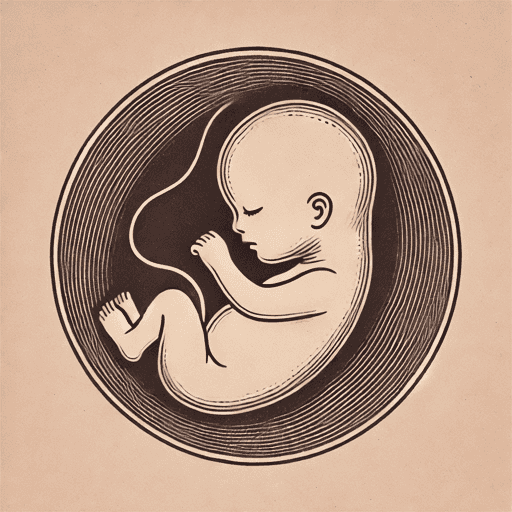
Nutshell: A Novel
Nutshell: A Novel
A modern alternative to SparkNotes and CliffsNotes, SuperSummary offers high-quality Study Guides with detailed chapter summaries and analysis of major themes, characters, and more.
Summaries & Analyses
Quizzes
NEWReading Tools
Chapters 6-10Chapter Summaries & Analyses
Content Warning: This section of the guide includes discussion of substance use, death by suicide, child abuse, and death.
Chapter 6 Summary
Claude and Trudy spend the next few hours drinking together. The narrator enjoys the taste and the feeling of the pinot noir, guessing at its varietal. He contemplates whether he could actually kill his uncle if it came to it.
Claude and Trudy begin discussing their plan. Claude suggests that she have a “picnic” with John as a way to reconnect, while putting the glycol in some of the food. Trudy begins to cry, noting that she loved John and was happy with him when they were younger. The narrator is hopeful that there is a chance that she will not go through with the murder.
Once Trudy finishes crying, Claude continues to explain his plan. He tells Trudy that she needs to go to John’s apartment at least once to reestablish their relationship. On the day of the murder, she has to wax her fingerprints, ensuring that nothing is left behind. He hopes to make John’s death look like a suicide. They also need to erase all traces of Claude having been in Trudy’s home, making it appear that they are only friends.
Trudy interrupts to argue that this plan only endangers her. She is adamant that Claude be tied to it as well, instead of at home when John is killed. Claude begins to argue, but then the doorbell rings. He checks the camera and tells her that John is there with a young woman.
Chapter 7 Summary
By way of introducing the young woman—Elodie, a poet who writes primarily about owls—the narrator acknowledges that great art, science, and knowledge often come from a “nutshell,” or limited worldview. Thus, he respects Elodie’s obsession with owls.
Claude lets John and Elodie in, and they sit at the kitchen table. Claude pours them wine. John introduces Elodie, whom he is going to publish. As they make small talk, the narrator contemplates the situation. He is unsure whether Elodie is his father’s lover or simply a ruse to allow him to stay with Trudy longer than normal. He can tell by his mother’s heart rate that she already despises Elodie. They have a terse conversation about owls, with Trudy arguing that they can be dangerous when provoked.
Finally, John stands and makes a speech. He first acknowledges that he and Trudy were both once deeply in love. He is adamant that they respect and remember that fact. However, he then announces that that love is gone. He knows about Claude and Trudy’s relationship, and he wishes them well. He is now in love with Elodie. She tries to interrupt him, but he dismisses her. He informs Claude and Trudy that he will be back the next day to begin moving his things in; he expects Trudy to vacate the home and move in with Claude. He suggests that they live their own lives for at least a year before trying to socialize and hopes that the divorce will be “civil.” After his speech, he gets up and leaves with Elodie.
The narrator is devastated by the fact that his father did not talk about his unborn child. He considers his father his “savior,” yet John did not even mention him. At the same time, he acknowledges the effort his father has been putting into pretending to be heartbroken, in turn “lulling [Trudy] into greater security” and “drawing” Claude and Trudy “together” (71).
After John and Elodie are gone, Trudy and Claude sit in silence for several moments. Then, Trudy tells Claude that they need to kill John tomorrow.
Chapter 8 Summary
Through the night, Claude and Trudy continue to drink and plot the murder. The narrator contemplates his existence: He was once blissfully unaware of the world, but now he is plagued by the knowledge that his father does not want him and that his mother plans to kill his father. Sometime after seven o’clock in the morning, Claude and Trudy crawl into bed. Given that John is coming in just a few hours, the narrator hopes that they will be unable to carry out their plan. At the same time, he acknowledges that any outcome is bad for him.
In the morning, the narrator is woken up by his mother rushing down the stairs. She and Claude quickly prepare for John to arrive, having left themselves only a handful of minutes. Claude brings John’s favorite smoothie from a place nearby and puts it in the blender with the antifreeze. The narrator senses his mother’s fear and panic inside her body yet notes her outer serenity. He urges her to recognize that her plan will never work. However, John then arrives, yelling up to Claude and Trudy that he is going to begin bringing his things in.
Chapter 9 Summary
The narrator writes a letter to his father. He recalls a poem that John read to Claude in the library about a “bitter” speaker who lost his love to someone else, lamenting his “longing unresolved and unacknowledged” (82). The narrator compares his view of the world to the speaker’s view of his love, noting how badly he wants to be part of the world despite everything bad he has heard about it. He begs his father to love him, saying that if he does, he will urge his father not to come into the kitchen and not to drink the smoothie.
Claude and Trudy sit in silence at the kitchen table. The narrator knows that everything is in place, though he does not fully understand it. In particular, there is something important from the bank and a “thing” that Claude retrieved. Meanwhile, they listen to John upstairs moving boxes in.
Eventually, John comes upstairs and sits at the table. He points out that Claude and Trudy have not begun to pack their things. He claims to have called an exterminator to fumigate the home and a garbage company to move out their trash. However, Trudy insists that they are not going anywhere. Claude tries to offer John the smoothie twice, but Trudy interrupts both times.
Trudy admits that John is right: They need to separate, but she is going to take her time moving out of their home. When she mentions Elodie, calling her “Threnody,” John admits that he had a fight with her last night. Elodie is adamant that John is still in love with Trudy. She laughs in response, offering to call Elodie to explain how much she despises him. Trudy then nods to Claude, signaling that she is ready to put their plan into action.
Chapter 10 Summary
Once Claude leaves, John asks to recite a poem. Although Trudy urges him not to, he does anyway, quoting “Sonnet 61: Since There’s No Help” by Michael Drayton. When he finishes, Claude returns. Trudy mentions having bought a smoothie, and Claude produces a cup that they allegedly saved for John. Desperate, the narrator kicks at his mother’s womb, trying to disrupt her, but she simply comments on his energy and then continues.
Trudy requests a glass of water and proposes a toast; however, John refuses to drink the smoothie. He gets up to leave, commenting that he will give Trudy a few weeks to get out of the house. She stops him, proposing a new toast and giving a speech about how John was right: They truly did have a great love once. The narrator again kicks his mother’s womb but fails to distract her or get John’s attention. This time, John drinks the smoothie, sets the cup down, and leaves.
Chapters 6-10 Analysis
This section of the text builds toward the murder of John. The planning scenes between Trudy and Claude convey the shift from vague intentions into deliberate and calculated crime. The presence of wine and alcohol during these conversations contributes to the atmosphere of indulgence and violence that surrounds the conspiracy, developing the theme of The Corrupting Influence of Greed and Desire; the characters’ appetites consistently lead them astray. Drinking also facilitates a tonal clash between the characters’ casual conversation and deadly planning, implying that intoxication creates a temporary emotional buffer between them and the reality of what they intend to do.
At the same time, the novel continues to explore The Problem of Ethical Judgment and Action by further complicating the narrator’s attitude toward both his parents. Trudy’s emotional reaction during the planning conversation introduces a moment of hesitation that the narrator seizes on. When Trudy states, “I loved him once” (55), the narrator pictures “an early tear […] smoothly traversing her cheekbone” (55). In this moment, Trudy’s apparent regret suggests that the murder might still be avoided, heightening the tension further leading up to John’s death. However, the narrator admits that the image of Trudy crying is one that he “imagine[s]”—he cannot see her—implying a desperation to see the best in her.
Conversely, the narrator’s attitude toward his father shifts negatively in the wake of John’s visit with Elodie. Initially, he imagined his father as a potential ally who might somehow rescue him from the destructive decisions being made around him. However, when John proclaims his love for Elodie, he fails to even mention the baby. In response, the narrator angrily thinks, “Not even a mention, not in an aside, not even dismissed as an irrelevance. A year ‘or so’ must pass before my saviour sees me. He paid tribute to honest memory and he forgot me. In a rush towards his own rebirth, he discarded mine” (71). In this moment, the narrator experiences a sense of abandonment that reshapes his understanding of his father. The silence surrounding his existence underscores his complete lack of agency in the world beyond the womb and the little influence he has over it, reinforcing The Limits of Knowledge and Power; the narrator realizes that even though he has listened to every conversation, he cannot influence how others perceive or acknowledge him.
At the same time, John’s visit hints at the narrator’s unreliable perception, exploring the limits on both his agency and ethical judgment from another perspective. Later chapters introduce the possibility that John’s relationship with Elodie is a ruse intended to make Trudy jealous. Whether this is true is left ambiguous, but certain details of the visit suggest it may be the case. John’s speech during this gathering represents a dramatic reversal in the emotional dynamics between the characters and leans toward hyperbole, both of which hint at insincerity. For instance, his declaration that they should not be upset but should “rejoice instead. These dark feelings [they] need to set [them]selves free, to be reborn into new life and new love” is grandiose in tone (69)—exaggerated in a way that may seek to amplify Trudy’s feelings of guilt. That John is a writer heightens the ambiguity; he is well poised to understand the effect of his words, but he is also prone to rhetorical flourishes that serve no apparent purpose. Regardless, the narrator does not grasp all the interpersonal undercurrents at play in the scene, as he himself admits while listening to Trudy and Elodie’s barbed exchange about owls: “Small talk or a trade in threat and insult—I lack the social experience to know” (66). This unreliability introduces the possibility that the narrator’s turn away from John is based on incomplete information.
This is not the only way in which the episode illustrates the problem of limited knowledge. John’s speech is immediately juxtaposed with Trudy’s anger, as she declares after his departure, “I want him dead” (71). Her response, like John’s visit, is ambiguous: Her anger may stem from the idea of losing the house, from jealousy, or (presuming she views John’s relationship with Elodie as fake) from resentment of John’s efforts to manipulate her. Regardless, it accelerates the plot against John in a way that is ironic, as she responds either to an attempt to win her back or to genuine magnanimity with redoubled determination to kill him. This highlights the limits of John’s agency; whatever his intention, it has backfired disastrously due to his incomplete understanding of his wife.
The motif of poetry emphasizes this futility. The narrator’s letter to John mentions the latter’s choice to quote a traditional sonnet in a moment of personal upheaval, which reflects his continuing reliance on literary language as a means of understanding emotional conflict. This reaction contrasts with Trudy and Claude’s violent impulses, further highlighting the differences between these characters; John reaches for language while Trudy and Claude plan action, and language does little to save him from their murder plan.
However, the juxtaposition is not simply one between words and deeds. In recalling the poem, spoken by an abandoned lover, the narrator reinterprets it in light of his own feelings of abandonment by John. That it fuels his resentment of his father underscores that words do have power to create change; however, language’s inherent ambiguity means that that power may not always translate into the intended result.

Get in-depth, chapter-by-chapter summaries and analysis from our literary experts.
- Grasp challenging concepts with clear, comprehensive explanations
- Revisit key plot points and ideas without rereading the book
- Share impressive insights in classes and book clubs