Nutshell: A Novel
Nutshell: A Novel
A modern alternative to SparkNotes and CliffsNotes, SuperSummary offers high-quality Study Guides with detailed chapter summaries and analysis of major themes, characters, and more.
Summaries & Analyses
Quizzes
NEWReading Tools
Symbols & Motifs
Content Warning: This section of the guide includes discussion of substance use, death by suicide, child abuse, and death.
The Womb/“Nutshell”
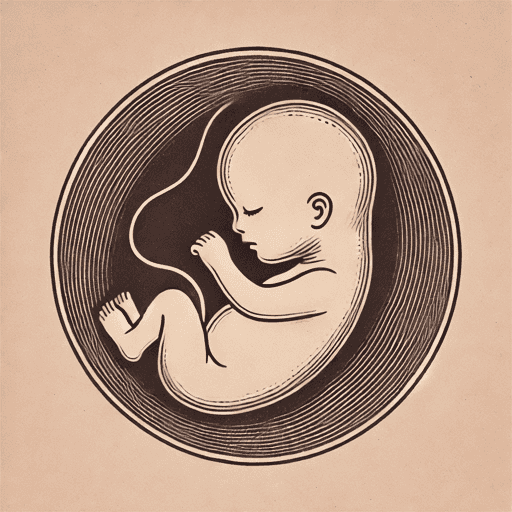
The womb, in its association with the “nutshell” of the title, is a symbol that represents both confinement and awareness. Physically, the narrator exists in a space that is completely enclosed; he cannot see the world directly or communicate with anyone. Despite these limitations, however, he develops a high degree of intellectual awareness. Through overheard communications and the physical sensations he experiences through his mother, he learns about the world beyond his immediate environment. This contradiction between knowledge and power reflects the theme of The Limits of Knowledge and Power. Despite his knowledge, the narrator cannot prevent the murder of his father or influence the adults around him. The womb therefore confines the narrator while also directly influencing his awareness of the world.
In this way, the womb emphasizes the narrator’s state of moral observation. Because he cannot physically participate in the world, he is forced into the role of a witness rather than an actor. From this position, he analyzes the motivations of Trudy and Claude, trying to understand how they justify their crime. His confinement allows him to contemplate complex questions about guilt, responsibility, and justice. In this sense, the womb functions as a metaphorical “nutshell” that contains the narrator’s expanding consciousness. Even though the physical space is small, it becomes the setting for vast intellectual reflection.
The narrator’s eventual birth marks the destruction of the narrator’s confinement as he becomes an active participant in the world. By puncturing the amniotic sac and forcing the labor process to begin, he converts the space of confinement into a gateway to action. His movement from the womb into the outside world is a rejection of passivity and a recognition that knowledge alone is insufficient, even if action itself is complex. In this way, the womb underscores both the limitations of observation and the potential for autonomy.
Wine and Alcohol
Alcohol is a recurring motif, particularly during the conversations between Trudy and Claude as they plan and justify John’s murder. Their frequent drinking creates an atmosphere in which serious moral decisions are discussed casually and with less restraint than they might otherwise show. The presence of wine or stronger alcohol during these conversations suggests that intoxication allows the characters to distance themselves emotionally from the gravity of what they are planning. Similarly, Trudy’s alcohol use emphasizes her lack of care for her child, as she consumes several glasses of wine daily despite her pregnancy.
This recurring motif connects to the theme of The Corrupting Influence of Greed and Desire, as alcohol often accompanies moments when the characters indulge in fantasies about the life they hope to achieve after John’s death. When Claude returns with the glycol for the first time, the narrator notes that Trudy “and [the narrator] share two glasses of the Sancerre, [Claude] drinks the rest, then returns to his plastic bag for a burgundy. The grey plastic bottle of glycol stands next to the empty, sentinel to our revels” (51). This metaphor, comparing the glycol bottle to a “sentinel,” underscores the interconnectedness of alcohol and the lovers’ plan, as does the fact that Claude presents both bottles, pulling them from the same bag.
The narrator experiences alcohol indirectly through his mother’s bloodstream, which creates an unusual relationship between pleasure and danger. At times, he describes the warmth and comfort the alcohol brings him, revealing how enjoyable the indulgence feels. The first time Trudy drinks, the narrator thinks, “I know that alcohol will lower my intelligence. It lowers everybody’s intelligence. But oh, a joyous, blushful Pinot Noir, or a gooseberried Sauvignon, sets me turning and tumbling across my secret sea, reeling off the walls of my castle, the bouncy castle that is my home” (7). Yet these moments of comfort occur alongside conversations about murder, betrayal, and escape. The coexistence of pleasure and wrongdoing demonstrates how the characters’ desires gradually overwhelm their sense of morality. Alcohol becomes a physical representation of indulgence, underscoring how the pursuit of immediate satisfaction can cloud ethical judgment.
Poetry
Poetry is a motif that is directly connected to the character of John. Through the repeated references to poetry readings, the poems John publishes, and John’s own work, the narrative presents poetry as a form of communication that attempts to capture the complexity of human feelings. John’s identity as a poet shapes how others interpret his character; while the narrator reveres his father for his love of poetry and obsession with literature, Trudy seems bored by it. His poetry represents a world of artistic expression and emotional depth that contrasts sharply with the deception and violence surrounding his murder, emphasizing Trudy’s violence and immorality. When the narrator discovers his mother and uncle’s plan to kill his father, he thinks, “I refuse to say I hate her. But to abandon a poet, any poet, for Claude!” (33). In this way, the motif connects to the theme of The Problem of Ethical Judgment and Action because poetry becomes a tool through which the narrator attempts to interpret motivations.

Unlock the meaning behind every key symbol & motif
See how recurring imagery, objects, and ideas shape the narrative.
- Explore how the author builds meaning through symbolism
- Understand what symbols & motifs represent in the text
- Connect recurring ideas to themes, characters, and events