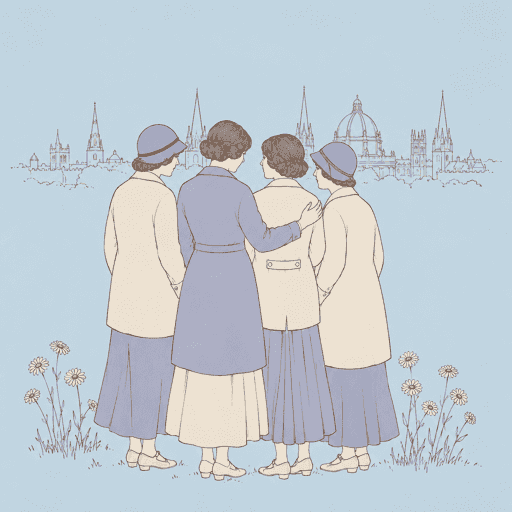
The Eights
The Eights
A modern alternative to SparkNotes and CliffsNotes, SuperSummary offers high-quality Study Guides with detailed chapter summaries and analysis of major themes, characters, and more.
Summaries & Analyses
Author Insights
Quizzes
NEWReading Tools
Book Club Questions
Content Warning: This section of the guide includes discussion of bullying, mental illness, and gender discrimination.
General Impressions
Gather initial thoughts and broad opinions about the book.
1. What was your initial reaction to the heckling scene on matriculation day? How did this opening confrontation shape your expectations for the challenges the Eights would face throughout their first year at Oxford?
2. The novel features the real-life historical figure Vera Brittain, whose memoir Testament of Youth also details a young woman’s experience at Oxford and the deep impact of the Great War. How did reading The Eights as a work of fiction compare to any nonfiction accounts you may have read about this era? What can fiction offer in exploring this historical period that a memoir or history book might not?
3. The story is told through the perspectives of all four central women. Which of the Eights did you connect with the most, and whose journey did you find the most compelling by the end of the novel? What was it about her story that resonated with you?
Personal Reflection and Connection
Encourage readers to connect the book’s themes and characters with their personal experiences.
1. Friendship is a powerful force in the novel, acting as an important support system for the Eights as they navigate a hostile environment. Think about a time you entered a new and challenging situation, like a new school or job. How did the friendships you formed help you find your footing?
2. Beatrice struggles to define herself outside the shadow of her famous and often critical mother, Edith Sparks. Have you ever felt the pressure of a family member’s legacy or expectations? How do you think Beatrice’s journey toward self-acceptance reflects the universal challenge of forging one’s own identity?
3. After being humiliated in a lecture, Beatrice receives an anonymous note of encouragement and a snowdrop. Think about a small act of kindness from a stranger or acquaintance that had a surprisingly large impact on you. What made that gesture so meaningful?
4. Otto sees attending Oxford as a “life buoy,” an escape from the future her family has planned for her. Can you recall a time when pursuing an educational or personal goal felt like a form of rescue or a way to redefine your path?
5. Marianne must conceal a huge part of her identity, living in constant fear that her secret will be discovered. Without revealing personal secrets, let’s talk about the pressure of hiding a part of yourself to fit in or meet expectations. What kind of toll can that take on your relationships and sense of self?
Societal and Cultural Context
Examine the book’s relevance to societal issues, historical events, or cultural themes.
1. How does the novel depict the psychological toll of World War I, or “shell shock,” through characters like Charles Baker and the soldier in the park? In what ways has our public conversation about veterans’ mental health evolved since the 1920s, and what aspects still feel familiar?
2. The story is set right as women were first granted full membership status at Oxford, yet they were still bound by strict rules and quotas. What parallels can you draw between the institutional and social barriers the Eights faced and the challenges that persist for underrepresented groups in academic and professional fields today?
3. The guide mentions the post-war demographic issue of “surplus women.” How do you see this social anxiety playing out in the lives of the four main characters? How does it influence their motivations for seeking an education and their views on marriage?
Literary Analysis
Dive into the book’s structure, characters, themes, and symbolism.
1. Charles Baker is presented as an antagonist, yet his cruelty is explicitly linked to his war trauma. How did the novel’s portrayal of his character affect your ability to feel sympathy for him? Does the story suggest that his actions are forgivable, or simply explainable?
2. What is the significance of the recurring references to Pre-Raphaelite art? How does the novel contrast the idealized, often tragic women in the paintings, like Rossetti’s “stunners,” with the agency and complex choices of characters like Dora and Marianne?
3. Miss Jourdain’s character contains a fascinating contradiction. How does her secret role as Marianne’s protector complicate her public persona as the strict, rule-enforcing principal? What might this suggest about the compromises powerful women had to make in that era?
4. The author uses flashbacks to reveal each of the main characters’ backstories. How effective did you find this technique? Which character’s past was most surprising or illuminating for you, and how did it change your perception of her actions in the present?
5. Letters are central to the plot, delivering both destructive lies and quiet truths. How does the novel use this motif to explore themes of deception and connection in an era before instant communication? What does Captain Ferryman’s fabricated letter reveal about the power of the written word?
6. The number eight evolves from a simple coincidence to a powerful symbol for the group. How does this symbol reinforce the theme of friendship as a source of strength and shelter throughout the novel?
Creative Engagement
Encourage imaginative and creative connections to the book.
1. If you were to adapt The Eights for a television series, which character’s story arc would you be most excited to expand upon? Are there any minor characters or subplots you would give more screen time?
2. Imagine you are designing the book cover for a new edition of The Eights. Which object from the novel, such as Marianne’s locket, the suffragette penny, or the bee orchid, would you choose as the central image, and why?
3. The novel concludes at the end of the first year, with two more years at Oxford ahead for the Eights. Choose one of the four women and write a brief “epilogue” for her. What do you imagine her life looks like five or ten years after she leaves the university?

Get in-depth, chapter-by-chapter summaries and analysis from our literary experts.
- Grasp challenging concepts with clear, comprehensive explanations
- Revisit key plot points and ideas without rereading the book
- Share impressive insights in classes and book clubs