John of John
John of John
A modern alternative to SparkNotes and CliffsNotes, SuperSummary offers high-quality Study Guides with detailed chapter summaries and analysis of major themes, characters, and more.
Summaries & Analyses
Author Insights
Quizzes
NEWReading Tools
Chapters 1-5Chapter Summaries & Analyses
Content Warning: This section of the guide features depictions of physical and emotional abuse, antigay bias, substance use and addiction, sexual content, cursing, as well as illness and death.
Chapter 1 Summary
While living in Edinburgh, Cal (John-Calum Macleod) has a weekly phone call with his father, John Macleod, who lives on Harris in the Outer Hebrides. During these calls, Cal hides the reality of his life: He is unhoused, works a demeaning cleaning job, and has sexual encounters with men. His father, a precentor in their church, uses the calls for prayer and scripture readings. One day, John tells Cal that his maternal grandmother, Ella, is unwell, claiming her feet have turned the color of calf liver. He insists it is time for Cal to come home.
Cal begins the long journey back, swallowing an ecstasy pill while still watching the harbor recede early in the crossing, as the ferry churns across the Minch, the strait separating the Outer Hebrides from the mainland. Onboard, he runs into Innes MacInnes, a neighbor and his father’s friend. Wanting to delay his arrival, Cal lies about meeting a friend in town and declines Innes’s offer of a ride from the harbor. After disembarking on Harris, Cal intentionally misses the first bus. While waiting for the next one, he repacks his belongings, hiding his Walkman, old copies of The Face magazine, and a gay newspaper at the bottom of his bag.
Chapter 2 Summary
The narrative shifts to John Macleod, who wakes up troubled by the growing cracks in his house. In the fields, he discovers that his finest ram has died overnight from fluke. He drives to the bus stop to meet Cal, but the bus passes without stopping. Soon after, Innes MacInnes arrives and tells John that he saw Cal on the ferry, but that Cal claimed to have other plans.
Innes persuades John to wait at the MacInnes croft, where he lives with his elderly father, Innes Crùbaidh, and his younger and more academic brother, Sorley MacInnes. The brothers have not spoken directly to each other in 16 years, forcing visitors to repeat questions to each of them separately. After John has eaten, Innes follows him outside. Away from the view of the house, their interaction becomes tense and intimate. John flinches when Innes touches his arm, but then takes Innes’s hand and gently strokes the back of it with his thumb, hinting at a secret, physical relationship between the two men.
Chapter 3 Summary
John picks Cal up from the bus shelter, and his disapproval is immediate. He criticizes Cal for drinking and for his worn, fashionable clothes. Pulling off Cal’s hat, he reacts with disgust to Cal’s long, bleached-ginger hair, calling it feminine and comparing him to a cross-dresser. During the tense drive home along the single-track “ribbon road,” John invites Cal to a men’s book club, but becomes angry when Cal mentions hugging Innes on the ferry, warning him not to make a mockery of the man.
Cal considers telling his father that he is gay, if only to hurt him for demanding his return, but remains silent. As they drive, they pass an abandoned van on the shore that reminds Cal of his childhood friend, Doll Macdonald with whom he often visited the van. When they arrive at the croft, Cal greets his grandmother, Ella. He immediately checks her feet and discovers they are not purple but a pale lilac, realizing his father manipulated him into returning home with a lie. In front of Ella, John again yanks the hat from Cal’s head and demands that his hair be “sorted.”
Chapter 4 Summary
After several days of rain have kept him inside, Cal goes out and finds Doll Macdonald at the slipway. Doll is now a fisherman and is cold and resentful, accusing Cal of thinking he was too good for the island. In a moment of tension and desperation, Cal makes a blunt sexual offer to Doll, which is met with silence. Back at the house, John confronts Cal with his overdue bills and proposes a solution: They will secretly work the loom in shifts to fill a large order, violating the weaver’s code that permits only one weaver per cloth.
At a tense dinner, John—speaking Gaelic—erupts at the Glaswegian Ella for never having learned Gaelic in her 48 years on the island. Cal defies his father’s command to stay for evening worship, mockingly quoting a Bible passage about stoning rebellious sons before leaving. He goes to a small inn run by a local man named Flash (Aonghas Calder) to ask for work, but there is none. Feeling isolated, he reads the lonely-hearts column in a newspaper and finds an ad from a gay man in Inverness named William. That night, he writes a letter to William, introducing himself and hoping for a connection.
Chapter 5 Summary
In the kitchen, Ella tells Cal that her main source of gossip is a ewe named Ishbel who has become the new bellwether, or flock leader. She also reveals a sunbed lamp she hides from John in her small pantry-bedroom. The two share a private ritual where Cal teaches her a new vulgar word: “rantallion.” Ella gives Cal a box of old hair dye that belonged to his mother, Grace, prompting Cal to complain that his mother has never once visited in the 15 years since she left. Ella ignores this and suggests he pursue Doll’s younger sister, Isla, which angers Cal.
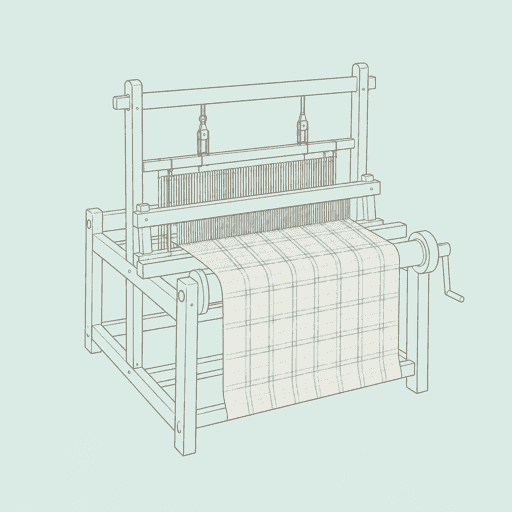
He later overhears his father quoting Deuteronomy to Ella, condemning Cal’s appearance as a “woman’s garment.” In the weaving shed, Cal raises the subject of Ella’s feet, telling John they are not purple. John evades the accusation, vaguely claiming they “were a hellish colour” (74) and telling Cal to trust in God’s plan. After demonstrating how to match his weaving technique to conceal their deception, John leaves Cal to work the night shift alone at the Hattersley loom with its treadle pedals. Cal feels his fate is sealed.
Chapters 1-5 Analysis
The novel’s central conflicts ignite through acts of concealment and deception, beginning with the phone call that brings Cal home. John’s claim that his mother-in-law’s feet are “as purple as calf liver” (1) is revealed to be untrue, exploiting the precise language of color that defines their shared craft as weavers to manipulate Cal’s sense of duty. This initial falsehood establishes a pattern of dysfunctional communication, wherein essential truths are withheld to maintain control. Cal, in turn, hides his own reality: His being without a home, his demeaning cleaning job, and his sexual encounters with men. By withholding or manipulating information, both Cal and John feel that they are exercising agency over their relationship. Their conversations are described as “censored, missing the things they couldn’t talk about” (2), a dynamic that extends beyond their immediate family to the community’s other men. The silent, 16-year feud between the MacInnes brothers and the furtive, tender moment between John and Innes outside the croft reveal a world where male intimacy is either violently suppressed or hidden away from communal view. These layers of secrecy, born from a rigid moral code and enforced with public shaming and gossip, show The Corrosive Nature of Sexual Repression, creating a system of lies and unspoken resentments that inhibit a genuine connection.
Cal’s 20-hour journey from Edinburgh is a physical manifestation of the immense cultural and psychological distance between his mainland life and his island origins. The arduous trip—involving multiple buses, a ferry, and a long walk to cover less than 300 miles—emphasizes the deep isolation of the Outer Hebrides. This isolation is further established through the ribbon road, the single-track path connecting the scattered houses of Falabay. Cal’s memory of the “giddy, stupid pleasure to know there was more than one way to get from where you were to where you wanted to be” (31) on Edinburgh’s complex street corners contrasts sharply with the island’s “one road,” an emblem of a life with severely limited choices. The unforgiving landscape of Lewisian gneiss is not merely a backdrop; it is an active force that mirrors the rigid social environment. This geographical confinement enables the intense communal oversight and moral policing that underpins Religious Dogma as Social Control, trapping inhabitants in a cycle of tradition and surveillance that fuels the phenomenon known as the “islander’s exile.”
Upon his arrival, Cal’s physical appearance immediately becomes a battleground for his father’s authority and the community’s strictures. John’s violent disgust at his son’s bleached-ginger hair, which he condemns as feminine and compares to that of a “cross-dresser that’s thrown on a coat because he’s run out of milk” (27), introduces the symbol of Cal’s hair as a tangible representation of his rebellion against island norms. For John, Cal’s appearance is less a matter of style and more an issue of morality and transgression. He invokes scripture, quoting Deuteronomy to frame Cal’s hair as a “woman’s garment” and therefore an “abomination” in the eyes of God. This response illustrates how religious dogma as social control is wielded to enforce strict gender conformity and police individual identity. Cal’s choice of clothing and hairstyle signifies his embrace of a modern, more fluid selfhood cultivated on the mainland, making his body the primary site of conflict with his father’s unyielding patriarchal and religious worldview. His act of hiding his magazines and a gay newspaper at the bottom of his bag is a literal layering of concealment, mirroring the psychological pressure to suppress his identity.
The precarious state of the island’s economy forces John to compromise his own moral authority, revealing the pressures that cause communities to fracture from within. Faced with Cal’s significant debt, John proposes they secretly work the Hattersley loom in shifts to fulfill a large order. This plan directly violates the strict weavers’ code of “one weaver per cloth” (50), a rule protected by the Harris Tweed Act of 1993 to ensure quality and provide an equitable distribution of work. This moment introduces the symbol of Harris Tweed and the loom as an emblem of economic desperation and ethical compromise. That John, the church precentor, is willing to risk his reputation and license shows The Way Economic Decline Fractures Communities by pushing individuals to subvert communal trust for personal survival. The decision traps Cal in the very trade he sought to escape, tethering his future to his father’s loom and the dwindling prospects of the island, a fate he feels is sealed when he begins his first shift alone.
Language itself is a primary tool of power and resistance, defining alliances and reinforcing divisions within the family. During a tense dinner, John’s sudden switch to Gaelic to berate Ella for never learning the language isolates her while simultaneously asserting his cultural and patriarchal authority over Cal. His use of Gaelic is territorial, a means of creating a private space of control that excludes his mother-in-law and reminding her that she is not local, as though his locality and mastery of Gaelic convey moral authority over an outsider like Ella. In response, Ella cultivates her own private language with Cal, teaching him vulgar English words like “rantallion” as an act of subversive intimacy. This secret vocabulary provides a small but significant rebellion against John’s dour piety. Caught between these linguistic battle lines and suffocated by the unspoken truths governing his home, Cal’s decision to write a letter to William, a stranger from a newspaper’s lonely-hearts column, becomes a desperate act of seeking connection outside this closed system. His letter is a fragile attempt at self-definition, an effort to articulate an identity that has no acceptable language in the world of Falabay.

Get in-depth, chapter-by-chapter summaries and analysis from our literary experts.
- Grasp challenging concepts with clear, comprehensive explanations
- Revisit key plot points and ideas without rereading the book
- Share impressive insights in classes and book clubs