John of John
John of John
A modern alternative to SparkNotes and CliffsNotes, SuperSummary offers high-quality Study Guides with detailed chapter summaries and analysis of major themes, characters, and more.
Summaries & Analyses
Author Insights
Quizzes
NEWReading Tools
Important Quotes
Content Warning: This section of the guide includes depictions of antigay bias, physical and emotional abuse, substance use and addiction, sexual content, suicidal ideation, and animal cruelty.
“He absolutely didn’t mention that he spent more nights than he wanted to with a gentle Welshman who, when Cal fucked him, liked to lie on his belly with his arms pinned beneath himself, his hands clasped in some devotional gesture of helplessness. If he were ever to tell his father that, he was certain those would be the last words they would ever share.”
(Chapter 1, Page 3)
This internal monologue establishes the deep emotional and informational divide between Cal and his father. Cal’s secret sexuality is the unspoken truth, framed as a terminal act rather than something that can bring about catharsis. Honesty would mean the end of their relationship, defining it by what must remain hidden.
“He peered around Innes into the darkness of the house again, and, seeing they were truly alone, he took a step closer. He took Innes’s hand in his, and he stroked the back of it with the side of his thumb.”
(Chapter 2, Page 24)
This passage reveals John’s repressed desires through a moment of secret, tender intimacy. The preceding actions—checking for witnesses and peering into the darkness—highlight the deep fear and secrecy surrounding his relationship with Innes. This creates an irony, in which both father and son are afraid of being honest about their sexuality.
“You’ve done nothing. Nothing at all. You upped and left as it suited you. And then you show up expecting everything to be the same.”
(Chapter 4, Page 48)
Doll’s bitter dialogue articulates the resentment of those left behind on the island, directly addressing The Way Economic Decline Fractures Communities. His accusation frames Cal’s education and departure as an abandonment instead of an achievement. This interaction reveals how economic stagnation has poisoned the friendship and created an unbridgeable gap between their experiences.
“And all the men of his city shall stone him with stones, that he die; so shalt thou put evil away from among you; and all Israel shall bear and fear.”
(Chapter 4, Page 54)
In this act of defiance, Cal weaponizes his father’s own religious text against him. By reciting the scripture that prescribes a death sentence for rebellious sons, he exposes the violent underpinnings of the patriarchal authority John wields. Cal is aware of the text, he shows, but he continues to act in this fashion. It is a moment of cold, intellectual rebellion, turning a tool of control into an expression of contempt.
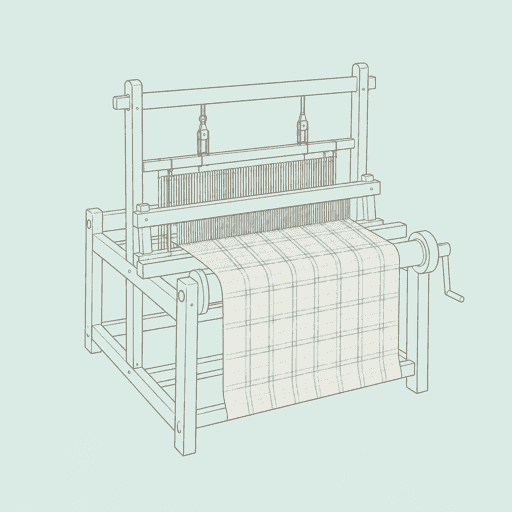
“Imagine whatever you like on that wall over there, and then just pedal towards it.”
(Chapter 5, Page 75)
Ella’s advice reframes the loom, a motif of constricting labor and tradition, as a potential vehicle for imaginative escape. By directing Cal’s attention to the blank wall, she offers a mental focal point that transcends his physical confinement. This moment suggests that internal freedom can be cultivated through imagination and hope, even in spite of the physical reality of the loom and everything it represents.
“She had been the one who taught Cal to knit. But she could never imagine the beauty that he could dream up; her mind didn’t conjure things it had never seen before.”
(Chapter 6, Page 77)
Ella’s reflection highlights the innate, almost otherworldly nature of Cal’s artistic talent. Though she taught him the craft, his creativity transcends her traditional understanding, stemming from a private, internal world she cannot access. This observation emphasizes the theme of art as a unique expression of a repressed self, beyond mere technical skill.
“John tore into the denims. The cloth made a terrible ripping sound and Cal stopped his searching. He sat back upon his haunches and stared at his father in shock.”
(Chapter 7, Page 92)
This act of destruction is a direct attack on Cal’s identity, symbolized by his modern clothing. The harshness of the “terrible ripping sound” audibly represents the violent fracturing of the father-son relationship. John’s rage targets the jeans as a symbol of mainland nonconformity and perceived effeminacy, foreshadowing greater physical violence.
“But he had once asked him why they worried so much about the Sabbath and John had said that to ignore the Fourth Commandment was to do away with the Word of God, and if you were to do that, then you might as well ignore the Sixth and kill whomever you pleased.”
(Chapter 7, Page 93)
John’s justification for the Sabbath’s strict observance exposes the rigid, all-or-nothing nature of his faith. By equating a failure to rest with a license to murder, he reveals a worldview where any deviation from scripture leads to total moral collapse. This extreme logic emphasizes the theme of religious dogma as an inflexible form of social control.
“His vision became a flick book of small images. He saw how his son’s mouth knotted. How his front teeth cracked together, angry bubbles of spit pushing through the chipped enamel.”
(Chapter 7, Page 106)
Describing the violent attack from John’s detached perspective, this passage highlights the chilling loss of paternal feeling. The clinical, almost cinematic detail—a “flick book of small images”—emphasizes his emotional distance even as he inflicts physical harm. This moment marks the culmination of the father-son conflict, whereby repressed anger erupts into brutal, dehumanizing violence rather than any effective means of communication or emotional honesty.
“He knitted around his erection, starting at the base and laying each stitch the same way a bricklayer builds a chimney around the flue, or the way Ella knit a turned-heel sock.”
(Chapter 11, Page 149)
This act combines Cal’s artistic craft, inherited from his grandmother, with his repressed sexuality in a desperate attempt at connection. The simile comparing the act to traditional knitting and bricklaying grounds this deeply personal and vulnerable creation in the familiar labor of his community. It is a fragile, handmade, and somewhat absurd expression of an identity he cannot otherwise reveal.
“She spoke to the Crofting Commission. She plans on assigning the tenancy to me.”
(Chapter 12, Page 162)
In this key revelation, Grace discloses a plan that shifts the novel’s central conflict from Cal’s personal struggles to a generational battle for land, home, and legacy. The croft tenancy becomes a symbol of power wielded by the family’s women against John. Cal’s decision to keep this secret from his father deepens the chasm of unspoken truths between them.
“She found John in Innes’s arms, lying in a patch of harebell overlooking the calm sea. They were doing nothing more than reading from the same book, Wuthering Heights, but John’s head had been resting on Innes’s chest and Innes had been caressing the soft hair that curled behind his ear.”
(Chapter 13, Page 170)
This passage reveals the source of the Macleod family’s fracture through a flashback. The imagery presents a moment of tender, non-sexual intimacy that is nonetheless interpreted as a deep betrayal within the community’s rigid norms. To Grace, such a scene of intimacy involving her austere husband had been a shock that altered her life.
“‘There’s this man,’ he said. ‘He’s a good man. If you need something in life, he will have noticed you have a need before you can even express it and he will be there, at your side, with the very thing you are missing. He lives on my road. I have known him since I was fourteen. I have loved him since I was fourteen.’”
(Chapter 15, Page 199)
Speaking under the anonymity of a false name, John finally confesses the secret that has defined his life. This moment of extreme vulnerability is a turning point, revealing the depth and duration of his love for Innes. Significantly, he can only be himself when he is pretending to be someone else. The simple, declarative sentences stand in stark contrast to his lifetime of silent, internalized suffering.
“Cal watched as he fought to maintain his dignity and his expression became one not of repentance or shame, but a smug sort of defiance, an immature smirk that exposed how hurt he was.”
(Chapter 16, Page 217)
Observed through Cal’s eyes, Doll’s public shaming becomes a moving commentary on religious authority. His reaction—a “smug sort of defiance”—is not so much arrogance as it is a fragile defense against deep humiliation. This reveals how communal judgment and strict religious discipline can breed resentment and hidden pain rather than genuine repentance.
“I have been nothing but a dog at your side for years now. It’s been all, ‘Good boy, Innes. Come here, Innes. Just wait, Innes.’ I can’t tell you how angry I am at my own hope. How ashamed I would be if anyone knew what I had settled for!”
(Chapter 17, Page 232)
Innes’s speech culminates decades of frustrated love and emotional subservience. The metaphor of being John’s “dog” powerfully conveys his sense of debasement and unreciprocated loyalty. His anger is directed not just at John, but at his own “hope,” revealing the immense psychological toll of waiting for a man who cannot overcome his own internalized shame.
“Cal knew it was a lie because Doll had lost his virginity to him.”
(Chapter 18, Page 243)
This short, impactful sentence reveals the depth of Cal and Doll’s secret history. It starkly contrasts Doll’s public, hyper-masculine posturing with their shared private intimacy. The revelation emphasizes the theme of hidden identities and suppressed desires within their community, showing the deep emotional cost of their secrets.
“Ach. What’s the point of being alive if you don’t try to kill yourself now and again.”
(Chapter 18, Page 244)
Spoken by Hoggy after recounting a story of near-fatal recklessness, this line captures the nihilism gripping the island’s youth. Faced with economic decline and a lack of opportunity, the young men engage in self-destructive behavior as a form of entertainment and escape. This self-destruction, by becoming a nickname, becomes a literal identity. The statement’s casual delivery emphasizes a deep-seated communal despair.
“And you have exactly as long as it takes me to build this shed to decide if we have a future or not. I won’t wait any longer.”
(Chapter 19, Page 259)
Innes issues this ultimatum to John, transforming the practical act of building a weaving shed into a symbolic deadline for their repressed relationship. This moment is an important turning point, wherein Innes rejects decades of silent suffering and demands a resolution. His agency directly challenges John’s passivity and fear of social condemnation.
“Everyone says it’s harder to leave. But it’s much harder to stay.”
(Chapter 20, Page 278)
Innes offers this observation to Cal, articulating a central tension of the novel. The statement reframes the conventional narrative of island life, which often glorifies those who remain while pitying those who emigrate. Here, staying is depicted not as a default. It is shown to be an act of endurance requiring deep strength.
“Not watching you, he had wanted to say, but watching for the John within you.”
(Chapter 21, Page 296)
This passage of Innes’s internal monologue reveals the truth of his long-held gaze, which Cal had misinterpreted as predatory. The sentence clarifies that Innes’s interest in Cal is a projection of his unrequited love for John. This insight exposes a tragic cycle of misplaced desire, linking the two generations through shared emotional repression.
“In a day or two that lassie will be nothing but a hoor. They’ll forget about that fisherman and the blame will be hers alone. You’d be surprised at the ways women betray themselves.”
(Chapter 23, Page 330)
Ella’s cynical observation exposes the misogyny embedded in the community’s religious and social structures. Her words highlight how patriarchal pressures compel women to enforce norms upon one another, thereby perpetuating their own subjugation. This commentary critiques the system that turns victims into accomplices in their own disempowerment, a key aspect of the theme of Religious Dogma as Social Control.
“‘Aidh—and I am an old man. I’ve wasted my life in waiting,’ he said. ‘Don’t waste yours. Go. Go see the world.’”
(Chapter 23, Page 336)
Innes’s advice to Cal is a moving admission of his own life’s regrets, stemming from his repressed love for Cal’s father, John. It emphasizes the theme of wasted potential due to societal and religious constraints. This warning is a catalyst, urging Cal to escape the island and avoid the same tragic fate.
“I saw you through the window. I saw him lying on top of you. I saw you spread flat like a woman. I heard you moan.”
(Chapter 24, Page 357)
Isla’s graphic description of what she witnessed between Cal and Doll reveals the community’s rigid gender roles and the shame associated with same-sex desire. Her depiction of Cal as “spread flat like a woman” emphasizes the perceived transgression of his masculinity. This moment crystallizes the themes of forbidden love and sexual repression, yet also highlights the deep bond between Isla and Cal by showing how she has kept (and will keep) their secret.
“Can you believe it? She thought she had won. But the croft will be mine and we can go on, you and me, just the way we are.”
(Chapter 25, Page 380)
Uttered after blackmailing Ella, John’s triumphant declaration to Innes is drenched in irony and a lack of self-awareness. He believes he has secured their static, clandestine life, which is precisely the existence Innes is fleeing. This line starkly illustrates John’s self-deception and how his inability to openly embrace his identity ensures he will lose the person he loves.
“‘Can you take a message to my grandmother?’ he said, with a splutter of embarrassed laughter. ‘Can you ask her to come home?’”
(Chapter 26, Page 400)
These final lines mark Cal’s transformation from an exile seeking escape to a man claiming his place within the community. In addressing the bellwether ewe, a symbol of his grandmother’s unorthodox connection to the island, he accepts responsibility for his fractured family. This act signifies his commitment actively rebuild his domestic life.

Unlock every key quote and its meaning
Get 25 quotes with page numbers and clear analysis to help you reference, write, and discuss with confidence.
- Cite quotes accurately with exact page numbers
- Understand what each quote really means
- Strengthen your analysis in essays or discussions