John of John
John of John
A modern alternative to SparkNotes and CliffsNotes, SuperSummary offers high-quality Study Guides with detailed chapter summaries and analysis of major themes, characters, and more.
Summaries & Analyses
Author Insights
Quizzes
NEWReading Tools
Chapters 18-22Chapter Summaries & Analyses
Content Warning: This section of the guide features depictions of physical and emotional abuse, antigay bias, substance use and addiction, sexual content, as well as illness and death.
Chapter 18 Summary
Cal and Doll take a bus to the west coast of Lewis for a cèilidh, a traditional Gaelic gathering with live music. On the way, they get drunk on vodka and pineappleade. Cal tries to apologize for their previous fight, but Doll dismisses it. They arrive at a bed and breakfast called Dunmarriet, run by Shiv Malone, a middle-aged Irishwoman. Doll flirts brazenly with Shiv, who seems to enjoy the attention. While helping her flip a mattress, Doll jerks her to her feet and she flies into his arms.
Later, at Tormod MacNeil’s “drinking bus,” a converted coach, Cal and Doll meet three workmen: Mildew, Peepo, and Hoggy. During the gathering, Hoggy is referred to as “Cheeks” by the other men due to an injury suffered during a peat stove accident. Cheeks reveals he has a new job working for Cal’s mother, Grace. Cheeks gives Cal ecstasy, invites him to the T in the Park music festival, but asks him not to bring the unreliable Doll.
As the party grows crowded, Doll becomes belligerently drunk. He vomits on the floor before extravagantly kissing Shiv. After the cèilidh ends, Cal walks back with Doll and Shiv to the B&B. Upon arrival, Doll asks Cal for some time alone with Shiv, then closes and locks the door, leaving Cal outside in the rain for hours. At first light, Shiv finds him, saying she fell asleep. She lets him into their room, where an unapologetic Doll is in bed. As a miserable Cal gets into his own bed, Doll briefly climbs in behind him and holds him. Shiv soon returns to the room and gets into bed with Doll.
Chapter 19 Summary
In Falabay, Innes shows John a concrete foundation he has laid for a new weaving shed on the MacInnes croft. He reveals that other men from the church have contributed money for its construction. Innes then lays out a plan for John to move into his house, where they can finally live together once Innes’s father passes away. He gives John an ultimatum: John has until the end of summer, when the shed will be finished, to decide if they have a future together.
Meanwhile, Cal returns from the cèilidh after taking some of his mother’s temazepam. He is picked up by Nurse Anna-Marie, who is crying over her faltering romantic relationship with Sorley. When Cal arrives home, John is grieving over their dying dog, Bess. Cal informs John that John’s brother, Uilleam, is also dying, but John is unmoved, implying he already knew. John then blames Cal’s absence for the death of a ewe and her twin lambs during a difficult birth. During the lambing season that follows, Cal impresses his father by saving a newborn lamb from an eagle, but a number of lambs are lost. Feeling trapped and desperate to get away, Cal calls Innes from a public phone box. He lies about wanting to help Innes look at new vans on the mainland, creating a pretext for them to leave the island together.
Chapter 20 Summary
Cal meets Innes in the mainland town of Oban. Innes arrives hours late, admitting he lied about being delayed by a car crash. At a pub, their conversation is strained until Cal, after several drinks, reveals his suspicion that his father is secretly seeing a woman in the town of Tolsta. Innes receives this news with interest. Later, while getting fish and chips, a very drunk girl named Kirsty latches onto Innes. He detaches himself by telling her that if she wants him to come home with her, he would like the opportunity to talk about their Lord and savior. Cal then spots one of the Glaswegian fishermen who had been stranded in Falabay and suggests buying drugs, but Innes pulls him away.
In their hotel room, Cal strips naked and hangs his wet clothes to dry. He then puts on a sheer silk dress he knitted at college. Innes appears aroused but asks him not to ruin the dress. Drawn to Innes and suspecting that Innes is gay, Cal confronts Innes about staring at him throughout his childhood. As they lie on their separate beds listening to music, Cal crawls over to Innes’s bed and kisses him. Innes does not kiss back. After Cal pulls away in humiliation, Innes gently tells him they should never do that again. They agree not to tell John.
Chapter 21 Summary
The next morning, Innes wakes early and watches Cal sleep. He reflects on Cal’s resemblance to a young John and sees the boy as a potential “angel of salvation.” Overcome with emotion, Innes cries, and a tear falls onto Cal’s back. Without waking Cal, Innes takes his things, leaves money on the dresser, and departs from the hotel room.
While waiting for the ferry, Innes calls John from a phone box to test Cal’s theory about the person in Tolsta. John, caught in a lie about his recent trip, claims he was visiting a man named Anndra but does not explicitly admit to a romantic affair with the man. Innes’s fears are aroused but nothing is confirmed; he swallows the hurt and keeps his tone casual. Before hanging up, Innes tells John that a beautiful young man flirted with him at the van dealership, adding that it was “nice to be noticed” (300). He then boards the ferry, leaving Cal behind in Oban.
Chapter 22 Summary
Bitter at being left alone by Innes, Cal returns to Falabay to find Reverend Rose and several church elders at his house. The men are there to address the fact that Isla Macdonald is seven months pregnant. They accuse Cal of being the father, which he denies. Flash, Isla’s uncle, reveals he saw her talking with one of the blonde Glaswegian fishermen from the stranded trawler, shifting suspicion to the stranger. Reverend Rose then pressures Cal to marry Isla anyway to save her from being “de-membered” from the church and exiled. When Cal refuses, Isla’s father, Donnie, shoves him to the floor and accuses him of being a “poofy wee bastard.”
After most of the elders go outside, John notices Cal is wearing Innes’s shirt and demands to know where Cal was the previous night. When Cal cannot answer, John slaps him, initiating a physical fight in which he punches his son twice in the ribs. John then turns on Ella, verbally abusing her in Gaelic. To his shock, Ella responds in broken Gaelic, revealing she has been secretly learning the language for years. She threatens to harm him if he ever speaks to her that way again.
Later in the kitchen, Ella gives Cal an envelope containing several thousand pounds, money she has secretly withheld from John’s church offerings. She then asks Cal directly if he is gay. He denies it. She urges him to leave Falabay for good and use the money to make himself happy. Cal accepts the money, though notes that his father almost certainly knew that Ella was withholding money from the church donations.
Chapters 18-22 Analysis
Though they may be intended as escapes, Cal’s two journeys away from Falabay function as failed attempts at connection that deepen his isolation. The trip to the cèilidh with Doll begins with a performance of youthful freedom but ends with Cal abandoned outside in the rain while Doll pursues a sexual encounter with Shiv Malone. Doll’s casual dismissal, “Can you give us half an hour, cove?” (251), is a definitive rejection of their shared private history in favor of a public performance of heterosexuality. Similarly, Cal orchestrates a trip to the mainland with Innes under the guise of friendship, only to be deserted again. After Innes rejects Cal’s kiss, Cal awakens to find Innes gone, with only cash left on the dresser. He feels used and abandoned in both situations. Both excursions promise a reprieve from the island’s suffocating atmosphere but instead reinforce Cal’s status as an outsider. He fits neither in the hyper-masculine world Doll crudely embraces nor in the repressed, closeted world Innes occupies, leaving him caught between two untenable models of male intimacy.
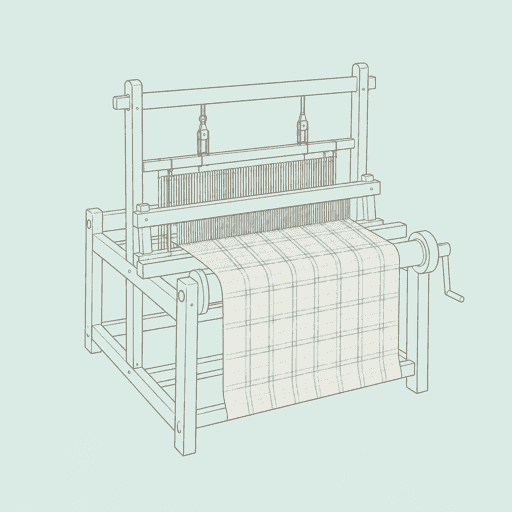
The concrete slab Innes lays for a new weaving shed becomes a physical manifestation of his desire for a future with John, forcing their decades of repressed intimacy toward a resolution for better or for worse. Involving other men from the church in the funding, Innes makes his private intention a communal project, constructing a space dedicated to the symbol of Harris Tweed and the loom. This act attempts to legitimize their relationship by integrating it into the community’s economic and social fabric, creating a palpable falsehood that would allow the men to live together without being judged. His ultimatum—that John must decide on their future by the time the shed is complete—transforms their long-standing emotional stalemate into a tangible deadline with clear consequences. Innes’s weary admission that this gesture represents “the last gasp of my self-respect” (259) reveals the deep emotional toll of their deferred life. The scene dramatizes The Corrosive Nature of Sexual Repression, demonstrating that even the most lasting, loving relationships can be eroded by the strain of enforced silence.
The crisis surrounding Isla Macdonald’s pregnancy provides a stark illustration of Religious Dogma as Social Control, revealing a community more invested in managing appearances than in supporting its members. The assembly of church elders in the Macleod home operates as an informal tribunal where Cal is presumed guilty and pressured to marry Isla, thereby containing the scandal of her out-of-wedlock pregnancy. Neither Cal nor Isla’s emotional desires are considered, only the appearance of propriety. Reverend Rose’s manipulative suggestion that Cal should “hurry that interest along” (310) exposes the church’s role in enforcing conformity. The proposed solution—exiling Isla to another island while forcing Cal into a loveless marriage—is designed entirely to erase the transgression from public view. In a mirror to Innes’s proposal to John, it creates an acceptable but fundamentally untrue social arrangement to address a breach of social expectation. When Cal refuses, Donnie Macdonald’s furious accusation that he is a “poofy wee bastard” (312) explicitly links his refusal to perform conventional masculinity with sexual deviancy. This highlights how the community’s rigid moral code polices sexuality and harshly punishes any behavior that deviates from its patriarchal and heterosexual norms.
The elders’ meeting precipitates a violent implosion within the Macleod home, shattering its fragile peace and exposing deep fractures. John’s physical assault on Cal is triggered by the sight of Innes’s shirt on his son—an object that symbolizes a relationship John can neither acknowledge nor tolerate in this new, threatening context. This eruption of violence, however, prompts a rebellion from Ella. Her revelation that she has secretly learned Gaelic by eavesdropping on their phone calls and by conversing with Cal shows a massive power shift; the language John used as a tool of exclusion becomes her weapon of defiance. Her threat to “put so much bleach in your bath it’ll melt your face off” (319) is a rejection of her decades-long subservience and an assertion of her power. By giving Cal the money she has secretly skimmed from church offerings, she subverts John’s piety and provides Cal with the material means to finally escape the toxic family dynamic.
Throughout these chapters, language itself—specifically the divide between Gaelic and English—is a medium of secrecy, control, and subversion. John uses Gaelic to maintain a private world with Innes and to verbally abuse Ella, confident in her exclusion. Ella’s secret mastery of the language, however, turns this power dynamic on its head, allowing her to understand the full extent of John’s cruelty and to confront him on his own terms. This pattern of coded communication and deception extends beyond the Macleod household. Cal’s lie about the trip with Innes, Innes’s false story about a car crash, and John’s invention of a man named Anndra to cover his own secrets all underscore an environment where genuine expression is impossible. The pervasive need for lies and subtext reveals a culture where repression has made open, honest communication so dangerous that relationships are conducted through a constant state of performance, leading inevitably to misunderstanding, betrayal, and violence.

Get in-depth, chapter-by-chapter summaries and analysis from our literary experts.
- Grasp challenging concepts with clear, comprehensive explanations
- Revisit key plot points and ideas without rereading the book
- Share impressive insights in classes and book clubs