John of John
John of John
A modern alternative to SparkNotes and CliffsNotes, SuperSummary offers high-quality Study Guides with detailed chapter summaries and analysis of major themes, characters, and more.
Summaries & Analyses
Author Insights
Quizzes
NEWReading Tools
Character Analysis
Content Warning: This section of the guide includes depictions of antigay bias, physical and emotional abuse, substance use and addiction, sexual content, suicidal ideation, and illness or death.
Cal (John-Calum) Macleod
As the novel’s protagonist, Cal Macleod’s internal conflicts drive the narrative. He is defined by his struggle for selfhood, caught between the suffocating traditions of his island home, Falabay, and the liberating possibilities of the mainland. A recent art school graduate, Cal returns home defeated by the mainland’s lack of opportunity, a situation that plays into The Way Economic Decline Fractures Communities. Forced to return home, he is confronted by an even more precarious financial situation, even if it is one with which he is more familiar. His artistic sensibility and non-conforming appearance, symbolized by his bleached, long hair, mark him as an outsider and a threat to the island’s rigid patriarchal and religious norms, norms which he knows well from his youth. This defiance makes him a target for his father’s corrective violence, which seeks to erase any trace of the mainland’s perceived femininity and moral looseness. Cal’s perspective, often characterized by a mix of resentment, longing, and sharp observation, provides a critical lens through which the community’s repressive nature is examined.
Cal’s relationship with his father, John, is the story’s central and most painful conflict, an embodiment of The Corrosive Nature of Sexual Repression. Cal is forced to censor every aspect of his life, from his unemployment to his sexuality, creating a dynamic of repression, secrecy, and unspoken tension. John’s violent outbursts are not merely about discipline but are fueled by a deep-seated panic over Cal’s identity, which mirrors John’s own repressed self. Cal’s initial response to this pressure is retreat and defiance, seen in his lonely-hearts letter to William and (in the past) his secret, shame-filled encounters with Doll Macdonald in the abandoned Bedford van. These clandestine acts highlight the deep isolation and danger associated with queer identity in his community. He yearns for a connection he cannot find, leading him to seek it in transient or anonymous ways that ultimately leave him feeling more alone.
Over the course of the narrative, Cal evolves from a self-pitying and reactive young man into someone capable of deep empathy and sacrifice. The catalyst for this change is his observation of the suffering of others, particularly Isla and Doll Macdonald, who are both victims of the community’s harsh judgment. Witnessing the tragic consequences of the island’s intolerance forces Cal to look beyond his own pain. His decision to give Isla the money his grandmother gave him for his own escape signifies a deep shift, as well as a manifest act of empathy. Instead of fleeing, he chooses to invest in someone else’s future and remain tethered to his home. Similarly, a radical shift in empathy toward his father recontextualizes his life, as he realizes that his father suffers much from a similar sense of repressed sexuality. Cal feels a sudden understanding of his father’s pain, as well as a knowledge of the broader context in which the familial tension has taken hold. This development suggests a move toward a more mature understanding of responsibility and community, accepting his place within a flawed world rather than simply trying to escape it.
John Macleod
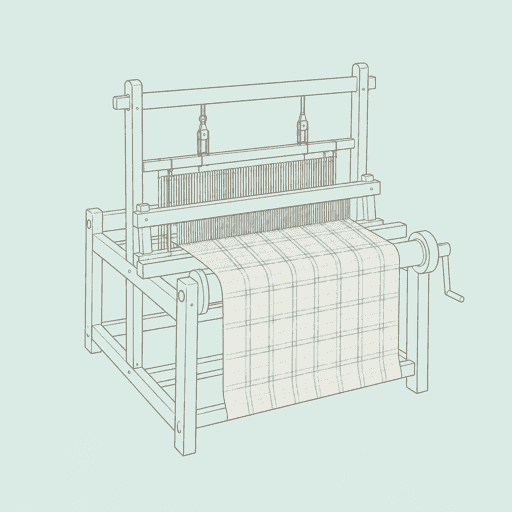
John Macleod serves as the primary antagonist and a complex foil to his son, Cal. A deacon in the Free Presbyterian Church and a master weaver of Harris Tweed, John embodies the island’s most rigid traditions of faith, masculinity, and labor. His character is a portrait of deep internal conflict. On the surface and in public, John is a man known for his public piety and patriarchal authority. This outward demeanor, however, conceals a secret life of repressed desire. John’s strict adherence to scripture and community standards is more than an expression of faith; it is a desperate mechanism of self-control, as he struggles to maintain his religious and social beliefs while being aware of his homosexual desires. His obsession with order, from the rhythm of his loom to the moral purity of his household, is a constant battle against the internal chaos of his own identity, with his masculinity and demand for conformity an overcompensation for his cognitive dissonance. His worldview is structured by the theme of Religious Dogma as Social Control, which he wields as both a shield for himself and a weapon against his son.
John’s defining psychological trait is his deeply internalized anti-gay bias, which stems from his own clandestine romantic relationship with his lifelong friend, Innes MacInnes. This secret is the source of the novel’s central tragedy concerning father and son. John projects his self-loathing onto Cal, punishing him for the very qualities and desires he cannot acknowledge in himself. Cal’s long hair, his artistic sensitivity, and his connection to mainland culture are perceived as “womanly” (27) and become targets for John’s violent rage, a rage that is fueled by envy as much as fear. These brutal confrontations, such as the fight on Sabbath morning, are explosive manifestations of John’s repressed anxiety about his own sexuality. Unable to reconcile his identity with his faith and his role in the community, he attempts to violently erase any reflection of his true self that he sees in his son. This dynamic is a powerful illustration of the corrosive nature of sexual repression, creating a cycle of trauma and preventing any possibility of honest connection between father and son.
Despite his cruelty, John is not a one-dimensional villain. He is a round character whose moments of tenderness, though rare, reveal a deep, albeit conflicted, love for his son and a deep loneliness. His work at the Hattersley loom provides a rare space for connection with Cal, as they share a mastery of the craft and a shared artistic inclination. John’s love for his dogs is another example and, ironically, one of the only times he permits himself to show emotion. He will allow affection for his dog, but not his son or himself. His quiet conversations with Innes, marked by hidden gestures and unspoken understanding, expose a vulnerable man yearning for a companionship he can never publicly claim. John’s tragedy is that of a man trapped by circumstance, faith, and his own fear. His inability to change or accept himself makes him a tragic character, ensuring the perpetuation of his own misery and inflicting it upon those he loves most, particularly the son who serves as an inescapable mirror.
Innes MacInnes
Innes MacInnes, known as Innes Ciuin or “Gentle Innes,” is a deuteragonist and an important foil to John Macleod. His defining traits are his patience, kindness, and deep loneliness, traits which make his relationship with the austere John all the more tragic. Innes’s quiet and accommodating nature stands in stark contrast to John’s rigid and often violent demeanor, showing the different ways men cope with the pressures of their community and the repression of their sexual desires (at least in public). He endures a difficult home life, silently entertaining a 16-year feud with his educated, arrogant brother, Sorley. This domestic stalemate emphasizes Innes’s tendency toward passive endurance, a quality that also defines his relationship with John. His hobby of operating ham radios symbolizes his deep-seated desire to connect with a world beyond his immediate, confining reality, sending out signals in the hope of an acknowledging response.
Innes’s central role in the novel is defined by his secret, decades-long romantic relationship with John. He represents the emotional heart of this repressed love, lasting years of waiting and secrecy for fleeting moments of private intimacy. While John’s response to his own sexuality is self-hatred and violence, Innes’s is one of quiet resignation and lasting hope. He is the keeper of their shared secret, creating small, safe spaces for their affection, like the new weaving shed he begins to build for John, only to give over to Sorley as a demonstration of his dwindling patience. His plan is not just a practical solution to John’s tenancy issues but a romantic gesture, an attempt to build a future where they can finally live together. His ultimatum to John, giving him until the end of summer to decide on their future, is a significant turning point. After a lifetime of waiting, Innes claims agency, refusing to be a perpetual secret and demanding a definitive choice, thereby becoming a more dynamic character. He eventually takes the initiative and leaves the island, but in such a manner that gives John the chance to follow him.
Ella Morrison
Ella Morrison, Cal’s maternal grandmother, acts as an irreverent and pragmatic force in the Macleod household. As a Glaswegian who moved to the island after the war, she remains a perpetual outsider, a status that grants her a critical and often humorous perspective on the community’s strict piety and social codes. Her defiance is expressed in small but significant ways: Her short, masculine haircut, her secret sunbed, and her rich vocabulary of vulgar words, which she passes on to Cal as a form of cultural inoculation against his father’s dourness. Ella’s presence provides Cal with an important emotional anchor and an alternative model of behavior, one that values humor and resilience over rigid adherence to scripture.
Beneath her cantankerous and gossipy exterior, Ella is a lonely and strategic woman deeply committed to her family’s survival. Having lost her husband and then her daughter, she dedicates herself to raising Cal, though she resists the role of a conventional, affectionate grandmother. Her motivations are often complex and born of a fierce, protective instinct. She fabricates a health crisis to lure Cal home, a manipulation designed not only to alleviate her own loneliness but also to save Cal from what she perceives as failure on the mainland. Her most significant act is her plan to assign the croft tenancy to her daughter, Grace, and later to Isla Macdonald. This move is a calculated assertion of her own matriarchal power and a final, posthumous act of loyalty to her husband’s family line, even if it means displacing John. In an assertion of her agency, she also reveals that she has been learning Gaelic for many years and feigning ignorance when people use the language in her presence (often to gossip about her). Ella provides Cal with the financial means to escape, a selfless act that demonstrates her deepest desire is for his happiness, even if it means facing her old age alone.
Doll Macdonald
Doll Macdonald is Cal’s childhood friend and a tragic figure who shows a potential dark future for the island’s youth. As a young man with few prospects beyond working on his father’s unprofitable fishing boat, Doll embodies despair at the way economic decline fractures communities. He channels his frustration and hopelessness into alcohol addiction, which becomes a form of self-medication against a future he feels is bleak and predetermined. His reliance on alcohol also speaks to his loneliness when in the company of women, as the alcohol provides him with a false confidence that enables him to talk to women and to mask his insecurity and self-loathing. His resentment toward Cal, who had the chance to escape to art school, is palpable, creating a rift between the former friends. Doll’s story is one of decline, a slow slide into addiction and self-destruction exacerbated by the community’s punitive judgment.
Doll’s primary role is to reflect the consequences of the island’s repressive attitude toward sexuality. His secret sexual encounters with Cal in the abandoned Bedford van are marked by shame and a desperate need for an outlet, rather than genuine intimacy. Doll is not necessarily gay—at least not in the same way that Cal is gay—but he is desperate for any kind of intimacy or understanding. For Doll, these acts are a source of deep conflict, leading to his cold and hostile behavior toward Cal upon his return. His public shaming by the church elders for his drinking is a brutal example of religious dogma as social control, an act of community discipline that pushes him further into despair rather than offering a path to redemption. His eventual death, officially ruled a drowning, is the tragic culmination of his inability to find a place for himself in a world that offers neither economic opportunity nor emotional acceptance.
Isla Macdonald
Isla Macdonald begins as a conventional love interest for Cal but develops into a symbol of resilient and defiant young womanhood. She is intelligent and ambitious, ranking eighth in Scotland for her exams and earning a place at Glasgow University. This, for Cal, shows her as an intellect which should not be restrained by the confines of island life. Her out-of-wedlock pregnancy, the result of a brief affair with a visiting Glaswegian, places her in direct conflict with the community’s rigid moral code. Instead of submitting to the elders’ plan to exile her and have her baby adopted, Isla demonstrates remarkable strength and agency. She refuses to name the father, protecting both him and herself from further condemnation, and decides to leave the island to raise her child on her own terms.
Isla’s relationship with Cal evolves from a childhood friendship into a deep, honest friendship based on their shared status as outsiders. They maintain their friendship, in spite of the presumption of romance between them on behalf of the community. Their connection is important, even if it is misunderstood by everyone around them. Her knowledge of Cal’s secret relationship with her brother, Doll, allows them to connect beyond the community’s superficial expectations. She does not use this knowledge against Cal, but instead forms a bond of mutual trust. By accepting Cal’s money to fund her escape to Glasgow, she provides him with a vicarious means of leaving and the chance to perform a selfless act. Her journey shows a subversion of the tragic fate often assigned to “fallen” women in such narratives; instead of being destroyed by the community’s judgment, she finds the strength to forge her own path.
Grace Macleod
Grace Macleod, Cal’s mother and John’s estranged wife, is a key character who is largely absent from the novel’s present action. Just as her absence still pains Cal and John, she is most notable for her physical absence from the narrative. Grace is glimpsed only in occasional scenes, just as John glimpses her occasionally in public spaces, yet her absence dominates everything. Her decision to leave John and start a new family with his brother, Uilleam, is the inciting incident of the family’s trauma. The sunken caravan, which contains all her sealed-away belongings, is a powerful symbol of this unresolved past and the family’s inability to speak about their grief. Grace shows a radical act of self-preservation. By leaving a loveless and repressive marriage, she chooses her own happiness in a society that offers women few such choices. At the same time, her refusal to expose the secret of John’s sexuality shows some degree of compassion for her former husband, even if he resents her for leaving. Her life on another part of the island—physically close yet emotionally distant—is a constant, unspoken reminder to John of his own failures and unhappiness, and to Cal of a maternal love he can see but not fully access.

Unlock analysis of every major character
Get a detailed breakdown of each character’s role, motivations, and development.
- Explore in-depth profiles for every important character
- Trace character arcs, turning points, and relationships
- Connect characters to key themes and plot points