John of John
John of John
A modern alternative to SparkNotes and CliffsNotes, SuperSummary offers high-quality Study Guides with detailed chapter summaries and analysis of major themes, characters, and more.
Summaries & Analyses
Author Insights
Quizzes
NEWReading Tools
Chapters 12-17Chapter Summaries & Analyses
Content Warning: This section of the guide features depictions of physical and emotional abuse, antigay bias, substance use and addiction, suicidal ideation and suicide attempts, sexual content, as well as illness and death.
Chapter 12 Summary
On the day Isla is scheduled to leave, Cal hitchhikes across Lewis to visit his mother, Grace, avoiding goodbyes at home. On the moor, he meets his younger half-sister, Abby, who is returning from a dance competition with her friends.
At Grace’s unfinished house, Cal is greeted by his other half-siblings, Thomas and Bella. He also sees his uncle, Uilleam Macleod—Grace’s partner and John’s brother—who is has a degenerative illness that causes severe confusion and delusions. Grace confronts Cal about his seven-week absence and the faded bruises on his face. She explains that Uilleam’s condition is worsening and recounts a recent encounter where she saw John hiding and watching her at the supermarket.
Cal asks for money, and Grace gives him about £20. After he plays with the children in the rain, Grace reveals that his grandmother, Ella, plans to assign the tenancy of the family croft to her, to be held in trust for Cal, placing John in a precarious position. Furious, Cal accuses Grace of trying to shame his father and asserts she is the reason the family fell apart. He suspects John already knows about the plan through local gossip. As they argue, Ella arrives at the house.
Chapter 13 Summary
John has dinner with Innes MacInnes while Innes’s family is away. Cautious of being seen, John checks every room to ensure they are alone. During a tense meal, Innes tries to initiate physical contact, which John avoids. Innes attempts to create a romantic mood by playing a Nana Mouskouri record and asking John to dance. John complies but remains rigid and hyper-vigilant, scanning the room for any potential exposure.
A flashback reveals their long, secret history, involving clandestine meetings in the hills, John’s emotional coldness, and the day Grace discovered them together. Following the discovery, Grace agreed to stay on the conditions that John turn to God and stay away from Innes. During their forced separation, Innes corresponded with a Polish man named Sascha, invited him to Scotland, and sent him money for the journey; Sascha never arrived, and Innes wept publicly before John intervened. John eventually told Grace he could not stay away from Innes, and Grace had no choice but to leave. She later took up with John’s brother, Uilleam, who took care of her when no one else would.
Back in the present, Innes coaxes John to stay by asking for his “help” () upstairs, a long-standing pretext for intimacy. After turning on every light and appliance in the house until there is not a single shadow, Innes goes upstairs. Following a moment of internal conflict, John sheds his coat and follows. At the top of the stairs, the two men embrace in the dark.
Chapter 14 Summary
By November, the cold forces John and Cal to use a gas heater in the weaving shed. The dry heat causes their skin to chap and crack. One evening, John tends to Cal’s painful hands with ointment. Resentful over the plan to transfer the croft, Cal provokes his grandmother, Ella, until John warns him to stop. Cal then treats John’s hands, which are severely damaged from years of working with wool.
Speaking in Gaelic to exclude Ella, Cal urges his father to sign up for unemployment benefits, but John refuses, calling it dishonest. Cal secretly struggles with whether to tell John about the tenancy, fearing it will force him to choose a side and trap him on the island. He puts rubber gloves on his father’s hands to help them heal.
The winter is harsh and isolating. Cal’s Christmas visit with his mother is strained by their unresolved argument. One day, Ella confronts Cal about his coldness, but he again avoids the topic. Later, Cal walks alone to an abandoned van on the shore. He is joined by Innes, who also uses the van as a refuge; while there, Cal recalls that he and Doll used the van for secret, emotionally unfulfilling sexual experimentation. They drink together, and Innes admits he feels stuck in his life and wonders if it is too late for him to pursue an education.
Chapter 15 Summary
John and Cal drive to Stornoway, sharing a bonding moment while speeding along the mountain road. After dropping Cal off, John visits a Tolsta crofter, Anndra, and they follow a familiar routine that leads toward intimacy, leaving John consumed with guilt afterward. He then goes to a support office, where he confesses his life’s secret to a counsellor named D.I. John reveals his lifelong love for his neighbor, Innes, admitting he only married his wife, Grace, to be near Innes. He explains Grace knew and left, a “kindness” he has had to conceal by playing the jilted husband. He also discloses that he sometimes thinks about unscrewing the hose on their gas heater and taking his own life.
Later, John and Cal deliver tweed to the mill, where they share a lighthearted moment. On the drive home, they pass a primary school, and John instinctively cranes to search the strangers’ faces; when Cal notices, John admits his fear of encountering Grace. The chapter ends with a flashback to Cal’s childhood, revealing how Grace abandoned him at a bus stop by tricking him into running home for a book she never intended to wait for, creating the opportunity for her to leave the family home forever.
Chapter 16 Summary
On Communion Sunday, a hungover Doll is chastised by his mother, Sarah, for his drinking and for embarrassing the family. Forced to wash outside, he later sneaks a drink from a gin bottle hidden in the ruins of his grandfather’s house. As she walks to church, Sarah opens the fuel cap of Doll’s prized car and sprinkles the salty detritus she has swept from the tablecloth into the petrol tank; her sabotage is why Doll can never get the car to work and, therefore, can never leave. At the service, Doll is publicly humiliated when Reverend Rose and the visiting elders single him out for a reprimand in front of the entire congregation. That night, a furious Cal argues with his father, John, that the shaming will only worsen Doll’s drinking. John reveals the situation is dire: Flash found Doll lying in a ditch while driving home, and Doll’s parents are planning to make him live in the byre. Horrified, Cal begs his father to intervene.
Chapter 17 Summary
While working with the sheep, Innes invites John on a trip to the mainland, suggesting they use buying a van as a cover story to spend time together openly. John is hesitant. Their day is interrupted by a nurse, Anna-Marie, who is aggressively pursuing Innes’s brother, Sorley. Her arrival fuels Innes’s fear that Sorley will marry and displace him from their family home. Desperate, Innes proposes that he and John move in together, arguing they could pass as two old friends helping each other out. John raises objections about the church and community rather than refusing outright, but he then turns down Innes’s earlier, smaller invitations. This is the last straw for Innes, who declares their decades-long, one-sided relationship is over. He tells John he is tired of waiting and deserves a love worth the risk. Just after their argument, Cal, oblivious to the tension, offers to help Innes with the transistor John had just refused to look at.
Chapters 12-17 Analysis
John’s confession to a counsellor that he married Grace only “to be near” Innes (200) dismantles the persona of the piously wronged husband he has curated for decades. This admission, delivered under the pseudonym Gregor, recasts his entire life as a performance rooted in the concealment of his love for Innes. The narrative juxtaposes this moment of painful honesty with a flashback to Grace’s discovery of the two men together, showing how a single, suppressed truth has radiated outward, poisoning every relationship. His secret encounters, like the joyless, ritualized visit to Anndra, are not acts of liberation, but cycles of transgression and guilt that only deepen his torment. This dynamic reveals The Corrosive Nature of Sexual Repression, forcing John into a counterfeit marriage that creates a legacy of abandonment and bitterness for his wife and son. His confession brings no relief; instead, it confirms the hellish trap of his own making, a life where he is a “wicked little coward” (201) to himself and a disappointment to everyone he loves, including Innes and Cal.
The public reprimand of Doll Macdonald during Communion Sunday is a stark illustration of the church’s role in policing the community. As Reverend Rose and the visiting elders form a menacing semicircle around Doll, the sacred space is weaponized, transforming a religious service into a theater of public shaming. Their actions demonstrate Religious Dogma as Social Control: Religion in this context functions through the enforcement of social conformity. Doll’s visible sin of drinking is publicly excised, while John, a church precentor, harbors what the community would deem a far greater transgression in silence. The hypocrisy is palpable: The church purges a minor offense while its moral leader is consumed by a lifetime of deceit, a dynamic which—it is implied—is not unique to John. Cal’s correct prediction that the humiliation will only worsen Doll’s drinking highlights the inefficacy of such punitive measures, which breed resentment rather than reform. This public spectacle reinforces the oppressive, panoptic nature of life in Falabay, where any deviation from the rigid code is met with organized condemnation.
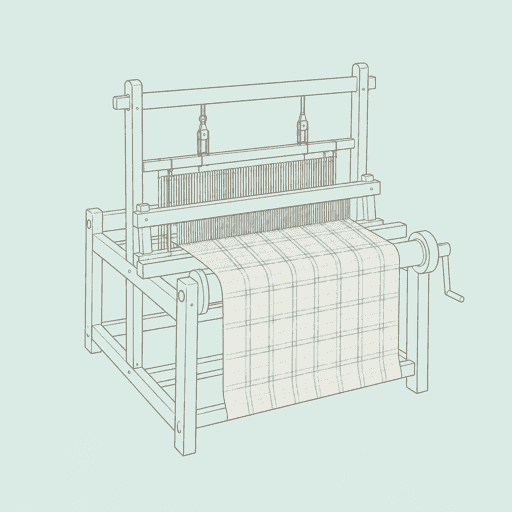
The intimate scene of Cal tending to his father’s work-ravaged hands grounds the family’s emotional and economic struggles in physical suffering. John’s hands, described as “knuckled like celery root” (175) and broken down by lanolin and sheep dip, are proof of a life of grueling labor. Cal’s diagnosis that his father might be allergic to wool—the very material of his trade and heritage—is a metaphor for John’s entire existence: A life fundamentally at odds with his own nature. This moment develops the motif of Harris Tweed and the loom, showing it as much more than just as a cultural craft. It is also a physically destructive force intertwined with financial desperation. John’s refusal to seek medical help or sign on for benefits, which he deems dishonest, reveals a self-defeating pride that exacerbates his family’s precarity, reflecting The Way Economic Decline Fractures Communities by pitting outdated moral codes against the pragmatic needs of survival.
Narrative structure in these chapters reinforces the characters’ sense of entrapment through a series of contrasting flashbacks and confined spaces. Cal’s visit to his mother’s chaotic, unfinished house introduces a new family dynamic, yet it culminates in a flashback that reveals the origin of their estrangement: Grace’s calculated abandonment of him as a child at a bus shelter. This memory shatters any simple narrative of maternal love, exposing the deep, foundational wounds of the family and showing how Grace could be just as cynical and as manipulative as John. Similarly, Cal’s visit to the abandoned Bedford van establishes the vehicle as an important symbol of sanctuary from the community’s oversight; it is emotional important to Innes as well as Cal. His recollections of secret, unfulfilling sexual encounters with Doll in the same space position the van as a repository for repressed desires and identities across generations. This rusted, immobile vehicle, a private refuge for both Cal and Innes, mirrors their shared experience of being stuck—a physical manifestation of the “islander’s exile” where one can be isolated even when at home.
The dramatic dissolution of John and Innes’s relationship is an important turning point, challenging the novel’s atmosphere of stagnant repression. After decades of waiting, Innes’s declaration that he is finished with their one-sided affair is an act of deep self-assertion. Innes is pragmatic: He does not desire a grand romance. He instead, he longs for the simple, open dignities of a shared life—to go to an art gallery, to talk in a pub without fear, to receive a gentle pat on the behind. When he finally tells John, “I deserve a love that was worth it” (233), he reclaims his own future from the paralysis of John’s fear. John’s inability to accept any of Innes’s proposals, from a trip to the mainland to simply looking at a transistor, is the final proof of his incapacitation. Cal’s arrival at this precise moment, and his immediate, casual offer to help Innes with the very task his father just refused, creates a powerful symbolic realignment. It suggests the possibility of a new bond forming between the two men John has kept apart, hinting that a younger generation may be able to forge connections free of the shame that has destroyed the old ones, while also illustrating the unspoken and unknown similarities between John and Cal in terms of repression of sexuality.

Get in-depth, chapter-by-chapter summaries and analysis from our literary experts.
- Grasp challenging concepts with clear, comprehensive explanations
- Revisit key plot points and ideas without rereading the book
- Share impressive insights in classes and book clubs