John of John
John of John
A modern alternative to SparkNotes and CliffsNotes, SuperSummary offers high-quality Study Guides with detailed chapter summaries and analysis of major themes, characters, and more.
Summaries & Analyses
Author Insights
Quizzes
NEWReading Tools
Symbols & Motifs
Content Warning: This section of the guide features depictions of physical and emotional abuse, antigay bias, substance use and addiction, sexual content, as well as illness and death.
Harris Tweed and the Loom
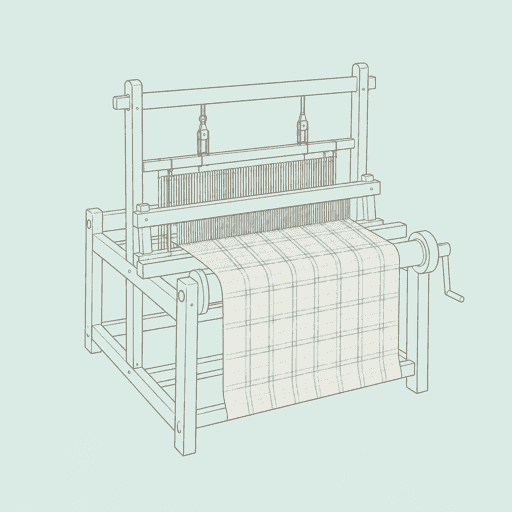
Harris Tweed production on the Hattersley foot-powered loom symbolizes the duality of island heritage as both a source of cultural pride and a form of economic and personal entrapment. The craft connects generations of islanders to their past and provides a much needed (but precarious) income, but its demanding, isolating labor also confines them. This tension is represented by John’s talent for weaving, a talent that is undercut by what Cal notices to be an allergy to the very wool that he weaves. The artisanal trade that grants John his identity and his income is slowly hurting him with a pain that he refuses to recognize and which—when Cal draws attention to the possible allergy—he deliberately ignores.
For John and Cal, the loom is the primary site of their fraught relationship, a space defined by shared mastery, financial desperation, and paternal control. John describes the loom as an “iron pulpit” (72), framing the work as more than just as labor. To John, it is a quasi-religious duty demanding ascetic devotion. This fusion of work and worship emphasizes how tradition is used to enforce discipline. As a first-class art school graduate, Cal is uniquely skilled yet forced back into this archaic practice, showing The Way Economic Decline Fractures Communities by closing off modern opportunities. John leverages this desperation, forcing Cal into secret, illegal night shifts to pay off debts, transforming their shared craft into a mechanism of control. The very rules of the craft, which dictate “one loom per house, one weaver per cloth” (50), are meant to ensure fairness, but also reinforce isolation, mirroring the community’s broader resistance to change and collaboration. John is one of many weavers, presumably, who outwardly conform to the rules but—behind closed doors—feel a need to bend the rules to suit their personal, pressing needs.
The Sunken Caravan
The sunken caravan on the Macleod croft is a symbol of the family’s deliberately repressed grief and unspoken trauma surrounding the departure of Grace, Cal’s mother. After Grace leaves, John excavates a shallow grave for the caravan, fills it with her belongings, and seals it, creating a physical tomb for the past. This act of burial is a conscious effort to erase a painful history, but the caravan’s visible roofline is a permanent scar on the landscape, representing a memory that cannot be fully hidden. As much as John tries to hide Grace’s departure, the hints of his pain remain evident.
The novel makes this symbolism explicit, stating John “lugged a heavy rock and set it on the roof, sealing the caravan as though it were a tomb” (43). This image embodies The Corrosive Nature of Sexual Repression, showing how the inability to confront difficult truths manifests physically. The caravan’s presence reinforces the emotional distance between John and Cal, as their shared loss remains a forbidden topic. It is a constant, silent testament to a wound that has not only has not healed, but has been deliberately buried alive. In this state, its unresolved energy is poisoning the family’s ability to connect and forcing them to live in the shadow of a loss they are forbidden to acknowledge.
Cal’s Hair
Cal’s long, bleached hair is a symbol of his non-conforming identity, mainland influences, and perceived femininity, which stand in direct opposition to Falabay’s rigid, hyper-masculine norms. To his father, the hair is a moral transgression and a public source of shame. John’s visceral reaction upon Cal’s return, where he “recoiled as Cal’s hair whipped about his face like hellish flames” (27), immediately frames Cal’s individuality as something sinful and dangerous by likening his long hair to the flames of hell. This conflict is a key illustration of how Religious Dogma as Social Control is enforced within the family unit itself, with John quoting scripture to condemn his son’s “womanly” (92) appearance. The escalating tension culminates in John’s violent physical attack, a desperate attempt to forcibly shear away the parts of Cal he cannot understand or control.
For Cal, his hair is an extension of his authentic self, a fragile link to a world where he felt more freedom. He returns to the island with his long hair is a small act of defiance in the context of his forced return, clinging to a vestige of his mainland, university identity despite his overbearing father and community. His decision to re-bleach it after the assault becomes an even more powerful act of defiance and self-reclamation, asserting that his identity cannot be erased by violence, even as it deepens the corrosive rift in his family.
The Abandoned Bedford Van
The abandoned Bedford van symbolizes a dangerous, liminal space where repressed queer desires can find temporary expression outside the community’s suffocating moral surveillance. For Cal and Doll, the wrecked van becomes a secret sanctuary for their forbidden sexual relationship, a place where their true selves can emerge away from the demands of performative heterosexuality. Its physical state—rusting, stripped of its parts, and sitting off the main road—mirrors the broken and hidden nature of the desires it contains, particularly in the context of a community that rejects such desires much as the van itself is rejected. Just as Innes and John found themselves secret nooks and hiding places in the island to express their forbidden desires, the van becomes an intergenerational iteration of the way in which such desires are pushed to the margins of the community.
The van represents the only alternative to the rigid, two-directional path of conformity offered by the island. This sanctuary, however, is ultimately unsustainable. Doll’s lonely death by drowning, with his body discovered “in the mouth of the ruined Bedford van” (342), transforms the site from a haven into a tomb. This tragic conclusion emphasizes the corrosive nature of sexual repression and erodes individual lives by forcing queer identity into decaying, isolated spaces. The van becomes a monument to the fatal consequences of a society that offers no legitimate place for authentic selfhood, suggesting that such hidden outlets for desire inevitably lead to destruction.

Unlock the meaning behind every key symbol & motif
See how recurring imagery, objects, and ideas shape the narrative.
- Explore how the author builds meaning through symbolism
- Understand what symbols & motifs represent in the text
- Connect recurring ideas to themes, characters, and events