Satantango
Satantango
A modern alternative to SparkNotes and CliffsNotes, SuperSummary offers high-quality Study Guides with detailed chapter summaries and analysis of major themes, characters, and more.
Summaries & Analyses
Quizzes
NEWReading Tools
Important Quotes
“He gazed sadly at the threatening sky, at the burned-out remnants of a locust-plagued summer, and suddenly saw on the twig of an acacia, as in a vision, the progress of spring, summer, fall and winter, as if the whole of time were a frivolous interlude in the much greater spaces of eternity, a brilliant conjuring trick to produce something apparently orderly out of chaos, to establish a vantage point from which chance might begin to look like necessity.”
(Part 1, Chapter 1, Page 4)
Futaki’s vision establishes the novel’s philosophical framework. It posits time as a mere “brilliant conjuring trick,” an illusory attempt to impose order on an eternal, chaotic universe. This introduces the key theme of cyclical history and human insignificance, suggesting that the characters’ struggles are just repetitive patterns in a vast, indifferent existence.
“‘Irimiás,’ he added, smiling and he put his hand on Schmidt’s shoulder, ‘is a great magician. He could turn a pile of cow shit into a mansion if he wanted to.’”
(Part 1, Chapter 1, Page 9)
Futaki’s comment reveals the villagers’ desperate hope for a savior. The crude yet potent metaphor of turning “cow shit into a mansion” shows their belief in Irimiás’s near-supernatural ability to transform their wretched reality. This highlights their gullibility and the power of charismatic rhetoric in a community starved for change.
“‘Our clock here,’ he continues, pointing to the one above them with his long, slender and refined index finger, ‘is very late, while that one there measures not so much time as, well, the eternal reality of the exploited, and we to it are as the bough of a tree to the rain that falls upon it: in other words we are helpless.’”
(Part 1, Chapter 2, Page 25)
While waiting in the police station, Irimiás articulates a worldview of powerlessness and predetermined suffering. His poetic simile comparing the exploited to a branch in the rain frames their condition as a natural, unavoidable state. This moment reveals his fatalism and capacity for manipulative, philosophical language, which he later uses to control others.
“‘One stick of dynamite per jacket! That one there,’ he indicates someone behind him with his thumb, ‘will get one stuffed in his pocket. That one,’ he continues, glancing toward the fire, ‘will find one under his pillow. There’ll be bombs up chimney flues, under doormats, bombs hung from chandeliers, bombs stuffed up their assholes!’”
(Part 1, Chapter 2, Page 41)
In the bar, Irimiás’s theatrical threats are a performance of power to intimidate the patrons. This violent, detailed fantasy of destruction reveals his nihilistic worldview and capacity for menace. It contrasts sharply with the messianic image he later cultivates at the estate, exposing the manipulative core of his character before he even arrives.
“It was not, however, enough to remember things conscientiously: that ‘was insufficient in itself,’ not up to the task: one had to compile and comprehend such signs as still remained in order to discover the means whereby the perfectly maintained memory’s sphere of influence might be extended and sustained over a period.”
(Part 1, Chapter 3, Page 57)
The doctor’s methodical approach to memory is about more than just passive recording; it’s an active intellectual battle against decay. He believes that by compiling and comprehending the signs of the world, he can extend the influence of his consciousness against entropy. This highlights his quasi-scientific, desperate attempt to create meaning and permanence.
“[H]e was lost in successive waves of time, coolly aware of the minimal speck of his own being, seeing himself as the defenseless, helpless victim of the earth’s crust, the brittle arc of his life between birth and death caught up in the dumb struggle between surging seas and rising hills.”
(Part 1, Chapter 3, Page 60)
While reading a geology book, the doctor has an epiphany that reduces human existence to an insignificant footnote in planetary history. He sees his own life as a “brittle arc” caught in the indifferent, monumental struggle of geological forces. This deep sense of helplessness emphasizes the novel’s theme of human powerlessness against vast, impersonal forces.
“[T]hat the constant rain would turn the soil into one enormous sea of mud, and the animals would vanish into the woods the other side of the Szikes, into the narrow park of the Hochmeiss estate or into the overgrown park of Weinkheim Manor because the mud would kill off all forms of life, rot the vegetation and there would be nothing left, just the ankle-deep cart tracks of the end of summer that had filled up with water up to your boot tops, and these pools and puddles of water, as well as the nearby canal, would be covered over with frogspawn and reeds and tangled weeds that in the evening or early twilight, when the moon’s dead light reflected off them, would glitter all over the body of the land like a galaxy of tiny silvery blind eyes gazing up at the sky.”
(Part 1, Chapter 3, Page 66)
This description personifies the rain-soaked landscape, transforming it into a sentient, watching entity. The powerful simile comparing puddles to “tiny silvery blind eyes” creates an unsettling atmosphere of surveillance and decay. The environment is a backdrop but also an active, almost malevolent force mirroring the characters’ stagnation and hopelessness.
“The entire end-of-October night was beating with a single pulse, its own strange rhythm sounding through trees and rain and mud in a manner beyond words or vision: A vision present in the low light, in the slow passage of darkness, in the blurred shadows, in the working of tired muscles; in the silence, in its human subjects, in the undulating surface of the metaled road.”
(Part 1, Chapter 4, Page 91)
This passage personifies the landscape, giving the night a “single pulse” that unifies the natural world and the human experience. The prose rhythm creates a hypnotic, oppressive atmosphere, reflecting the characters’ entrapment. This sensory detail emphasizes the theme of Decay as an Unstoppable Force, suggesting an all-covering, almost sentient state of entropy.
“Now that no one could see him, he gave his rage free rein, shaking his fist and making terrifying faces, keenly aware of the smell of rust (‘the smell of love…’ as he often had occasion to term it when the Horgos girls had pitched their headquarters there) and running his eye straight down the line of untouched goods as he always did when wanting to think over some pressing problem, toward the window that was protected from potential roadside thieves by two iron bars of a finger’s thickness each, as well as a dense weave of cobwebs.”
(Part 1, Chapter 4, Page 92)
In the privacy of his storeroom, the landlord’s true self is revealed. His impotent rage contrasts with his public servility, while his cynical equation of rust with “the smell of love” from local sex workers highlights the deep corruption and transactional nature of all relationships on the estate, linking physical and moral decay.
“She was frightened, but she understood that something had to be done now, and because this wasn’t a feeling previously known to her, it was balanced by a flash of momentary, confused ambition suggesting that, if she could earn her brother’s respect, together they could ‘conquer’ the world.”
(Part 1, Chapter 5, Page 118)
This quote captures the turning point in Esti’s psychology following her brother Sanyi’s manipulation. Her desperate need for validation transforms into a “confused ambition,” illustrating her vulnerability and distorted perception of power. The tragic irony is that her first moment of agency is born from deceit and leads to her ultimate self-destruction.
“Until now she had always believed that it was failure only that was intolerable, but now she understood that victory too was intolerable, because the most shameful element of the desperate struggle was not that she remained on top, but that there was no chance of defeat.”
(Part 1, Chapter 5, Page 123)
After brutally overpowering her cat, Esti experiences a destructive epiphany that explores the psychological horror of absolute power over the helpless. Her realization subverts conventional notions of conflict, suggesting that true moral decay lies in the capacity to dominate without consequence, which makes her victory feel like a shameful defeat. She employs a lesson learned from her bullying brother but doesn’t feel good about it.
“She also knew she was not alone, since everything and everyone—her father up above, her mother, her siblings, the doctor, the cat, these acacias, this muddy track, this sky and the night below it—all depended on her, just as she depended on everything else. ‘What a great champion I might become! I just have to keep going.’”
(Part 1, Chapter 5, Page 133)
In her final moments, Esti feels a deep, albeit misguided, sense of connection to the world—an ironic feeling of cosmic importance at the moment of her complete abandonment. Her tragic perspective, believing that her suicide makes her a “champion,” emphasizes the story’s bleak view of human isolation and the dangerous fantasies born from desperation.
“Futaki glanced around in fright, lit a cigarette, his hands trembling, and greedily drank up what was in his glass. ‘I shouldn’t be drinking,’ he berated himself. ‘Every time I do I can’t help thinking of coffins.’”
(Part 1, Chapter 6, Page 137)
Futaki’s moment of panic encapsulates the existential dread haunting the villagers. His immediate association of alcohol—their primary escape—with “coffins” reveals the futility of their attempts to numb their despair. This connection highlights how their coping mechanisms only reinforce their sense of entrapment and mortality, contributing to the theme of inescapable decay.
“The table and chair legs were woven into a cocoon and then—with the aid of one or another secret narrow strand—they were all connected up, as if it were a matter of some importance that the spiders, flattened in their secret, remote corners, should be properly advised of every slight tremor, each microscopic shift, and would be so as long as this strange, all-but-invisible network remained intact.”
(Part 1, Chapter 6, Page 160)
This passage literalizes the novel’s central metaphor of entrapment. The spiders’ web becomes a physical manifestation of the invisible forces that bind the villagers. The network, sensitive to every tremor, suggests a system of surveillance and control, foreshadowing how Irimiás will manipulate this interconnected web of despair for his own purposes.
“The tragedy involves each and every one of us, because, as we know full well, we are all responsible for what has happened. The hardest thing we must face in this situation is the obligation, through clenched teeth, with lumps in our throats, to examine the case.”
(Part 2, Chapter 6, Page 166)
Irimiás’s speech skillfully reframes Esti’s death as a symptom of the community’s collective moral decay, a burden they must all share, rather than as a private family tragedy. This rhetorical move is the cornerstone of his manipulation, creating a shared sense of guilt that he can then offer to absolve, positioning himself as their only path to redemption. Irimiás castigates the villagers as sinners before offering them a route to redemption by following him, creating within them the need for atonement that makes them so loyal to him.
“What I want is to establish a small island for a few people with nothing left to lose, a small island free of exploitation, where people work for, not against each other, where everyone has plenty and peace and security and can go to sleep at night like a proper human being.”
(Part 2, Chapter 6, Page 182)
Irimiás paints a picture of a perfect communal society that directly contrasts with the villagers’ current lives of isolation, poverty, and mistrust. Ironically, Irimiás’s promise of a perfect communal society echoes the promises of the decaying Hungarian regime, hinting at the novel’s ideas about time and mistakes repeating. Though the regime’s promises of utopic living haven’t come to pass, the villagers are willing to believe in the exact same promises if they come from Irimiás, showing how their inability to recognize these patterns leaves them trapped.
“The intensity of his disappointment was only matched by the intensity of Mrs. Horgos’s delight at his despair. Having surveyed ‘this whole idiotic ritual’ with a sour expression, she had returned to the bar, to mock the landlord behind his counter. ‘You see. Just look at you! The horse has bolted, all right!’”
(Part 2, Chapter 5, Page 191)
Mrs. Horgos’s commentary provides a cynical counternarrative to the villagers’ euphoric departure, framing their hope as an “idiotic ritual.” Her pragmatism and delight in the landlord’s ruin underscore the persistent selfishness and lack of genuine community on the estate. This scene reveals that even in a moment of supposed collective transformation, old resentments remain firmly intact.
“The headmaster was slamming his door ever more furiously, as if trying to work himself into a hysterical state, then, seeing he was having no success, lifted the door off its hinges, stepped back two paces then, using all his strength, smashed it against the wall.”
(Part 2, Chapter 5, Page 196)
This scene depicts a cathartic, violent ritual of severance from the past, fueled by Irimiás’s promises. The villagers’ destructive frenzy is a physical manifestation of their psychological break from their old lives. This act of what they believe to be liberation ironically ensures their complete dependence on Irimiás, as they destroy any possibility of returning home.
“A wind had sprung up around the body and in complete silence the blindingly white corpse began uncertainly to rise…then, having reached the top of the oaks, it suddenly rocked and, bobbling slightly, started its descent to the ground again, to the precise spot it had occupied before.”
(Part 2, Chapter 4, Page 225)
This moment of supernaturalism disrupts the novel’s bleak naturalism, presenting an event that defies rational explanation. The levitation of Esti’s corpse shatters Irimiás’s cynical worldview, confronting Irimiás with a phenomenon he can’t control or manipulate. The intrusion of the transcendental creates tension with Irimiás’s pragmatic, nihilistic vision of society, forcing him to confront the idea, at least momentarily, that the world isn’t as he believes it to be.
“It’s nothing but a network of dependency under enormous fluctuating pressures. It’s only our imaginations, not our senses, that continually confront us with failure and the false belief that we can raise ourselves by our own bootstraps from the miserable pulp of decay. There’s no escaping that, stupid.”
(Part 2, Chapter 4, Page 228)
This quote is the clearest articulation of Irimiás’s bleak, nihilistic worldview, which stands in stark contrast to the hopeful vision he sold the villagers. His belief that life is an inescapable cycle of failure and decay belies the vision of a utopia that he sold to the villagers a few hours earlier. This intrusion of authentic belief amid his many lies shows the juxtaposition between the world as Irimiás believes it to be and the lies that he tells for personal profit. By telling these lies, he actively steers the world toward his nihilistic vision, creating a self-fulfilling philosophy.
“‘Given this situation,’ Irimiás continued, sweating a little but still resonant, ‘the only possibility of bringing our plans to a successful conclusion, the only possible way forward, is for us to disperse into various parts of the country until these gentlemen entirely lose track of us, at which point we can return here and set about realizing our original objectives.’”
(Part 2, Chapter 3, Page 246)
Irimiás reframes the group’s failure as a necessary tactical retreat, feeding their desire for purpose and belonging. His explanation, filled with vague notions of “these gentlemen” and future success, transforms their aimless displacement into a covert mission, ensuring their continued obedience and dependence on his leadership. The villagers’ willingness to accept this failure shows their vulnerability to any lies told to them by Irimiás.
“Futaki now understood that the speech at the bar with its clumsy rhetorical tricks was simply a way of concealing from those who still believed in Irimiás the truth that he was as helpless as they were, that he no longer hoped to lend meaning to the power that was strangling him as much as it was them, that even he, Irimiás, could not free himself from it.”
(Part 2, Chapter 3, Page 253)
Futaki’s disillusionment provides a critical perspective, demystifying Irimiás by revealing him as another victim of the same oppressive forces. This realization subverts the prophet-follower dynamic, suggesting that even the manipulator is just a functionary trapped in a meaningless cycle; his grandiose schemes are merely a performance to hide his own helplessness. For all Futaki’s cynicism and failure, he feels a pang of sympathy toward Irimiás, but he doesn’t act on his realization to warn the others. Irimiás is just like them, Futaki realizes, and he allows all involved to continue to believe in their harmful fantasies.
“And because it was clearly hopeless trying to resolve the actual contents of what the witness had intended to say they took the cavalier course of reducing the whole febrile mishmash to a single, sane sentence: ‘His limited intellectual capacity and his tendency to cower before any display of strength makes him peculiarly suitable for the carrying out, at the highest level, of the act in question.’”
(Part 2, Chapter 2, Page 263)
This passage epitomizes the bureaucratic process of reducing complex, messy human reality into sterile, manageable data. The clerks, faced with an incomprehensible description, abandon any attempt at truth and instead generate a “sane sentence” that serves the institution’s needs. It highlights the dehumanizing nature of state surveillance and its functional logic.
“Either I’ve gone mad or, by God’s mercy, this morning I have discovered that I am the wielder of mesmerizing power. I find I can control the flow of events around me using nothing more than words. Not that I have the least idea yet what to do. Or I have gone mad…”
(Part 2, Chapter 1, Page 274)
The doctor’s declaration blurs the line between observation and creation, reflecting a desperate attempt to impose order on a chaotic world. His belief that words can control reality is a meta-commentary on the author’s own power. This moment of supposed enlightenment is immediately undercut by his self-doubt, exploring the fine distinction between divine insight and folly.
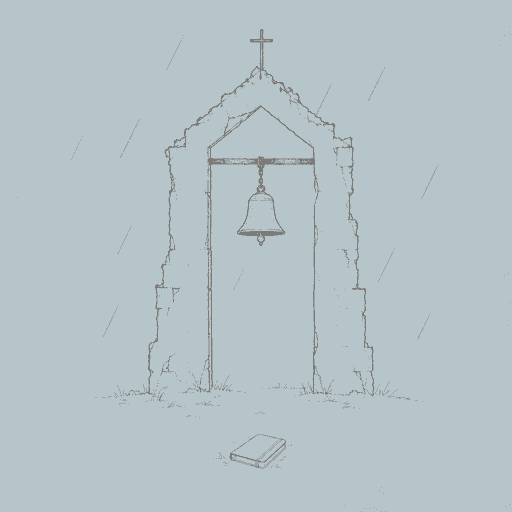
“One morning near the end of October not long before the first drops of the mercilessly long autumn rains began to fall on the cracked and saline soil on the western side of the estate (later the stinking yellow sea of mud would render footpaths impassable and put the town too beyond reach) Futaki woke to hear bells.”
(Part 2, Chapter 1, Page 279)
The novel’s closing passage, written by the doctor, mirrors its opening line almost exactly, cementing the theme of an inescapable, cyclical existence. By having a character initiate the narrative loop, the text suggests that even attempts to observe and record reality are doomed to perpetuate the same patterns of hope and despair. The doctor feels like he’s assuming control of the lives of other people, only to show that he’s bound by the same universal forces of recurrence as everyone else.

Unlock every key quote and its meaning
Get 25 quotes with page numbers and clear analysis to help you reference, write, and discuss with confidence.
- Cite quotes accurately with exact page numbers
- Understand what each quote really means
- Strengthen your analysis in essays or discussions