The Hunger of the Gods
The Hunger of the Gods
A modern alternative to SparkNotes and CliffsNotes, SuperSummary offers high-quality Study Guides with detailed chapter summaries and analysis of major themes, characters, and more.
Summaries & Analyses
Quizzes
NEWReading Tools
Chapters 13-24Chapter Summaries & Analyses
Content Warning: This section of the guide features discussion of graphic violence, death, physical abuse, and cursing.
Chapter 13 Summary: “Varg”
Varg and other Bloodsworn scouts halt when they smell smoke from a nearby village. The warband’s chief, Glornir, sends Varg and a warrior named Svik to investigate. In the village, they speak with the local chief, Njal Olafsson, who tells them that two boats carrying wounded warriors from the Grimholt passed through several days earlier. They left one of their dead for burial.
As they talk, a group of dragon-worshippers preaches nearby. Svik throws a wheel of cheese at their shouting leader, silencing him; one of the preacher’s companions then hurls a spear at Svik, and the rest of the dragon-worshippers charge. Varg, remembering Frøya and fueled by rage, rushes in and fights fiercely but loses control of his inner wolf mid-battle, nearly killing a downed opponent before Svik grabs his wrist and forces him to pull back. After the brief skirmish, a thrall named Terna recognizes Varg. She explains that she and Varg’s sister, Frøya, were sold together by their former master, Kolskegg. A man named Brimil, who traffics enslaved people, bought them, and Terna was later sold to Njal at the thrall-market in the city of Darl. Terna last saw Frøya alive, but notes that Brimil beat her for repeatedly trying to escape.
Later, the Bloodsworn examine the body left by the Grimholt survivors and confirm it is not their target, Skalk. Varg now has a new purpose: to find Brimil in Darl.
Chapter 14 Summary: “Biórr”
Biórr travels with Ilska and the Raven-Feeders toward the Isbrún Bridge as Lik-Rifa descends from the sky. A swarm of tennúr emerges from a nearby hill, and the Raven-Feeders prepare for battle, but instead of attacking, the tennúr flock to Lik-Rifa. She reveals that the tennúr and all vaesen—or magical creatures—are her “children” and commands her followers not to harm them.
Lik-Rifa then speaks to the tennúr in their own language, instructing them to guard the bridge and to attack Ulfrir—her brother, the wolf—and all those with him when they arrive. She then transforms into her human form and uses her magic to make the Isbrún Bridge invisible, sealing the path behind them. She announces her intention to travel with Ilska and learn about the new world.
Chapter 15 Summary: “Orka”
Orka arrives at Rotta’s chamber with Lif, the tennúr Vesli and Spert, and a Bloodsworn party led by the scout Edel. They discover a pile of corpses from the earlier battle, including trolls, skraelings, and humans stripped of their gear. Among the dead, Orka identifies a white-bearded, dragon-born warrior. Inside the mountain, they explore the dark chambers, finding Rotta’s altar with its broken chains, a room full of scrolls copied from Rotta’s Galdrabok, and the spot where Vol was captured.
In another room, Orka finds small straw mattresses and recognizes the scent of a place where children were held captive. Vesli and Spert confirm that her son, Breca, was there. Overwhelmed by grief and rage, Orka kneels by his mattress but finds no new clues to his location.
Chapter 16 Summary: “Guðvarr”
Guðvarr arrives in Darl with Skalk and the other survivors from the Grimholt. Skalk ensures that his party is separated from the others to control the story of what happened. In the city, they pass a gruesome display of executed dragon-worshippers.
At the fortress, Skalk reports to Queen Helka, her son Prince Hakon, Guðvarr’s aunt Jarl Sigrún, and an allied prince named Jaromir. Skalk claims the Bloodsworn tried to steal what he found but that he escaped with it. He then produces Orna’s talon from the chest he brought back and triumphantly restores it to the eagle god’s skeleton, which forms the longhouse roof. He also reveals that he possesses scrolls copied from Rotta’s Galdrabok, the Raudskinna. Guðvarr, witnessing these displays of power and deception, senses opportunity.
Chapter 17 Summary: “Elvar”
Elvar and the Battle-Grim are exhausted from their long march to the Isbrún Bridge. Huld challenges Elvar’s de facto leadership, demanding that they rest and formally choose a new chief. Uspa, the Seiðr-witch, intervenes, warning that they will be trapped for months if the bridge closes.
When they arrive at the place where they expect the bridge, they find it gone. The weakened wolf-god Ulfrir, forced by his thrall-collar to obey Elvar and the Battle-Grim, presses his bloodied palm to the granite rock and speaks words of challenge to Lik-Rifa; mist shapes of a wolf and a dragon clash over the pit, the wolf-mist destroying the dragon-mist, and the bridge reappears. Just as they finish crossing, the tennúr swarm from their nest and attack, focusing on Ulfrir. He transforms into his massive wolf form and, with help from Skuld, Uspa, and the Battle-Grim, fights them off.
Chapter 18 Summary: “Orka”
As the Bloodsworn prepare to leave Rotta’s chamber, Orka spars with Lif, trying to teach him to fight. Their training is interrupted by the arrival of a dozen riders. Orka recognizes their raven-wing shields as the mark of Ilska’s Raven-Feeders. The group’s leader, a black-haired, dragon-born woman, reins in her horse when she sees the pile of corpses, her eyes fixing on a dead troll’s limbs protruding from the heap. She dismounts and runs to kneel before one specific corpse among the dead, then throws her head back and screams—revealing that he was her father.
Chapter 19 Summary: “Varg”
Varg scouts ahead of the Bloodsworn as they approach Darl, using his wolf’s senses to range ahead of the column. He and Røkia signal the all-clear, and the Bloodsworn emerge from the treeline, Glornir leading them down toward the city. From a wooded vantage point, they make camp, and Glornir outlines his plan to infiltrate the Galdur tower at sunset to rescue Vol.
Chapter 20 Summary: “Orka”
Orka steps out to confront the Raven-Feeders, and Lif follows despite her orders to stay back. Myrk, leading the Raven-Feeders, demands to know who killed her father. When Orka gives a dismissive answer, Myrk’s warriors attack. Orka, Lif, and Vesli fight back. Orka enters a battle-fury, channeling her inner wolf and killing three warriors in seconds. The Bloodsworn, seeing the fight, charge from the woods to join the battle.
The fight concludes with all Raven-Feeders dead except Myrk, whom Orka captures. During interrogation, Orka confirms that Myrk knows Drekr by showing her the seax she recovered from Thorkel’s body. Myrk, defiant, taunts Orka about her husband’s death. Enraged, Orka beats Myrk unconscious before she can get any information about Breca.
Edel tells Orka that the Raven-Feeders came from the north-west following the Boneback mountains, a path that leads to Lake Horndal and the trading town of Starl, and that is where she would head. Before departing with the rest of her crew, Edel grants permission for three Bloodsworn—Halja Flat-Nose, Gunnar Prow, and Revna Hare-Legs—to accompany Orka on her quest for vengeance and to find her son. As they prepare to leave, Vesli mourns that her pouch is too small to carry all the teeth from the new corpses.
Chapter 21 Summary: “Guðvarr”
Guðvarr is woken from a vivid nightmare by Yrsa, Skalk’s warrior. She escorts him to Queen Helka’s chamber, where he is summoned to give his account of the battle at the Grimholt. For his role in saving Skalk’s life, Helka rewards him with a heavy gold arm ring. After Guðvarr recounts his version of events—carefully omitting his own cowardice—Skalk tells Guðvarr he has a task for him.
Chapter 22 Summary: “Guðvarr”
Skalk leads Guðvarr and Yrsa through a secret tunnel connecting Queen Helka’s fortress to the Galdur tower. Skalk explains that he wants Guðvarr to befriend Prince Hakon and act as a spy, believing the prince is hiding something from his mother. Skalk threatens Guðvarr with magical torment should he betray him. Inside the tower, Guðvarr is disturbed to see various vaesen held in cages. He also sees the captive Seiðr-witch Vol, who has been brutally beaten and had her lips stitched shut.
Chapter 23 Summary: “Guðvarr”
Guðvarr is taken to a central chamber within the Galdur tower. To his horror, Skalk orders him strapped to a table. Skalk explains that to ensure Guðvarr’s loyalty, he will place a “spy within a spy” (209). He then uses his magic to command a female hyrndur—a large, wasp-like creature—to burrow into Guðvarr’s arm. The creature will live inside him, close to his heart, and will alert Skalk to any betrayal. Despite Guðvarr’s begging, Skalk gives the command, and Guðvarr screams in agony as the hyrndur tears into his flesh.
Chapter 24 Summary: “Varg”
Varg, Svik, and two other Bloodsworn named Jökul and Æsa make their way through the crowded streets of Darl. They are one of several small groups infiltrating the city as part of Glornir’s plan to attack the Galdur tower at sunset and rescue Vol. As they near the tower, Varg feels a nervous anticipation, which his new companions help to calm. Jökul reminds him that Yrsa, the warrior who killed their companion Torvik, will likely be defending Skalk. Just as dusk settles, they hear a scream, the clash of steel, and a sudden explosion from the direction of the tower. They share a look and break into a run.
Chapters 13-24 Analysis
Svik’s observation that Varg is “starting to move like a warrior” marks a transition in Varg’s identity (101), charting his evolution from the ingrained helplessness of an enslaved person, or “thrall,” to the dangerous agency of a Bloodsworn. In the militaristic society of Vigrið, becoming a warrior is one of the few paths available for young people wishing to gain a measure of control over their lives. Svik deliberately chooses Varg for a scouting mission because he has “just the right amount of fierce about you” (101), revealing that Varg’s external appearance is changing faster than his internal self-image. This new persona is immediately tested in a village skirmish, where his tactical instincts are overwhelmed by an uncontrollable rage. The “wolf prowling in your blood” erupts not as a controlled stream of power but as a destructive flood (101), and only Svik’s intervention prevents him from murdering a defeated opponent. This moment reveals that while Varg has the capacity for violence, he lacks the discipline to wield it effectively. The revelation about his sister Frøya’s fate at the hands of the enslaver Brimil gives his unfocused rage a specific target, transforming his journey into a personal vendetta. His past of enslavement, symbolized by the scars from the thrall-collar he touches on his neck, is not just a memory but an active force shaping his new life, linking his personal trauma to the broader theme of Enslavement as an Engine of Societal Ruin by breeding cycles of retaliatory violence.
Orka’s brutal beating of the captive Myrk Sharp-Claw mirrors Varg’s own struggle with rage, demonstrating the power of Vengeance as a Self-Perpetuating Cycle. Her grief leads her to sabotage her own primary goal of finding her son, Breca. After discovering Breca’s small mattress in Rotta’s chamber—a tangible trace of her son that offers no path forward—her desperation intensifies until it erupts in the glade. Her interrogation of Myrk devolves into an uncontrolled explosion of pain, forcing her new Bloodsworn allies to restrain her. Orka’s journey parallels Varg’s, but where his rage is that of a newly freed man discovering his power, hers is the pain of a veteran warrior finding herself newly powerless. She is defined by the loss of her son, a single-minded pursuit that isolates her even as warriors like Revna are drawn to the promise of being part of her “skáld-song.” Revna’s desire for fame frames Orka’s quest not just as a mother’s search but as a heroic epic in the tradition of Beowulf, where personal vengeance becomes a saga. Halja Flat-Nose joins for her own revenge, forming a small, grim fellowship united by loss, suggesting that vengeance is a communal as well as a personal force.
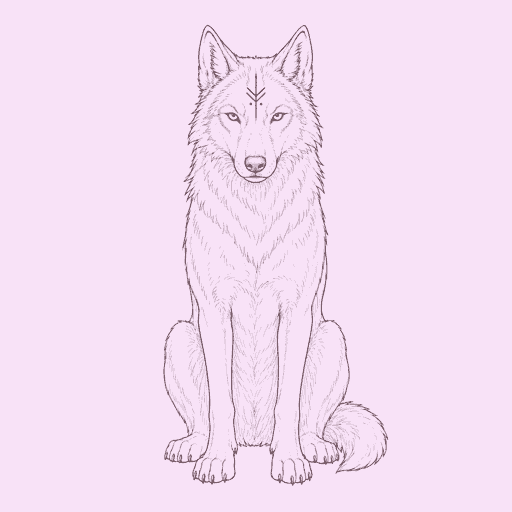
The conflict between Lik-Rifa and her brother Ulfrir becomes a world-altering blood feud, a direct echo of the apocalyptic Norse myth of Ragnarök. Their power is immense, as shown when their magical projections—mist-shapes of a wolf and a dragon—clash over the vaesen pit to reveal or conceal the Isbrún Bridge. The vaesen themselves, monstrous creatures swarming from all directions to overwhelm the Raven-Feeders, symbolize the erosion of human control over the natural world. Despite their resurgent power, the gods are also vulnerable and dependent on mortals. Ulfrir is weakened and wears a thrall-collar, subjugated by Elvar, while Lik-Rifa seeks a political alliance with Ilska to navigate the new world. This dynamic illustrates The Destructive Effects of Prejudice, as divine blood ties both mortals and gods to ancient, destructive conflicts rooted in the mutual hostility and power rivalry between humanity and the gods. Lik-Rifa’s relationship with the tennúr, whom she commands with a mix of affection and authority, further complicates their status, showing that even monstrous beings are caught in these divine family loyalties.
The scene of torture in which Skalk commands a hyrndur to burrow into Guðvarr’s arm reveals that power in Darl is rooted in coercion and bodily violation. Skalk’s method of ensuring loyalty is a grotesque form of enslavement, with the creature functioning as a living, internal version of the thrall-collar, surveilling not only Guðvarr’s actions but even his thoughts. This biological mechanism of control aims to guarantee Guðvarr’s obedience through the constant threat of pain and death, but by robbing him of agency, it effectively makes loyalty impossible, highlighting Enslavement as an Engine of Societal Ruin. This perversion of loyalty is preceded by masterful psychological manipulation; Skalk praises Guðvarr’s “strong sense of self-preservation” (199), reframing his cowardice as strategic survival to appeal to his insecure ego. Guðvarr’s ambition leads him directly into a servitude more absolute than any he has witnessed; he sought an “opportunity” in high politics, only to become a living tool, his body no longer his own. The Galdur tower, with its caged vaesen, its brutally tortured prisoner Vol, and its dark rituals, is a physical manifestation of this corrupt, controlling power, where knowledge and magic are used not for enlightenment but for subjugation.
The motif of the shield wall represents communal loyalty and survival in a world of overwhelming violence. When Huld challenges Elvar’s leadership among the Battle-Grim, their internal conflict is immediately suspended by the tennúr attack, forcing them into the defensive shield wall formation to survive. This tactical necessity temporarily overrides their power struggle, demonstrating the degree to which individual goals must routinely be set aside in favor of mutual protection. The shield wall, in which many warriors stand shoulder to shoulder, raising their shields in unison, recurs numerous times throughout the book as a motif symbolizing the bonds of loyalty that supersede individual aspirations.

Get in-depth, chapter-by-chapter summaries and analysis from our literary experts.
- Grasp challenging concepts with clear, comprehensive explanations
- Revisit key plot points and ideas without rereading the book
- Share impressive insights in classes and book clubs