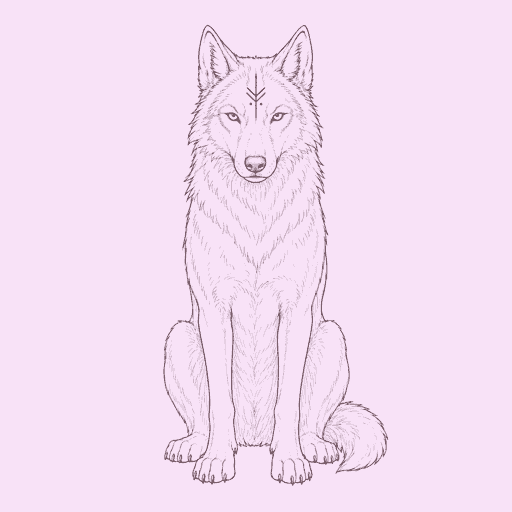
The Hunger of the Gods
The Hunger of the Gods
A modern alternative to SparkNotes and CliffsNotes, SuperSummary offers high-quality Study Guides with detailed chapter summaries and analysis of major themes, characters, and more.
Summaries & Analyses
Quizzes
NEWReading Tools
Chapters 49-66Chapter Summaries & Analyses
Content Warning: This section of the guide features discussion of graphic violence, death, physical abuse, and cursing.
Chapter 49 Summary: “Elvar”
In the town of Starl, Elvar and her Battle-Grim crew part ways with Orka and her warriors. Before they leave, Elvar passes on a message from the wolf-god Ulfrir, who wishes Orka “good hunting” and says they will meet again. As Orka’s party rides out of town, Elvar reminds her to convey the Battle-Grim’s offer of employment to the rest of the Bloodsworn.
Elvar returns to the Wave-Jarl, where her second-in-command, Grend, remarks that Orka carries the “scent of death.” From the deck, they watch Orka’s group ride along the shore of Lake Horndal. Ulfrir tells Elvar he is certain they will see Orka again. The Battle-Grim then set sail, traveling down the River Hvitá toward Snakavik, the fortress of Elvar’s father.
Chapter 50 Summary: “Orka”
From the lakeshore, Orka watches Elvar’s ship depart. She receives a telepathic message from Ulfrir, who howls in her mind of a coming “wolf age” and promises they will reunite. She mentally snarls at him to stay out of her head.
Orka then whistles for her vaesen companions, Spert and Vesli, who rejoin the group and reveal that their creator, the dragon-god Lik-Rifa, has been psychically summoning all vaesen to join her. Spert and Vesli resisted the call only because of their oath to help Orka find her son, Breca. Another warrior, Revna, worries about what this mass gathering might mean, and Orka concludes that Lik-Rifa is preparing for war.
Chapter 51 Summary: “Varg”
Aboard the Sea-Wolf, Varg and the Bloodsworn prepare for battle as two unknown vessels approach. Svik rouses Varg from his thoughts about Brák Troll-Slayer and his own Tainted heritage. Varg dons his mail and weapons, taking his place in the shield wall between Svik and Røkia. As the two enemy ships pull alongside the Sea-Wolf, their crews throw grappling hooks and prepare to board.
Chapter 52 Summary: “Guðvarr”
In a Galdur tower, Guðvarr watches Skalk torture Kalv, a Tainted warrior, for information about his meeting with Prince Hakon. Unable to bear the sight, Guðvarr reveals the message himself: Drekr has reported that “the job was done” and that Hakon should be ready (431).
Queen Helka arrives with Prince Hakon, who denies knowing either Kalv or Guðvarr. Guðvarr counters by revealing that Hakon bears a secret mark, which he had to show Kalv as proof of allegiance. Helka forces her son to reveal a newly inked dragon tattoo on his head. Under threat of torture, Hakon begins to confess. Kalv shouts for him to say nothing and partially breaks free of his chair before Frek, one of Helka’s Úlfhéðnar, kills him. Hakon then reveals that the dragon-god Lik-Rifa has been freed from her prison beneath the mountain Oskutreð, and that Drekr’s dragon-born used a spell and the blood of abducted Tainted children to release her.
Hakon says Lik-Rifa is now at Nastrandir, her ancient hall in the Boneback Mountains. Skalk proposes a counter-plan: Use spell fragments from a Galdrabok to resurrect Lik-Rifa’s dead sister, the eagle goddess Orna, and then control her with a magical chain to fight the dragon. To secure his own survival by remaining useful, Guðvarr volunteers to travel to Nastrandir as Hakon’s messenger to spy on Lik-Rifa’s plans.
Chapter 53 Summary: “Varg”
The battle rages on the deck of the Sea-Wolf. The enemy warriors are strangely silent and preternaturally resilient, continuing to fight even after suffering mortal wounds. Varg is pulled from the shield wall and attacked by a man whose mouth contains a grotesque, sentient tongue with its own set of teeth. Terrified, Varg fully unleashes his inner wolf, entering a berserker fury. He slaughters the remaining assailants and, when the fighting is over, stands atop a pile of corpses and howls.
Chapter 54 Summary: “Biórr”
At Nastrandir, Lik-Rifa’s hidden fortress, Biórr and his friend Storolf train a group of Tainted children in combat. Storolf is distraught: He can no longer psychically sense his brother, Kalv, and fears he is dead. Rotta observes the training, encouraging the children to fight with vicious pragmatism.
The fortress is rapidly filling with vaesen—trolls, skraeling, frost-spiders, and night-hags—all answering Lik-Rifa’s psychic call. Lik-Rifa holds a war council, declaring her intention to conquer Vigrið and kill her brother, the wolf-god Ulfrir. After Ilska, leader of the Raven-Feeders, outlines the political powers of the realm—Jarl Orlyg, Queen Helka, and Jarl Störr—Lik-Rifa announces her plan. They will march south, destroying each jarl in turn and freeing Tainted thralls to swell her army as she goes, until she finally finds and kills Ulfrir.
Chapter 55 Summary: “Orka”
Orka and her companions track Myrk along the northern edge of the Boneback Mountains. They discover the tracks of numerous vaesen traveling east toward Lik-Rifa. During the journey, Orka has a conversation with Lif, a young warrior, about his brother’s courage and her own motivations for rescuing the ravens they had encountered.
Their pursuit is interrupted by screams and smoke from a nearby farmstead under attack. Though reluctant to get involved in others’ conflicts, Orka agrees to investigate, fearing they could be ambushed in the night if they ignore the threat.
Chapter 56 Summary: “Elvar”
Elvar and the Battle-Grim sail down the River Hvitá toward Snakavik. They stop a merchant ship to gather news and learn that Elvar’s father, Jarl Störr, is mustering his forces for war against Queen Helka, whom he believes is forming an alliance with Jarl Orlyg.
Further downriver, they are shocked to see a band of dragon-worshippers marching openly through Störr’s territory—a flagrant act of defiance. Elvar chooses not to engage them, remaining focused on her primary mission. Soon after, the fortress of Snakavik, built into the colossal skull of the dead god Snaka, comes into view.
Chapter 57 Summary: “Orka”
Orka’s group finds the farmstead besieged by skraeling. Though Orka is initially determined to avoid the fight, Lif appeals to her compassion by invoking her son, Breca. The other warriors also argue for attacking, viewing the skraeling as future enemies allied with Lik-Rifa.
Orka relents, and they launch a coordinated assault, killing the skraeling in the courtyard and inside the main longhouse. As the battle concludes, two giant ravens swoop in and help kill the last of the attackers. A survivor, Gudleif Arnesson, explains that his family has a pact with the ravens, named Kló and Grok: They provide the birds with food in exchange for protection and news. The ravens can speak, and they recognize Orka, who previously saved Grok from a frost-spider’s web. Seeing an opportunity, Orka tells them she needs a favor.
Chapter 58 Summary: “Biórr”
At Nastrandir, Biórr, on guard duty at the docks, discovers Kráka and Bjarn attempting to escape. Kráka explains that she is bound by a magical blood oath—a blóð svarið—to return Bjarn to his mother, Uspa. She shows Biórr the magical wounds that appear on her arm whenever she resists the compulsion. Moved by Bjarn’s desire to see his mother, Biórr allows them to leave, having Kráka knock him unconscious to create a cover story.
However, Ilska’s warriors capture the fugitives. Back in the main hall, Kráka explains the blood oath to Rotta, who confirms that death is her only escape. Brák Trolls-Bane, another warrior, grows suspicious of Biórr’s story and, to prove his loyalty, forces him to be Kráka’s executioner. Under pressure from Brák and Ilska, and a private whispered warning from Rotta—too quiet for anyone else to hear—that he must remember where his loyalties lie, Biórr kills Kráka with his spear.
Chapter 59 Summary: “Varg”
The Sea-Wolf arrives at the massive port city of Ulaz, the gateway to the southern land of Iskidan. As Svik gives Varg a new warrior’s haircut, he recounts the history of Iskidan’s unification by three brothers from Vigrið who were aided by a legendary assassin called the Shadow-Walker.
The Bloodsworn rendezvous with their scouts, Sulich and Edel. They learn that Prince Jaromir, their target, is two days ahead of them, traveling to his fortress of Valdai with over 100 warriors. They also learn that he has Vol, who has been tortured and had her lips sewn shut. Enraged, Vol’s husband Glornir learns from Sulich of a shortcut on foot through the mountains that will allow them to intercept Jaromir. Glornir orders the Bloodsworn back to their oar-benches to row for Vol.
Chapter 60 Summary: “Guðvarr”
Guðvarr and his Úlfhéðnar companion, Frek, travel through a blizzard toward Nastrandir. As they near their destination, Frek refuses to proceed further, fearing detection, and leaves a terrified Guðvarr to continue alone. Soon after, Guðvarr is ensnared in a frost-spider’s web and captured.
He awakens inside the vast, fire-lit cavern of Nastrandir, bound in webbing and surrounded by vaesen. He is confronted by Drekr and by Storolf and Fain, the brother and father of the now-dead Kalv. Guðvarr delivers his cover story, claiming to be a new messenger from Prince Hakon. Just as Drekr frees him, Lik-Rifa arrives in her dragon form, carrying a whale. She transforms into a woman and questions Guðvarr’s identity. As proof of his allegiance, he shows her the dragon tattoo on his arm, and she accepts his story.
Chapter 61 Summary: “Elvar”
As the Wave-Jarl approaches Snakavik, Elvar returns a fine, gold-hilted sword to the demigod Skuld, whom she holds as a thrall. Grend offers Elvar encouragement, reminding her of her cunning even as a child. They dock at the harbor, which is overflowing with longships and warriors who have answered Jarl Störr’s call to war.
A harbor official informs them that all warriors fighting for the jarl are exempt from fees and directs them to the fortress, as Störr wishes to meet all new arrivals. Elvar leaves most of her crew to make camp while she, Grend, Sighvat, Uspa, and Ulfrir head toward her father’s hall.
Chapter 62 Summary: “Biórr”
At Nastrandir, Biórr observes as Lik-Rifa’s forces prepare to march on Svelgarth. Their departure is interrupted by the arrival of a lone, wounded rider: Myrk. She reports that her entire crew, including her father, was killed by the Bloodsworn at the northern mine. She names Varg as the warrior who slew her father.
Myrk reveals that Orka is hunting Drekr to rescue her abducted son, Breca. Myrk knows that Orka deliberately let her escape to lead her to Breca, but Myrk deceived Orka into believing that Drekr and the other dragon-born are in the Iskalt Islands. Upon hearing this, Breca cries out for his mother, and an enraged Drekr strikes him. Myrk wants to kill Breca, but Rotta intervenes, suggesting they keep the boy alive to use as “live bait” to trap Orka.
Chapter 63 Summary: “Varg”
After running for half a day through the mountains of Iskidan, the Bloodsworn arrive at a ridge overlooking the valley road that leads to Prince Jaromir’s fortress, Valdai. Sulich confirms that they have beaten Jaromir’s party to the location. Glornir sends Edel to watch for Jaromir’s approach and Røkia to scout Valdai.
Røkia returns and reports that the fortress is only lightly defended. Shortly after, Edel signals that Jaromir’s column is coming. The Bloodsworn move into the valley and form a shield wall at a narrow chokepoint in the road, preparing their ambush.
Chapter 64 Summary: “Orka”
Orka’s group tracks Myrk through a snow-covered landscape to a peninsula, where the trail vanishes at the base of a sheer cliff. Spert, Orka’s vaesen companion, recognizes the location as Nastrandir, Lik-Rifa’s legendary hall. He speaks the word “Opinn,” and the pre-existing doors—hidden in the cliff face—begin to open, stone serpents animating as the rock moves.
Orka and her warriors charge inside, but the vast cavern is deserted, though it is filled with signs of recent occupation by both humans and numerous vaesen. As they explore, the stone serpents on an empty throne come to life and hiss at them. Just then, Sæunn, the Hundur-thrall, announces that she has picked up Myrk’s scent again inside the hall.
Chapter 65 Summary: “Elvar”
Elvar and her small retinue enter the fortified plateau atop Snaka’s skull. The area has been transformed into a massive military camp, crowded with the tents of warriors who have answered her father’s summons. At the fortress gates, a guard grants them entry and leads them to Jarl Störr, who is personally meeting the leader of every arriving warband. Elvar, along with Grend, Sighvat, Uspa, and Ulfrir, is escorted into her father’s mead hall.
Chapter 66 Summary: “Varg”
The Bloodsworn wait in their shield wall. Soon, Jaromir’s column of over 100 riders enters the valley. Seeing the Bloodsworn blocking his path, Jaromir contemptuously orders his Seiðr-witch, Iva, to attack them.
Among the riders, Varg spots a captive woman—Vol. She is bruised, and her lips have been violently stitched together. When Vol and Glornir lock eyes, he lets out a roar of pure rage and pain. He bellows the command for the Bloodsworn to form their shield wall, and the battle begins.
Chapters 49-66 Analysis
As the vaesen are drawn irresistibly toward their creator, Lik-Rifa, their convergence symbolizes the breakdown of human dominance and foreshadows a coming crisis. The vaesen, once creatures of the shadows, now flock to their queen, transforming from a scattered menace into a unified force poised to shatter the existing order. Even human-allied vaesen like Spert and Vesli feel the pull of Lik-Rifa’s summons, illustrating the degree to which bonds of loyalty place individual agency in question. They resist only through the strength of a prior oath, suggesting that free will is often a matter of choosing one oath over another. Lik-Rifa’s war council, where she declares her intent to conquer the mortal jarls and hunt her brother Ulfrir, invokes the mythological context of Ragnarök, casting the unfolding conflict as a world-ending event that supersedes the political squabbles of human rulers.
This section examines Enslavement as an Engine of Societal Ruin by presenting multiple forms of subjugation. Kráka is physically and mentally bound by a Seiðr-oath, a supernatural form of servitude that robs her of all personal agency. Biórr, who believes he has found freedom, belonging, and an escape from The Destructive Effects of Prejudice among the Tainted at Nastrandir, discovers that this new society is just as oppressive as the one he fled. When his loyalty is questioned, he is coerced into executing Kráka, a friend he has tried to help. This brutal act reveals that the “freedom” offered by Lik-Rifa’s revolution is conditional, enforced by the same principles of fear, suspicion, and lethal violence that define the system they oppose. The hope for a safe haven for the Tainted dissolves into the reality of another cruel hierarchy.
Upon seeing his tortured wife, Vol, with her lips stitched together, Glornir’s “deep, pain-filled roar” in Chapter 66 crystallizes the narrative’s focus on all-consuming personal quests (504). This moment demonstrates Vengeance as a Self-Perpetuating Cycle, as Glornir’s grief gives way to immediate, organized violence. Glornir’s personal pain becomes the catalyst for the warband’s collective fury, manifested in the shield wall that subsumes their individual bodies into a collective purpose. This transformation is mirrored in other characters throughout this section. Orka’s hunt for Drekr makes her initially reluctant to aid a besieged farmstead, as her singular focus overrides a compassionate impulse. Varg, when confronted by the grotesque tongue-eaters, fully unleashes his inner wolf in a berserker fury, letting his most animalistic instincts take control to survive. In this world, the cultural imperative for retribution acts as a corrupting force, pushing individuals to embrace their most brutal natures in the name of justice for their kin.
The telepathic message Orka receives from the wolf-god Ulfrir in Chapter 50 highlights the invasive and inescapable nature of divine ancestry. When Ulfrir howls directly into her mind, speaking of a coming “wolf age,” he violates her mental autonomy, treating her as his “fierce wolf-child” rather than an independent being. This forced connection illustrates the all-consuming nature of cycles of vengeance, which yoke mortals to the ancient conflicts of the gods. While ambitious figures like Prince Hakon actively seek a link to divine power by tattooing Lik-Rifa’s image on their skin, Orka experiences her heritage as a loss of self. She cannot sever the connection to her divine forebear, making her an unwilling pawn in a cosmic struggle that constantly interferes with her personal mission to find her son. Her furious mental command for Ulfrir to stay out of her head is an assertion of agency in a fate largely dictated by her bloodline.
The recurring motif of the shield wall is a critical emblem of identity and communal survival for the Bloodsworn. As Varg, a former thrall, takes his place in the formation in Chapter 51, the act is a definitive step in his transformation from an isolated outcast into an integrated member of a warrior brotherhood. His subsequent warrior’s haircut from Svik in Chapter 59 is a parallel symbolic gesture, physically shedding the last vestiges of his subjugated past. Drawing from the author’s practical experience with Viking reenactment, the depiction of the shield wall emphasizes disciplined, coordinated action. This contrasts with the chaotic, monstrous threats the Bloodsworn face, such as the resilient, parasite-infected warriors, showing that unity is a source of strength as well as a threat to individual agency.

Get in-depth, chapter-by-chapter summaries and analysis from our literary experts.
- Grasp challenging concepts with clear, comprehensive explanations
- Revisit key plot points and ideas without rereading the book
- Share impressive insights in classes and book clubs