The Hunger of the Gods
The Hunger of the Gods
A modern alternative to SparkNotes and CliffsNotes, SuperSummary offers high-quality Study Guides with detailed chapter summaries and analysis of major themes, characters, and more.
Summaries & Analyses
Quizzes
NEWReading Tools
Character Analysis
Orka Skullsplitter
A central protagonist, Orka is a round and dynamic character whose journey is driven by a singular, consuming purpose: rescuing her abducted son, Breca, and avenging the murder of her husband, Thorkel. This quest forces her to resurrect her former identity as the “Skullsplitter,” the feared ex-chief of the Bloodsworn, an identity she had abandoned for a peaceful life. This internal conflict between mother and warrior defines her arc. Orka’s actions are a stark illustration of Vengeance as a Self-Perpetuating Cycle; her grief manifests as a cold, methodical rage that allows her to commit acts of extreme violence, such as the slaughter at the Grimholt, without remorse. Her devotion to her son places her in direct opposition to the world-altering plans of gods and rulers, making her an unpredictable and formidable force.
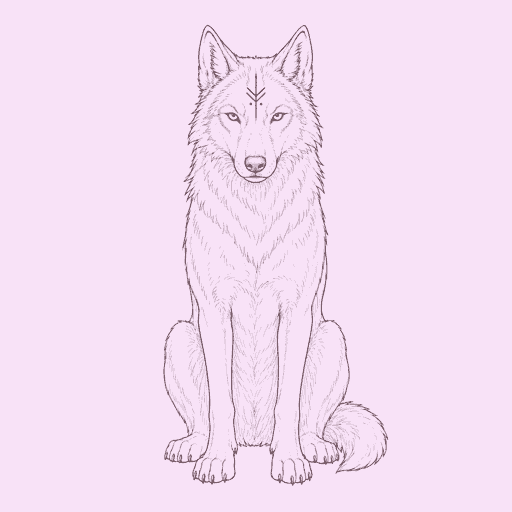
Orka’s “Tainted” nature as an Úlfhéðnar—or descendant of the wolf god Ulfrir—is a source of power that she has long suppressed but fully embraces upon the loss of her family. Her connection to Ulfrir gives her preternatural strength and senses while threatening to overwhelm her self-control. Her reunion with the resurrected Ulfrir complicates this relationship, as he claims her as his “child” and asserts a paternal authority she fiercely rejects. Her god-blood is both her greatest weapon and a tie to a power that seeks to control her, setting up a character arc that turns on her efforts to access this power while maintaining agency. Her interactions with others are purely transactional, guided by what they can offer her quest. She mentors the vengeful Lif, forges a tense alliance with Elvar, and re-engages with the Bloodsworn, not out of a renewed sense of loyalty, but as a means to an end.
Despite her brutal exterior, Orka demonstrates a capacity for forming unconventional bonds, particularly with the vaesen Spert and Vesli, whom she treats as part of her household. Her fierce protection of them, and later of Lif, reveals a protective instinct that extends beyond her own son. She embodies the archetype of the avenging warrior, a highly capable and determined figure whose personal tragedy becomes a catalyst for wider conflict. Her journey is one of self-rediscovery, as she sheds the identity of a homesteader to become the weapon she was always meant to be, her empathy reserved only for the few she chooses to protect.
Varg No-Sense
As one of the book’s primary protagonists, Varg undergoes a significant transformation from a fugitive to an integrated member of the Bloodsworn. Initially, his motivation is to find a Seiðr-witch to reveal his sister’s killer. This quest for personal vengeance leads him to the Bloodsworn, where he discovers his Tainted heritage as an Úlfhéðnar. This revelation is a turning point, offering an explanation for the rage he has never understood and providing him with a new identity and community. His journey highlights The Destructive Effects of Prejudice, as his god-blood marks him for a life of marginalization and violence but also offers him a place among found family. Varg is a round, dynamic character whose allegiances shift from a solitary quest to a fierce loyalty to his new kin.
His development is significantly shaped by his relationships within the Bloodsworn. Røkia becomes his mentor in weapons craft and in controlling the “beast in [his] blood” (92), teaching him to channel his wolf-like power rather than be consumed by it. Svik acts as a friend and guide, helping Varg navigate the social dynamics and moral codes of the warband. The death of his friend Jökul deepens his commitment to the Bloodsworn and fuels his desire for retribution against their shared enemies. This shift from a personal to a communal cause is central to his arc; he is no longer just a man seeking to avenge his sister but a brother-in-arms avenging his fallen comrades.
Varg’s character serves as an entry point for the reader into the world of the Tainted and the Bloodsworn. His journey from ignorance to acceptance of his own nature mirrors the reader’s discovery of the book’s lore. His past enslavement gives him a unique perspective on the world’s injustices and fuels a deep-seated hatred for human traffickers like Brimil. He struggles with the moral complexities of the Bloodsworn’s violent life but ultimately embraces it as his own. His internal conflict is less about right and wrong and more about control versus chaos, as he learns to balance his human consciousness with the primal instincts of the wolf within.
Elvar Fire-Fist
Elvar is a dynamic, round protagonist whose arc is defined by her reluctant ascent to leadership. Initially driven by a desire to escape her father’s influence and earn her own battle-fame, she finds herself bound by a magical blood oath and, following the death of her chief, Agnar, is thrust into the role of leader of the Battle-Grim. This responsibility forces her to shift her goals from individual glory to the survival and well-being of her crew. Her leadership style is pragmatic and decisive, culminating in the audacious plan to resurrect and enslave the wolf-god Ulfrir. This act, using a thrall-collar to control a divine being, highlights Enslavement as an Engine of Societal Ruin, as Elvar’s ambition to control and weaponize a god threatens to revive the war of the gods that almost wiped out humanity in the past.
Elvar’s relationship with her past, particularly her tyrannical father Jarl Störr, is a powerful motivator. Her return to Snakavik is not a homecoming but a strategic move to acquire the resources she needs to fulfill her oath: Jarl Störr’s enslaved Berserkir army. The confrontation with her father and brothers is the climax of her personal journey, where she uses the power and wealth she has earned to dismantle her father’s authority and seize it for herself. By killing her brother Thorun and accepting the fealty of her younger brother Broðir, she usurps her father’s position and becomes a jarl in her own right, completing her quest for independence in the most definitive way possible.
Her moral allegiance evolves throughout the narrative. While bound by the blóð svarið (blood oath) to rescue Uspa’s son, her methods are often morally ambiguous. She enslaves the demigod Skuld, manipulates Ulfrir, and ultimately sacrifices her own father to achieve her goals. Her actions are not driven by malice but by an amoral pragmatism. She understands that in a dangerous world, conventional morality is a luxury. Elvar embodies the archetype of the reluctant ruler, a leader forged in crisis who learns that power is not about glory but about making impossible choices.
Biórr
Biórr is a complex, round, and dynamic antagonist. His reintegration into the Raven-Feeders, the warband of his youth, is fraught with internal conflict. His time among the Battle-Grim, particularly his relationship with Elvar and his respect for Agnar, has left him with a lingering sense of guilt and a conflicted conscience. He struggles to reconcile the Raven-Feeders’ noble goal of liberating the Tainted with their brutal methods and the casual cruelty of figures like Brák Trolls-Bane. His evolving morality is evident in his discomfort with the enslaved children and his compassion for Bjarn. He comes to see that Lik-Rifa’s rhetoric about freedom and equality is a screen that obscures her own lust for absolute power.
His relationship with his divine bloodline is central to his identity. As one of Rotta’s line, he feels an immediate connection to the resurrected rat-god, who offers him validation and a sense of belonging he has not felt since he first left the Raven-Feeders to infiltrate the Battle-Grim. Yet, this allegiance is tested by his conscience. His decision to aid the escape of Kráka and Bjarn is a key moment, a betrayal of his comrades born from a sense of empathy and responsibility. This act of mercy backfires tragically when he is forced to kill Kráka to protect himself, a moment that extinguishes the last remnants of his moral resistance. This act solidifies his place within the Raven-Feeders but leaves him emotionally hollowed, a pawn in a divine game he no longer believes in. Biórr’s journey illustrates the corrupting nature of war and the difficulty of maintaining one’s principles when caught between opposing, absolutist ideologies.
Guðvarr
Guðvarr is a minor antagonist who undergoes a significant downward spiral, making him a dynamic character. Initially driven by the self-serving ambition to earn a “fair-fame name”—that is, a good reputation—his primary motivation is to capture Orka to please his aunt, Jarl Sigrún. However, his cowardice is exposed during the massacre at the Grimholt, where he flees in terror. From this point, his ambition is replaced by a desperate, all-consuming need for self-preservation. He becomes an opportunist and a sycophant, attaching himself to the powerful galdurman (magical warrior) Skalk in the hopes of protection and advancement. His character is a critique of ambition that is not tempered by courage or integrity.
His journey becomes a terrifying lesson in subjugation when Skalk forcibly places a hyrndur inside his body, turning him into a controlled spy. This violation transforms Guðvarr’s relationship with power; he is no longer just seeking it but is physically bound to it, a vessel for another’s will. This experience amplifies his most desperate traits. He volunteers to be a messenger to Lik-Rifa, seeing this betrayal of his community as his only path to survival. This choice highlights the degree to which enslavement accelerates societal ruin: By subjecting Guðvarr to torture in an attempt to force his loyalty, Skalk and Helka succeed only in turning him against them.
Lik-Rifa
The central antagonist of the novel, Lik-Rifa is a round, static character whose liberation sets the primary conflict in motion. As the dragon-god freed from her prison, she embodies the raw, apocalyptic power of the ancient world. Her motivations are twofold: to secure her own survival and to establish a new world order with herself as queen and the “Tainted”—despised and enslaved under the current order—as the ruling class. She is characterized by immense power, a volatile temper, and a twisted, possessive maternal instinct toward her “children,” which include her dragon-born descendants, the vaesen she created, and the Tainted children she liberated. She is both a charismatic revolutionary, offering freedom from subjugation, and a terrifying tyrant who devours her own followers on a whim. Her presence forces every other character to react, making her the story’s central driving force.
Myrk Sharp-Claw
A secondary antagonist, Myrk is a flat, static character who embodies the fierce loyalty and brutality of the dragon-born. As the sister of Ilska and Drekr, her actions are driven by devotion to her family and her god-ancestor, Lik-Rifa. She is a skilled warrior whose defining traits are confidence and cruelty. Her pursuit of the Bloodsworn is fueled by a desire for vengeance after the death of her father and crew. Even after her capture and mutilation at the hands of Orka, her spirit remains unbroken, and she uses deception to lead her enemies astray. Myrk is a direct representation of the Raven-Feeders’ ethos: uncompromising, violent, and utterly dedicated to their cause.
Glornir Shield-Breaker
A supporting protagonist, Glornir is a round, static character who represents stoic leadership and unwavering loyalty. As the chief of the Bloodsworn, his primary focus shifts from a mercenary contract to a personal quest when his wife, the Seiðr-witch Vol, is abducted by Skalk. This single-minded pursuit showcases Vengeance as a Self-Perpetuating Cycle, as all other concerns, including the welfare of the Tainted children, become secondary. His reunion with his sister-in-law, Orka, reconnects him to his past and forges a critical alliance. He is a paternal figure for the Bloodsworn, particularly Varg, and his steady, grim determination provides a moral anchor for the group.
Rotta
A secondary antagonist, Rotta the rat-god is a round, static character whose unexpected return introduces a new layer of divine politics. He is defined by his cunning, his history of betrayal, and his deep-seated terror and hatred of his siblings, Ulfrir and Orna. Unlike the overt power of Lik-Rifa, Rotta’s strength lies in manipulation and self-preservation. He quickly aligns himself with his sister, seeing her as his best chance for survival and for vengeance against Ulfrir. He is charming and charismatic on the surface but malevolent underneath, representing the deceitful and self-serving nature of power in the novel’s world. His presence complicates the divine power dynamics and foreshadows further betrayals.
Minor Characters
Several minor characters play important roles in driving the plot and developing the central themes. Uspa, a powerful Seiðr-witch, is the catalyst for the Battle-Grim’s journey to Oskutreð, driven entirely by the desire to rescue her son, Bjarn. Her willingness to resurrect a god demonstrates the extreme lengths a parent will go for their child. Grend serves as Elvar’s loyal protector and conscience, a stoic warrior whose existence is dedicated to her safety. Svik Tangle-Hair, the Bloodsworn’s skáld, provides both comic relief and moments of deep wisdom, and his history with Orka reveals the deep bonds of the warband. Skalk the Galdurman is a purely ambitious antagonist, whose kidnapping of Vol and theft of Orna’s talon serve to unite the Bloodsworn against Queen Helka. Finally, Lif Virksson, a fisherman-turned-warrior, represents the transformative power of vengeance, as his quest to avenge his brother under Orka’s tutelage hardens him into a capable, if reluctant, killer.

Unlock analysis of every major character
Get a detailed breakdown of each character’s role, motivations, and development.
- Explore in-depth profiles for every important character
- Trace character arcs, turning points, and relationships
- Connect characters to key themes and plot points