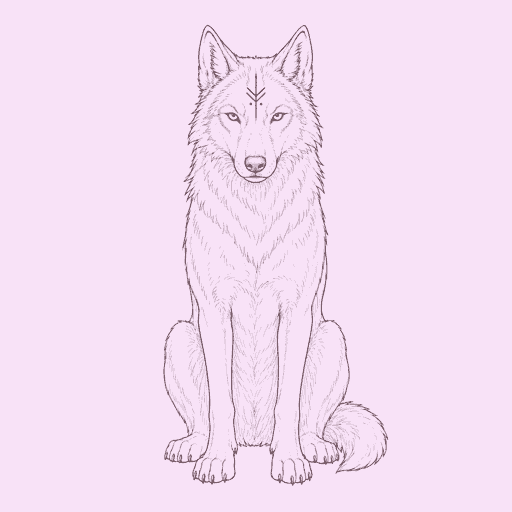
The Hunger of the Gods
The Hunger of the Gods
A modern alternative to SparkNotes and CliffsNotes, SuperSummary offers high-quality Study Guides with detailed chapter summaries and analysis of major themes, characters, and more.
Summaries & Analyses
Quizzes
NEWReading Tools
Chapters 25-36Chapter Summaries & Analyses
Content Warning: This section of the guide includes discussion of graphic violence, death, physical abuse, and cursing.
Chapter 25 Summary: “Guðvarr”
Guðvarr lies in agony on the table, with the wasp-like hyrndur having been forced to burrow into his body. Suddenly, the Galdur tower comes under attack. The assault is led by Prince Jaromir of Iskidan, a Tainted thrall named Taras who resembles a bull, and a Seiðr-witch named Iva.
Skalk and his apprentices defend the tower with Galdur-magic, creating flaming rune-shields and commanding a swarm of hyrndur. During the battle, Jaromir’s hawk swoops down unprompted and attacks Skalk, clawing his face and destroying one of his eyes; Jaromir whistles, and the hawk returns to him. Iva’s Seiðr-magic proves superior; she conjures a great fissure in the ground that swallows Skalk and many of his followers. Jaromir’s forces seize a chest containing the bones of the god Hraeg and capture Vol.
After the attackers depart, Guðvarr frees himself from the table. While searching for an exit, he discovers the body of Arild, a fellow captive, broken and stuffed into a barrel. Fleeing into the courtyard, Guðvarr is knocked to the ground when two fighting men crash into him. Seizing the moment, he grabs the hammer and kills the man who wielded it—the same man who had earlier killed Jökul. The dead man’s companion, a savage-looking warrior armed with a cleaver, sees the act and hurls a hand-axe at Guðvarr in a rage. The axe misses Guðvarr but kills the tower guard. Terrified, Guðvarr escapes into a nearby tunnel as the cleaver-wielding man gives chase.
Chapter 26 Summary: “Varg”
Varg and his fellow Bloodsworn, including Svik and Æsa, join an ongoing battle at the Galdur tower. Varg is horrified to witness Guðvarr sweep up Jökul’s own hammer from the ground and slam it into Jökul’s head, killing him. Consumed by grief and rage, Varg pursues Guðvarr into the tower and down the tunnel.
He is joined by Svik and Æsa, and they soon realize the tunnel leads to Queen Helka’s fortress. The rest of the Bloodsworn, led by Glornir Shield-Breaker, regroup with them. Inside the fortress, they find Prince Hakon, Helka’s son, naked in bed with a woman, and take him hostage. They then storm the queen’s mead hall, leading to a fierce battle with Helka’s honor guard of Úlfhéðnar, Tainted warriors descended from Ulfrir the wolf god, bound by Galdur-collars. During the fight, Varg is attacked by an Úlfhéðnar and has his ear bitten off. The battle is brought to a halt when Røkia holds a blade to the captive Hakon’s throat.
Chapter 27 Summary: “Guðvarr”
Guðvarr watches from the side as the standoff in Queen Helka’s mead hall unfolds. Glornir demands the return of Vol and Skalk. Guðvarr steps forward and reveals that Prince Jaromir’s forces have already taken Vol and a chest containing the bones of the god Hraeg. This news changes the dynamic of the confrontation.
Skalk appears, having survived the chasm, and confirms Guðvarr’s story. Queen Helka, a shrewd negotiator, proposes a new arrangement: Instead of continuing their fight, she will hire the Bloodsworn to hunt down Prince Jaromir. This allows them to rescue Vol, and Helka wants Jaromir caught and punished for the insult. In exchange, the Bloodsworn must spare Skalk’s life for now. Glornir agrees but insists on keeping Prince Hakon as a hostage to ensure that Helka honors the deal. As the tension subsides, Varg confronts Guðvarr. He warns him that Lif, whose brother Guðvarr also killed, is seeking revenge and declares that he, too, will eventually kill Guðvarr for murdering Jökul.
Chapter 28 Summary: “Elvar”
Huld calls for an Althing—a formal assembly—to challenge Elvar for the position of chief of the Battle-Grim. Elvar agrees to a holmganga, a duel to the death, to settle the matter. Her second-in-command, Grend, is worried because she has an apparent shoulder injury.
Elvar does not reveal that the Seiðr-witch Uspa has already healed her shoulder with Seiðr-runes. Elvar feigns weakness during the fight, luring Huld into a false sense of confidence. When Huld overcommits to an attack, Elvar strikes decisively, killing her. Having proven her strength and cunning, Elvar is formally recognized as the new chief of the Battle-Grim. She decides their first move will be to travel south and return to their ship, the Wave-Jarl, rather than immediately pursuing the enemy warband.
Chapter 29 Summary: “Varg”
Varg and the Bloodsworn prepare to depart Darl on a drakkar, a longship provided by Queen Helka. Before they leave, Varg, accompanied by Svik, Røkia, and Einar Half-Troll, goes into the city. His mission is to find Brimil, the human trafficker who purchased his sister, Frøya. To move through the slaver’s world unnoticed, Varg puts on his old iron thrall-collar.
They locate Brimil in an inn, and Varg brutally beats him until he reveals what happened to Frøya. Brimil confesses that he sold her to a trapper named Brák Trolls-Bane. During the interrogation, Varg loses control, and his Tainted wolf nature briefly manifests. To protect their secret, Svik and Røkia swiftly kill Brimil and his guards. The Bloodsworn then set sail from Darl with Prince Hakon and his Úlfhéðnar bodyguard, Frek, as hostages. Another Bloodsworn, Sulich, explains their plan: They will sail to the port city of Liga to intercept Prince Jaromir before he can escape Vigrið on his own ships.
Chapter 30 Summary: “Biórr”
Biórr, traveling with the Raven-Feeders, is tormented by guilt over his betrayal of the Battle-Grim and his killing of their chief, Agnar. Lik-Rifa begins to indoctrinate the Tainted children who were abducted for the ritual to free her.
Lik-Rifa removes their Galdur-collars and tells them their Tainted blood is a gift, not a curse, marking them as descendants of gods. She encourages them to discover and embrace the “beast” within them. The children, including a boy named Bjarn and another named Breca Thorkelsson, begin to identify with their divine animal ancestors. Biórr then witnesses Brák Trolls-Bane, the trapper who bought Frøya, brutally beat and maim Breca for attempting to escape, breaking the bones in his hand and scarring his face as a lesson.
Chapter 31 Summary: “Orka”
Orka continues her journey with her small band, tracking the Raven-Feeders. She interrogates Myrk, who reveals that the Raven-Feeders used a powerful rune-scroll and the blood of many Tainted children, including Orka’s son Breca, to perform a ritual that freed Lik-Rifa from her ancient prison.
Enraged that Breca was used in the ritual, Orka gouges out one of Myrk’s eyes. Myrk confirms that Breca is still alive. Orka consults her companions, then strikes a deal: She will reveal the name of Myrk’s father’s killer in exchange for Breca’s location. Myrk tells her that Lik-Rifa and the children are heading west toward the Iskalt Islands. In return, Halja Flat-Nose, one of Orka’s companions, tells Myrk that Varg killed her father.
Chapter 32 Summary: “Varg”
Aboard the drakkar sailing from Darl, Varg and the Bloodsworn anchor for the night. Glornir discovers that Einar Half-Troll has smuggled a group of children out of the city hidden in barrels. To entertain the crew and the children, Svik tells a story about a clever widow named Helka, a hungry troll named Einar, and a cunning wolf named Frek.
The tale is an allegory about fairness, power, and perception. It concludes that there is no fixed “way of the world” (288); rather, individuals make their own choices. Prince Hakon is confused by the story’s moral, but his Úlfhéðnar bodyguard, Frek, appears to understand its deeper meaning about challenging established power structures.
Chapter 33 Summary: “Guðvarr”
In Darl, Guðvarr is summoned to the Galdur tower by Skalk. To reassert his dominance, Skalk uses his Galdur-magic to activate the hyrndur inside Guðvarr’s chest, causing him excruciating pain. He reminds Guðvarr of his mission: to get close to Prince Hakon when he returns to Darl. Terrified and realizing he is completely under Skalk’s control, Guðvarr goes to his aunt, Jarl Sigrún, and confesses that he is in grave danger.
Chapter 34 Summary: “Elvar”
Elvar leads the Battle-Grim south, reaching their longship, the Wave-Jarl. As she grapples with the new responsibilities of leadership, Uspa challenges her worldview, arguing that the brutal “way of the world” is a choice, not an inevitability (307).
Their camp is suddenly visited by a Froa-spirit, a towering, tree-like vaesen, who has come seeking the wolf-god Ulfrir. When the Battle-Grim attack the creature, Ulfrir transforms into a giant wolf to protect it, killing one of Elvar’s warriors, Ketil, in the process. He declares the Froa-spirit an ally. To re-establish control, Elvar uses the power of the Galdur-collar to force Ulfrir back into his human form, inflicting immense pain on him. She demonstrates her absolute authority over both him and his daughter, Skuld, solidifying her command over the two gods.
Chapter 35 Summary: “Biórr”
Plagued by guilt over his role in the abduction of Uspa’s son, Bjarn, Biórr attempts to reconnect with the boy by offering to play tafl, a strategic board game, but Bjarn is uninterested and seems mentally unfocused. Kraká tells him that some of the abducted children are not yet fully themselves. Breca, the boy whose hand was broken by Brák Trolls-Bane, plays in Bjarn’s place.
Lik-Rifa continues her efforts to win the loyalty of the Tainted children, teaching them to embrace their divine heritage and reject their mortal parents. During her speech, a swarm of tennúr arrives. They report that her brother, the wolf-god Ulfrir, has been seen alive and has crossed the Isbrún Bridge, a mythical landmark. Lik-Rifa is enraged by this news.
Chapter 36 Summary: “Orka”
Orka’s group arrives at the lakeside town of Starl. Myrk confirms that the Raven-Feeders sailed across the lake from here. To gather information and supplies without raising suspicion, Orka purchases a Tainted thrall named Sæunn, who has knowledge of the local human trafficking networks.
While in Starl, Orka observes followers of Lik-Rifa openly preaching about the return of the dragon-god. As she looks out across Lake Horndal, she feels the familiar presence of Snaka’s power emanating from one of his giant ribs that arches over the water. Her attention is drawn to an approaching drakkar bearing the shields of the Battle-Grim, which Halja identifies for her.
Chapters 25-36 Analysis
When Skalk activates the parasitic creature inside Guðvarr’s body, he inflicts agonizing pain. This act of intimate, biological control epitomizes the section’s exploration of subjugation. In a society founded on enslavement, coercion spreads insidiously through every facet of daily life, demonstrating the effectiveness of Enslavement as an Engine of Societal Ruin. The symbol of thrall-collars recurs with increasing frequency: Queen Helka’s Úlfhéðnar are bound to her will by them, as are Prince Jaromir’s powerful Tainted warriors, Taras and Iva. The theme culminates in Elvar’s ruthless assertion of leadership, as she uses the collars’ power to dominate the divine beings Ulfrir and Skuld, proving that even they are not immune to this mortal system of control. In a moment of deep irony, the former thrall Varg willingly dons his old collar to navigate the enslavers’ world in Darl, a pragmatic choice that forces him to physically embody the oppressive identity he fought to escape. From the magical coercion of a god to the physical horror of an internal parasite, these chapters illustrate that bondage in this world is not merely a social status but a pervasive mechanism of power that corrupts every level of society.
Svik’s tale of the widow, the troll, and the wolf, told aboard the Bloodsworn’s drakkar, offers a philosophical counterpoint to Vigrið’s pervasive brutality. The story’s repeating refrain—that cruelty and betrayal are simply “the way of the world”—is ultimately subverted when the young prince figure, Hakon, tells the wolf, “‘There is no such thing as the way of the world. There is only this,’ and he tapped a finger to his head” (294). This allegory presents a direct challenge to fatalism, suggesting that social structures that appear natural and inevitable are in fact products of the mind and can be rethought. The same argument is made more directly when Uspa confronts Elvar about her actions, rejecting the notion that brutality is inevitable. “Nonsense,” Uspa growls, “We decide what is the way of the world” (306). These two scenes, one an allegorical fable and the other a direct philosophical debate, function as a narrative dialectic. Svik’s tale, told to a warband and a captive prince, uses cynicism and wit to argue for individual agency within a cruel system. Uspa’s plea, made to a new chieftain, is a more earnest appeal to change the system itself. Together, they articulate a central tension between accepting the world’s harsh realities and finding the moral courage to reshape them.
The monstrous power of the gods erupts into the narrative when Ulfrir transforms into a giant wolf to protect a Froa-spirit, a vaesen ally. In his divine form, Ulfrir casually slaughters one of Elvar’s warriors, Ketil, demonstrating the uncontrollable and amoral nature of divine power. Elvar’s immediate response—using the Galdur-collar to inflict debilitating pain and force the wolf-god to his knees—reasserts the new hierarchy, in which human ingenuity has found a way to chain the divine, making gods into powerful but ultimately controllable assets. This dynamic contrasts with Lik-Rifa’s political strategy, in which she inspires the Tainted children to rebel against The Destructive Effects of Prejudice, reframing their divine bloodline not as a curse to be feared or controlled, but as a source of strength and superiority. Her speech is a form of indoctrination, using the children’s trauma and alienation as the basis of a new, fervent identity rooted in loyalty to her alone. While Elvar controls divinity through pain and subjugation, Lik-Rifa controls it through ideology and emotional manipulation, revealing two distinct but equally ruthless methods of harnessing the gods’ dangerous legacy.
As Varg confronts Guðvarr in Queen Helka’s mead hall, he promises retribution for the murder of his friend Jökul, forging a new link in a growing chain of blood-feuds. This section tracks the escalating and intersecting nature of personal vendettas, showing the effects of Vengeance as a Self-Perpetuating Cycle. Varg’s grief-fueled rage drives him to lose control of his Tainted nature while interrogating the enslaver Brimil, forcing his companions to kill witnesses to protect his secret. This moment of weakness emphasizes the internal cost of his quest. Simultaneously, Orka’s pursuit of her son leads her to gouge out one of Myrk’s eyes in a cold, calculated act of retribution for her abuse of Breca. When Orka reveals that Varg killed Myrk’s father, she instantly creates a new desire for revenge in her captive. The narrative weaves these quests together, creating a tangled web where the hunter in one story becomes the hunted in another. These personal motivations—for a friend, a son, a father—are supplanting the larger objectives of the warbands, demonstrating how individual cycles of violence can destabilize the world as effectively as the machinations of gods and queens.

Get in-depth, chapter-by-chapter summaries and analysis from our literary experts.
- Grasp challenging concepts with clear, comprehensive explanations
- Revisit key plot points and ideas without rereading the book
- Share impressive insights in classes and book clubs