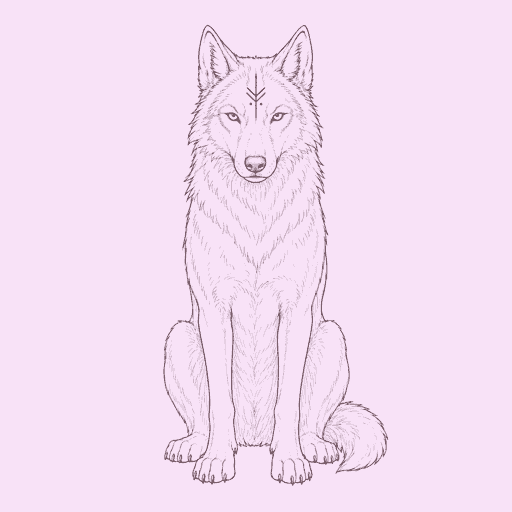
The Hunger of the Gods
The Hunger of the Gods
A modern alternative to SparkNotes and CliffsNotes, SuperSummary offers high-quality Study Guides with detailed chapter summaries and analysis of major themes, characters, and more.
Summaries & Analyses
Quizzes
NEWReading Tools
Chapters 37-48Chapter Summaries & Analyses
Content Warning: This section of the guide includes discussion of graphic violence, death, physical abuse, and cursing.
Chapter 37 Summary: “Varg”
The Bloodsworn’s drakkar arrives at the port of Liga. Varg observes as their chief, Glornir Shield-Breaker, immediately confronts the harbor official, Palrun, demanding to know if Prince Jaromir of Iskidan is in the town. Before the confrontation escalates, Jarl Logur, the ruler of Liga and Glornir’s friend, arrives. Logur informs them that Jaromir arrived a few days ago, restocked his ships, and sailed two days prior.
Glornir arranges for Logur to resupply their ship, the Sea-Wolf, for the pursuit. He also asks Logur to take custody of Queen Helka’s captured drakkar and her son, Prince Hakon. While they wait, Varg repays a life-debt to his crewmate Sulich by giving him a suit of lamellar plate armor he won in a previous battle.
Meanwhile, Edel and Ingmar Ice, who have just arrived on the Sea-Wolf, inform the others about events at Rotta’s chamber, including that Ilska’s sister Myrk led a group of Raven-Feeders there and that Varg killed Myrk’s father. They also report that Ilska is allied with Lik-Rifa. Once resupplied, the Bloodsworn, accompanied by the children they rescued from the Grimholt, set sail for Iskidan to rescue Vol, Uspa’s sister, from Jaromir.
Chapter 38 Summary: “Elvar”
Elvar, now chief of the Battle-Grim, directs the Wave-Jarl to the town of Starl to purchase food and ale. Aboard are Ulfrir, Skuld, and the treasure they recovered from Oskutreð. To prevent word of their valuable cargo from spreading, Elvar orders most of the crew to remain on the ship.
As they dock, three women approach: Orka, Halja Flat-Nose of the Bloodsworn, and a thralled woman accompanying them. They demand the release of Uspa. Elvar refuses, and a fight seems imminent. However, Uspa appears on deck, expressing shock and joy at seeing Orka, whom she believed to be dead. Just as Orka demands Uspa come with them, Ulfrir steps forward. He recognizes Orka and addresses her as his “wolf-child,” halting the confrontation.
Chapter 39 Summary: “Orka”
Orka is stunned to see Ulfrir, who was slain during the Guðfalla—the cataclysmic war among the gods that took place before the novel’s timeline. Ulfrir invites her aboard the Wave-Jarl for a discussion, and Elvar grants a temporary truce. During the parley, Orka explains that she is searching for her son, Breca. Uspa reveals that her son, Bjarn, was also abducted, leading them to conclude the boys were taken for the ritual that freed Lik-Rifa.
Orka asks Uspa to join her, but Uspa is bound by a blood oath to follow Elvar’s plan to rescue Bjarn. Ulfrir claims Orka is his daughter and insists her place is with him, but Orka refuses, unwilling to be delayed in her search for Breca. The conversation shifts when Halja recounts the Bloodsworn’s recent activities, including that Skalk took Orna’s talon, fragments of the Raudskinna, and Uspa’s sister, Vol. The meeting culminates when Elvar reveals that Orka’s prisoner, Myrk, has lied; the Raven-Feeders, who have the children, traveled east, not west as Myrk claimed.
Chapter 40 Summary: “Biórr”
Biórr travels with Lik-Rifa, the Raven-Feeders, and the captive Tainted children, including Breca and a recovering Bjarn. Their long journey east brings them into sight of the Boneback Mountains and onward to the coast of the Icebound Sea at a rocky promontory. Lik-Rifa leads the column to a sheer cliff face. There, she transforms into her massive dragon form and sings a Galdur-song. The song causes the cliffs to tremble and crumble away, revealing the hidden entrance to her ancient stronghold, Nastrandir. The entrance is a colossal doorway flanked by enormous, animated stone serpents that writhe and bow to her. Lik-Rifa welcomes her followers to her home.
Chapter 41 Summary: “Guðvarr”
|At Queen Helka’s fortress in Darl, Guðvarr apologizes to his aunt, Jarl Sigrún, for failing to kill Orka. Sigrún dismisses his failure, stating that her real concern is not revenge but projecting strength to prevent Helka and the other jarls from seeing her as weak. She also tells Guðvarr that Helka has summoned her rival, Jarl Orlyg of Svelgarth, for a meeting. Their conversation is interrupted by the arrival of an escorted Prince Hakon, who has been returned by the Bloodsworn. Guðvarr calls out a greeting to the prince, catching his eye as Hakon is led into the fortress. Queen Helka greets her son and announces a feast to celebrate his return.
Chapter 42 Summary: “Biórr”
Biórr and the others enter the vast, serpent-themed main hall of Nastrandir. Lik-Rifa senses that someone has been in her home. She leads her followers through the fortress, past an underground dock with longships, to another large chamber. Inside, they find a lavish feast already prepared. A tall, handsome man steps forward and welcomes Lik-Rifa home, calling her his sister. She is shocked and identifies him as Rotta, the rat-god, whom she and everyone else believed to be dead. Rotta reveals that rumors of his death were false; he escaped his prison during the Guðfalla.
Chapter 43 Summary: “Guðvarr”
Guðvarr attends the feast celebrating Prince Hakon’s return. A farmer named Leif Kolskeggson arrives with a mercenary, Sterkur, seeking Queen Helka’s permission to hunt Varg, who murdered Leif’s father when he was enslaved. Leif reveals that Varg has joined the Bloodsworn. Helka grants her blessing, adding that the Bloodsworn recently sailed from Liga in pursuit of a prince from Iskidan.
Afterward, Hakon initiates a shield-dance, a balance and agility contest. Guðvarr joins the competition and races through the shields, at one point colliding with Princess Estrid and sending them both crashing to the ground. Hakon wins, and the collision earns Guðvarr the prince’s amused attention. Following the feast, Guðvarr goes to The Dead Drengr inn with a woman named Vilja.
Chapter 44 Summary: “Biórr”
Rotta explains to Lik-Rifa that he escaped his prison during the Guðfalla but was too terrified of Orna and Ulfrir to aid her. Lik-Rifa discloses that she wrote her own Galdrabok during her imprisonment, but it has fallen into the wrong hands. Lik-Rifa forgives her brother, and they embrace. At the feast, Biórr’s crewmate Storolf defends a tennúr named Tannbursta from another warrior, knocking the man out and giving the man’s tooth to the tennúr. Rotta then approaches Biórr, acknowledging their shared divine bloodline and expressing sorrow for the suffering it has caused him. After Rotta’s apology, Lik-Rifa addresses the assembled host. She declares that their new purpose is to kill her brother Ulfrir and restore their kind to power. She then sings a powerful Galdur-song, calling all the vaesen she created to come to Nastrandir and join her.
Chapter 45 Summary: “Orka”
Orka and her small group of Bloodsworn are hiding in a stable in Starl with their prisoner, Myrk, who taunts them until Orka silences her. That night, a group of cloaked figures attacks the stable. The fight is a ruse, orchestrated by Orka with Elvar and the Battle-Grim. The staged chaos allows Myrk to escape with her horse. Orka’s plan is for Myrk—who does not realize she has been allowed to escape deliberately—to lead them directly to where the Tainted children, including Orka’s son Breca, are being held.
Orka introduces her companions to Sæunn, an enslaved man Tainted with the blood of Hundur the hound, who can track Myrk by the scent of her blood. Before the Battle-Grim depart, Elvar gives Orka a valuable silver arm-ring as a token of regard to accompany word to the Bloodsworn, whom Elvar wishes to hire at double pay, with instructions for them to meet her at Snakavik.
Chapter 46 Summary: “Guðvarr”
Guðvarr wakes with a severe hangover at The Dead Drengr inn. Remembering Skalk’s command to get close to Prince Hakon, he goes downstairs and finds the prince meeting secretly with a cloaked man named Kalv. Eavesdropping, Guðvarr learns that Kalv is a messenger from Drekr, reporting that their “job is done” and that a female god (Lik-Rifa, though Guðvarr does not learn her name) is now free (396). Guðvarr also glimpses what appears to be a tattooed mark beneath recently re-grown hair on the back of Hakon’s head.
To avoid being caught spying, Guðvarr pretends to be drunk and stumbles into the room. Hakon, amused by Guðvarr’s antics during the previous night’s shield-dance, invites him to eat with them. Their meal is interrupted by the arrival of Skapti and Hrolf, the two men from the Grimholt who know of Guðvarr’s association with Skalk.
Chapter 47 Summary: “Varg”
Varg is suffering from severe seasickness as the Sea-Wolf sails toward Iskidan. Røkia and Svik laugh heartily at his misery. After Svik walks away, Varg comments that at least his sickness has restored Svik’s good humor, as Svik has lately been in an uncharacteristically somber mood. Røkia explains that Orka rescued Svik after he escaped his enslavement and raised him as a son: Seeing Orka alive again at the Grimholt reopened old wounds.
Later, Varg talks with Refna, one of the children rescued from the Grimholt. She tells him her brother was brutally executed by Brák Troll-Slayer, who served Drekr. Varg reacts with horror at hearing Brák’s name and its connection to Drekr. The conversation is cut short when Sulich, using his enhanced Tainted sight, spots two ships on the horizon. Recognizing them as a threat, Glornir shouts for the Bloodsworn to arm themselves.
Chapter 48 Summary: “Guðvarr”
The narrative returns to Guðvarr in The Dead Drengr. Recognized by Skapti and Hrolf, he creates a diversion by flipping the table onto Prince Hakon and flees the inn. Kalv, Hrolf, Skapti, and Hakon’s guard give chase. Guðvarr leaps into a canal to escape, but his pursuers find a boat and continue the pursuit.
Desperate, Guðvarr runs toward the Galdur tower, hoping Skalk will protect him. Just outside the tower gates, Hrolf catches up and is about to kill Guðvarr with a throwing axe. However, a guard from the tower kills Hrolf with a spear. Kalv, revealing himself to be Tainted, charges Guðvarr. Skalk emerges from the tower and incapacitates Kalv with a Galdur spell, trapping him in a magical fiery net. After knocking Kalv unconscious, Skalk orders the captive to be brought inside and commands Guðvarr to follow him.
Chapters 37-48 Analysis
When Røkia tells Varg that Svik was once a “runaway thrall, like you” (403), whom Orka rescued and raised, she exposes the deep psychological scars left by servitude. The revelation reframes Svik’s character, explaining his fierce loyalty to Orka and the pain of her perceived abandonment as arising from the devotion of a rescued child to a surrogate mother. This moment highlights Enslavement as an Engine of Societal Ruin, showing how enslavement creates fractured identities and loyalties that persist long after the physical bonds are broken. The historical context of Norse thralldom, where individuals were treated as property, informs the desperation of characters like Svik and Varg. This theme is further developed through the children rescued from the Grimholt, particularly Refna, whose brother was brutally executed as an “example to the rest of us” for attempting to escape (405). Her story, like Svik’s, illustrates that the violence of slavery is not just economic but psychological, breeding trauma that fuels future conflicts and complicates the very notion of freedom.
The resurrection of dead or exiled gods creates yet more divided loyalties. When the wolf god Ulfrir confronts Orka on the deck of the Wave-Jarl, he immediately asserts his authority, calling her “wolf-child” and declaring that she has his protection. His claim is not a comfort but a command, an attempt to fold her independent quest into his own patriarchal designs. Orka rejects this claim by asserting that her loyalty belongs entirely to her son, Breca, whom she must rescue. Similarly, when the rat god Rotta meets his descendant Biórr, he acknowledges their shared blood and apologizes for the suffering this heritage has caused. In both cases, the gods attempt to claim human loyalty. Both encounters feature the motif of the vaesen and dead gods, whose return signifies the violent intrusion of the past into the present. Orka and Biórr are not empowered by their lineage; instead, they are conscripted into an ancient, apocalyptic conflict, their personal desires subordinated to the will of their divine progenitors.
The parley between Orka and Elvar demonstrates an important shift in the motivations and strategies of the world’s warrior bands. Their initial standoff quickly dissolves into a pragmatic alliance of convenience. Orka, driven by the need to rescue her son, agrees to a truce with the Battle-Grim, while Elvar, focused on her own goals, uses the opportunity to hire the Bloodsworn. This exchange, culminating in the staged stable fight, prioritizes cunning and mutual benefit over traditional warband honor. It echoes Jarl Sigrún’s advice to Guðvarr that victory often depends on “guile and deceit” rather than simple strength (364). The characters are adapting to a world where old loyalties are insufficient to combat new, supernatural threats, forcing them into complex, temporary partnerships to survive.
The narrative structure in these chapters relies on parallel reveals and overheard conversations to build suspense and connect disparate plotlines. The reappearance of Rotta at Nastrandir, alive and well after the Guðfalla, mirrors Ulfrir’s own resurrection. This mirroring establishes a symmetry between the opposing divine factions, escalating the conflict from a hunt for a single freed god to the reawakening of an ancient pantheon, an event reminiscent of the Norse apocalypse, Ragnarök. Elsewhere, Guðvarr’s eavesdropping on Prince Hakon’s secret meeting with Kalv is a critical expositional device. His accidental discovery of the conspiracy involving Drekr and Lik-Rifa connects the political intrigue of Helka’s court to the larger mythic conflict. The revelation that Varg’s former tormentor, Brák Troll-Slayer, was one of Drekr’s subordinates similarly forges a personal link between Varg’s arc and the central plot, weaving individual histories into world-altering events.
The cultural mandate for blood-feud is shown to be a self-perpetuating cycle of violence that entraps its participants, framing Vengeance as a Self-Perpetuating Cycle. When Leif Kolskeggson arrives at Helka’s hall to request permission to hunt Varg, he is not seeking justice but retribution for the “crime” of Varg’s self-emancipation. Helka’s casual blessing of the hunt reinforces a social order where vengeance is not only permissible but expected, ensuring that Varg can never truly be free of his past. Varg’s own quest is complicated when he learns that Brák Troll-Slayer, a man connected to his violent past, is also tied to the abduction of the Tainted children. This new information threatens to pull Varg back into a personal vendetta, blurring the line between his new role as a protector and his old identity as a man defined by the violence inflicted upon him.

Get in-depth, chapter-by-chapter summaries and analysis from our literary experts.
- Grasp challenging concepts with clear, comprehensive explanations
- Revisit key plot points and ideas without rereading the book
- Share impressive insights in classes and book clubs