The Hunger of the Gods
The Hunger of the Gods
A modern alternative to SparkNotes and CliffsNotes, SuperSummary offers high-quality Study Guides with detailed chapter summaries and analysis of major themes, characters, and more.
Summaries & Analyses
Quizzes
NEWReading Tools
Chapters 67-78Chapter Summaries & Analyses
Content Warning: This section of the guide features discussion of graphic violence, death, physical abuse, and cursing.
Chapter 67 Summary: “Elvar”
Elvar leads the Battle-Grim into the mead hall of her estranged father, Jarl Störr of Snakavik. Inside, she sees Störr conferring with Hjalmar Peacemaker, chief of the Fell-Hearted mercenaries. Also present are Elvar’s brothers, Thorun and Broðir; the Galdurwoman Silrið; Jarl Störr’s champion, Gytha; and his honor guard of enslaved Berserkir, which includes Uspa’s husband, Berak. The giant, severed head of the god Hrung rests on a stone pedestal, snoring. A guard, Syr, announces them to the jarl. Unaware that Agnar is dead, Jarl Störr mocks Elvar and her mercenary company. Elvar removes her hood, announces Agnar’s death, and declares herself the new chief of the Battle-Grim, stunning her father into silence.
Chapter 68 Summary: “Varg”
The Bloodsworn form a shield wall to block a road, facing the approaching druzhina army led by Jaromir. Iva is killed by arrows before she can cast a spell. The druzhina charge but are thwarted by a hidden ditch the Bloodsworn dug, which breaks their momentum and throws them into chaos. A powerfully built warrior whom Varg calls the “bull-man,” enraged by Iva’s death, goes on a berserker rampage. He smashes through the center of the Bloodsworn’s shield wall, injuring Varg, Røkia, and Svik before incapacitating Ingmar Ice. As the bull-man is about to kill Ingmar, Varg, Røkia, and Svik attack him. Ingmar, empowered by his Tainted bear-blood, recovers and drives half of his broken spear shaft into the bull-man’s neck, killing him; the other half he uses as a club to make the bull-man release him. Seeing the tide turn, Jaromir escapes with Vol. The Bloodsworn give chase.
Chapter 69 Summary: “Elvar”
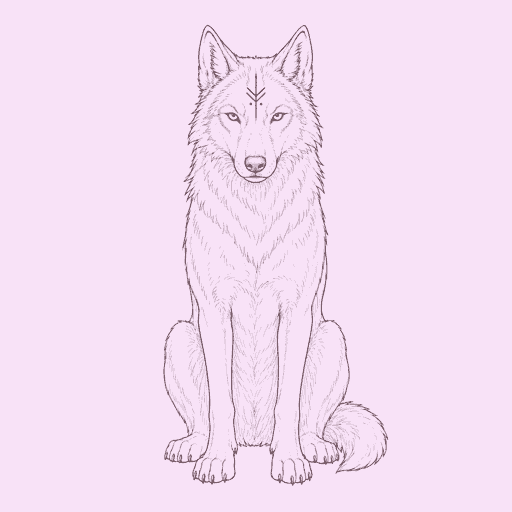
Elvar continues her confrontation with her father, Jarl Störr. She offers a chest of treasure from Oskutreð to buy Berak’s freedom. Störr scoffs at the offer. Elvar then presents a second, much larger chest of treasure, offering it in exchange for hiring Störr’s Berserkir to help rescue Berak’s son, Bjarn, from Lik-Rifa. Störr refuses, unwilling to grant Elvar control over the Berserkirs’ thrall-collars. He then threatens to seize all of her treasure by force, believing her ship is moored in his harbor and vulnerable. As his warriors move to surround the Battle-Grim, Elvar states that she will take the Berserkirs instead. In response to her father’s laughter, she reveals her secret weapon: Ulfrir, the resurrected wolf-god.
Chapter 70 Summary: “Varg”
Varg and the Bloodsworn pursue Jaromir to his fortress, Valdai. Røkia and Sulich manage to ride through the gates just before they are barred. Varg first hurls his shield up at the defenders to clear space, then uses Ingmar as a stepping-stone to vault over the fortress wall and begins fighting the defenders on the walkway. Soon joined by Svik and other Bloodsworn, they fight their way to the gate and open it from the inside, letting the rest of their warband into the courtyard. Jaromir forces the Bloodsworn to stand down by threatening to kill Vol. Vol headbutts Jaromir, but he still keeps his grip on her; Ingmar then crashes into Jaromir’s horse, throwing Jaromir back and hurling Vol free. Jaromir’s hawk savages Ingmar’s face, and Jaromir fatally wounds Ingmar with his sabre. He then tramples Ingmar’s body and flees into his hall as his men bar the doors. Ingmar dies of his wounds, and Varg and the Bloodsworn mourn his death before they breach the hall door in pursuit of Jaromir. Vol uses Seiðr magic to hurl splinters of the shattered door at Jaromir, killing him. The chapter ends with the discovery of captive Tainted children, identified as Sulich’s siblings.
Chapter 71 Summary: “Elvar”
In Jarl Störr’s hall, Ulfrir transforms into his giant wolf form, destroying much of the building as he attacks Störr’s warriors. Skuld flies in, captures Jarl Störr, and, on Elvar’s command, throws him to Ulfrir, who devours him. With Störr’s death, control over the Berserkirs’ thrall-collars transfers to his eldest son, Thorun—as Uspa had previously foretold—who immediately orders them to kill Elvar. However, Thorun’s Galdurwoman, Silrið, betrays him, immobilizing him with fire magic and offering him to Elvar. Elvar kills Thorun, and control of the collars passes to her. Her younger brother, Broðir, accepts her as his new jarl. The fortress’s remaining forces witness the scene and kneel.
Chapter 72 Summary: “Orka”
From a mountain path, Orka and her companions observe the fortress of Svelgarth. A massive and monstrous army, including trolls, tennúr, and night-hags, is setting up camp outside the fortress walls. Orka’s enhanced sight reveals that wagons in the warband’s train are filled with captive children. Struck by the certainty that Breca is among them, she lays out her weapons to prepare for battle. Seeing the two dragon-carved seaxes she took from Thorkel’s corpse, she is reminded that his killer, Drekr, must also be present.
After moving to a hidden camp to prepare, Orka tells the Bloodsworn that they do not have to join her in such a dangerous fight. They unanimously refuse to abandon her, reaffirming their loyalty. When asked for a plan, Orka deviates from her usual brutal tactics. She declares that her new objective is simply to infiltrate the camp, rescue her son, and escape, killing only those who directly try to stop her.
Chapter 73 Summary: “Biórr”
After an encounter with Myrk, Biórr is troubled by thoughts of Elvar and others he has betrayed. Myrk explains that in order to accommodate their vaesen allies, their army is waiting for full darkness before attacking Svelgarth. She reveals that she must go to the wall to counter the enemy Galdurmen, sharing a rare moment of vulnerability with Biórr and asking him not to die before she leaves.
Biórr rejoins Fain and Storolf at their camp, where they have been assigned by Rotta to guard the wagons and children at the rear. Storolf is frustrated and wants to join the main assault, but they agree to obey their orders. The horns sound, signaling the beginning of the attack. As warriors and vaesen surge toward Svelgarth’s walls, Biórr, Fain, and Storolf watch from their post, resigned to a quiet night of guard duty.
Chapter 74 Summary: “Orka”
From a nearby dell, Orka and her companions watch as dragon-born use fire magic, channeled through trolls, to tear down Svelgarth’s gate tower. As Lik-Rifa’s army swarms through the breach, Orka initiates her plan. She frees the enslaved Sæunn, instructing her to take their horses to a rendezvous point in case of failure. Orka then sends Lif, Halja, and Spert to create a diversion, while she, Gunnar, and Revna infiltrate the enemy camp. She teaches Lif the rune-words Skuggar skilja to use against night-hags.
The diversion successfully draws away most of the camp guards. After killing frost-spiders and the few remaining skraelings, Orka’s group reaches the captive children. Orka and her son, Breca, share an emotional reunion. They also find Bjarn. As they prepare to escape, Breca urges the other children to flee and calls for Harek, another captive from their village, to join them. Believing Lik-Rifa’s lies, Harek refuses and betrays them by screaming to alert the camp to their presence.
Chapter 75 Summary: “Biórr”
While his companions run toward burning tents, Biórr spots Orka and two Bloodsworn warriors escaping with Breca and Bjarn. Torn by his duty to guard the children, Biórr alerts Fain and Storolf and gives chase. Their fellow warrior Ilmur charges ahead but is quickly killed by Revna, a female Bloodsworn. Biórr immediately kills Revna in retaliation. A vicious battle ensues where Orka single-handedly fights Fain and Storolf. She grievously injures Storolf and then brutally kills Fain by ripping his jaw and throat out with her teeth before Storolf tackles her. The remaining male Bloodsworn, Gunnar, enraged by Revna’s death, attacks Biórr. Their duel is interrupted by the arrival of Rotta and other warriors, who surround and capture Gunnar at spearpoint.
Chapter 76 Summary: “Orka”
Orka’s fight is interrupted by Rotta, who takes Breca hostage. Surrounded by vaesen, Rotta reveals that he knows Orka has encountered his brother and demands to know his location. To force an answer, he orders Storolf to hold an axe over Breca’s head while a frost-spider binds Orka. Before Storolf can strike, Spert stings Storolf with lethal venom, then releases a black cloud from its mouth into Rotta’s face. Spert then hurls a spear into Rotta’s chest, causing the wounded god to lose control and transform into a gigantic, thrashing rat that destroys the camp. In the chaos, Lif frees Orka, and Halja provides cover. Spert guides Breca to safety, and the family reunites. Gunnar also escapes carrying the body of Revna, and the entire group flees into the woods.
Chapter 77 Summary: “Guðvarr”
At Darl’s fortress, Queen Helka, her court, and her allies gather to witness Skalk resurrect the eagle-god Orna. Skalk successfully performs the Galdur ritual, and Orna is reborn, bound by a thrall-collar. Just as Helka claims ownership, the dragon Lik-Rifa appears and attacks Orna. Simultaneously, dragon-worshippers launch a surprise assault on the ground. Amid the chaos, Jarl Sigrún betrays and murders Queen Helka. Guðvarr immediately kills Prince Hakon to prevent him from inheriting control of Helka’s thrall-warriors, the Úlfhéðnar. He then fails to kill Estrid, who now commands them. Guðvarr confronts Skalk, revealing his treachery: He told Lik-Rifa everything, and in exchange, she removed the deadly hyrndur from his body. Lik-Rifa’s other vaesen descend on the battle. The conflict culminates with Lik-Rifa brutally killing and dismembering Orna, leaving the dragon roaring victoriously over the eagle’s remains.
Chapter 78 Summary: “Orka”
Fleeing through the woods from their pursuers, Orka, Breca, and their companions follow a stream toward a lake. At Halja’s suggestion, the group splits up to confuse their enemies, leaving Orka and Breca running together. As they flee, they are ambushed by frost-spiders. Orka is bitten on the neck and injected with paralyzing venom. She and a battle-enraged Breca fight off the initial attackers, but the venom quickly takes hold, and Orka collapses, unable to move her limbs. Surrounded by more spiders and with no hope of escape for herself, Orka uses her remaining strength to throw Breca into the fast-flowing river to save his life. He is swept away by the current as she is swarmed. Orka fights back defiantly, killing two more spiders before she is overwhelmed by the venom and her wounds, losing consciousness.
Chapters 67-78 Analysis
Elvar’s defiant declaration in her father’s hall, “If you will not give them, then I must take them” (562), precipitates a violent coup that restructures power throughout Vigrið. Initially, Elvar attempts a transaction, offering chests of treasure for Berak’s freedom and the hire of the other Berserkir. This approach fails because her father recognizes that his enslavement of the Berserkir is the source of his power. When Jarl Störr and his heir Thorun are killed, control over the enslaved Berserkir passes directly to Elvar, the next in the bloodline. This magical inheritance literalizes the concept of people as property, with the collars acting as deeds of ownership that transfer automatically upon the master’s death. This system demonstrates Enslavement as an Engine of Societal Ruin by reducing powerful individuals to assets and making murder the most direct path to acquiring strength. The treachery of the Galdurwoman Silrið, who immediately betrays Thorun to align with Elvar, shows how this system breeds instability, as loyalty is always secondary to self-preservation under a new master. Elvar’s victory is thus a complicated one; to free one thrall, she becomes the master of many, using her own enslaved god, Ulfrir, to enforce her will.
The Bloodsworn’s desperate battles at Valdai and Svelgarth explore the brutal realities of the warrior-band ethos, using the recurring motif of the shield wall to represent its strengths and its deep costs. When the Bloodsworn form their shield line against the druzhina, the formation is an expression of the band’s commitment to mutual defense that defines the warband’s identity. The chaos of battle, however, tests this ideal. The bull-man’s berserker rage literally smashes through the wall’s center, symbolizing the breakdown of the existing social order and splintering the coordinated fighting force into a scattering of individuals each fighting for their own survival. The deaths of Ingmar Ice and Revna Hare-Legs devastate the group, transforming their professional mission into a raw, personal feud. Varg’s quiet mourning for Ingmar marks his transition from a novice warrior into a hardened veteran, while Gunnar’s grief-stricken rage as he carries Revna’s body further entangles the warband in Vengeance as a Self-Perpetuating Cycle.
The section juxtaposes the actions of Biórr and Guðvarr to explore different facets of betrayal and moral compromise in a world defined by shifting loyalties. Biórr is plagued by his past betrayals, particularly of Elvar, and his decision to pursue Orka is driven by a tangled mix of duty, fear of Lik-Rifa, and a desperate need to prove his loyalty to his new masters. His hesitation and internal conflict reveal the psychological toll of navigating a world where every alliance is temporary and every choice is fraught with consequence. In contrast, Guðvarr shows a deeper and more calculating form of treachery. His confrontation with Skalk reveals that the entire conflict at Darl is built on his betrayal. When he tells his former master, “I am a survivor, that’s what you told me, remember?” (619), he reframes his treason as a rational act of self-preservation. Guðvarr’s betrayal offers clear evidence of enslavement as an engine of societal ruin. Ironically, Helka and Skalk sealed their fate when they tried to enslave Guðvarr by injecting him with a parasitic wasp. Had they simply asked for his loyalty, he might have given it to them, but by trying to force it, they left him with no choice but to give his loyalty to whoever could remove the wasp. Guðvarr’s smiling admission of guilt presents a chilling portrait of a man who has sacrificed the world to save himself, fully embracing the amoral logic of survival.
Orka’s infiltration of the enemy camp culminates her long search for Breca, bringing her quest for vengeance into direct conflict with her maternal identity. Her emotional reunion with her son prompts a significant strategic shift; she announces a new plan to “only kill those who try to stop me” (585), a stark departure from her previous indiscriminate brutality. This moment shows a conscious effort to reclaim her humanity, which is immediately tested by Harek’s betrayal. The ensuing fight forces Orka back into the role of a ferocious protector, and her brutal killing of Fain—ripping his jaw and throat out with her teeth—shows how quickly her primal, wolf-like nature resurfaces when her son is threatened. Her final moments in this section synthesize these two identities. Paralyzed by frost-spider venom, she uses her last strength not to fight but to throw Breca into a river, saving his life at the cost of her own. This ultimate act of sacrifice transcends her quest for vengeance, revealing that her identity as a mother is the one she prioritizes above all else, even as it leads to a tragic separation.
The catastrophic events at Darl elevate the narrative’s conflicts to a mythological scale, directly evoking the Norse apocalypse of Ragnarök. The resurrection of the eagle-god Orna, immediately followed by her fatal battle with the dragon Lik-Rifa, transforms the political landscape into a divine battleground. The vaesen and dead gods embody ancient, uncontrollable forces that have returned to shatter the human world and deconstruct the very idea of divine salvation. Against this cosmic backdrop, the mortal power struggles are rendered almost insignificant. Jarl Sigrún’s assassination of Queen Helka and Guðvarr’s subsequent murders of the royal heirs are vicious but ultimately futile attempts to control a situation that has spiraled far beyond them. Lik-Rifa’s final, triumphant roar over Orna’s dismembered corpse signals the end of one age and the violent birth of a new one ruled by monstrous, ancient power. The scene mirrors the destruction of the old gods in mythology, framing the events not just as a political shift but as a genuine eschatological event where human ambition is consumed by divine warfare.

Get in-depth, chapter-by-chapter summaries and analysis from our literary experts.
- Grasp challenging concepts with clear, comprehensive explanations
- Revisit key plot points and ideas without rereading the book
- Share impressive insights in classes and book clubs