The Boat
A modern alternative to SparkNotes and CliffsNotes, SuperSummary offers high-quality Study Guides with detailed chapter summaries and analysis of major themes, characters, and more.
Summaries & Analyses
Quizzes
NEWReading Tools
Summary and Study Guide
Overview
Nam Le’s debut short story collection, The Boat (2008), is a critically acclaimed work of literary fiction that received numerous awards, including the Dylan Thomas Prize and the Anisfield-Wolf Book Award. The seven stories in the collection span the globe, featuring a diverse cast of characters navigating moments of intense personal and political crisis. The settings range from a writer’s workshop in Iowa and the violent streets of Medellín, Colombia, to the charged atmosphere of Tehran and a foundering refugee vessel on the South China Sea. The collection introduces a variety of protagonists, including a young writer struggling with his heritage, a teenage assassin, and a refugee girl trying to survive a harrowing journey. Across these varied landscapes, the characters are united by their attempts to reconcile with the past and forge a path forward. The collection explores themes of The Illusion of Escape, The Sacrifice of Innocence for Survival, and The Burden of Familial Legacy.
This guide refers to the 2009 Vintage Books edition of the text.
Content Warning: The source material and guide feature depictions of graphic violence, illness, death, cursing, child death, death by suicide, substance use, animal death, and sexual content.
Plot Summaries
Nam Le’s collection The Boat traverses the globe, examining characters caught between conflicting loyalties, traumatic pasts, and uncertain futures. In the opening story, “Love and Honor and Pity and Pride and Compassion and Sacrifice,” a young Vietnamese Australian writer named Nam is struggling with his final assignment at the Iowa Writers’ Workshop. Pressured by instructors and agents to write a story that capitalizes on his background, he is frozen by writer’s block. His world is further complicated by the unannounced arrival of his father, a visiting stranger from Sydney. The father, a survivor of the Mỹ Lai massacre, is a quiet, enigmatic presence who initially speaks only in Vietnamese proverbs. After a tense reunion, Nam decides to write his father’s story, believing it will be great. He confronts his father, who agrees to recount his experience but warns that it is not something Nam will be able to write.
Nam listens for hours as his father details the massacre that killed his entire family, his subsequent conscription into the South Vietnamese army, his imprisonment in a reeducation camp, and his eventual escape from Vietnam. The father describes horrific torture and the casual brutality that ruined his back and his spirit. After absorbing the 45 pages of notes, Nam puts them aside and writes the story from his own imagination, believing he has captured the essence of his father’s suffering and can make it speak for more than itself. He wakes the next morning to find his father gone, along with the manuscript. Rushing downtown, he finds his father on the riverbank with an unhoused man, standing before a burning gasoline drum. The ashes of the story float down the river. The father has destroyed it, believing it is better to forget. As his father walks toward him, rubbing the black soot from his hands, Nam is filled with a destructive anger, telling him his actions are unforgivable and that he is no father to him, failing to understand that his father has destroyed himself, yet again, in his son’s name.
In “Cartagena,” a 14-year-old hitman, or sicario, in Medellín named Ron is ordered by his mysterious agent, El Padre, to assassinate his childhood friend, Hernando. Ron and Hernando were once leaders of a street gang, a gallada, but after they killed a corrupt policeman, their paths diverged. Ron accepted the job as a sicario within El Padre’s gang, while Hernando joined a non-violence program and began speaking out against the drug lords. Refusing the order, Ron warns Hernando, who proposes they flee to the coastal city of Cartagena and become fishermen. Ron returns to hiding at his mother’s house, but El Padre summons him for a meeting. Before going, Ron joins his old gallada for a mission where they brutally beat a man who, unknown to Ron, is the assassin El Padre sent after Hernando. At the meeting, El Padre reveals that Hernando is already dead and that the mission Ron participated in was a setup by his friends to exact revenge on Hernando’s killer. El Padre offers Ron a chance to leave Medellín, but as Ron is led into a dark room with his guards, he pulls the pin on a grenade given to him by his friend Claudia, choosing a suicidal end.
A different kind of reckoning unfolds in “Meeting Elise,” where Henry Luff, an aging neo-figurative painter in New York, prepares to meet his estranged daughter for the first time in 17 years. Elise, now an 18-year-old cello prodigy, is in town for a debut concert at Carnegie Hall. As Henry struggles with painful hemorrhoids, he visits his doctor and receives a preliminary diagnosis of colorectal cancer. His anxiety escalates as he waits for Elise and her fiancé-manager, Jason Sharps, at a fancy restaurant. When they stand him up, he calls her, only for Sharps to intercept and hang up on him after Henry drunkenly insults him. Humiliated and desperate, Henry goes to Carnegie Hall, where Elise sees him from the stage but sends a stagehand to escort him out with a note demanding payment for the Guadagnini cello he bought her as a child. Devastated, Henry returns to his apartment, where he sketches and recalls his life with his deceased lover and model, Olivia. In a final, desperate act, he puts on his best suit and returns to the concert, arriving just as it ends. Outside in the rain, he waits for Elise, seeing her image in the faces of strangers as he is consumed by memories of Olivia.
In “Halflead Bay,” Australian teenager and local football hero Jamie is navigating his final weeks of school. His life is defined by two impending events: the grand finale against a rival town and the slow decline of his mother, who is dying from multiple sclerosis. His quiet life is upended when Alison Fischer, the beautiful and sought-after girlfriend of the town’s fearsome bully, Dory Townsend, begins showing interest in him. After they kiss at an abandoned courthouse, Alison’s attention puts Jamie on a collision course with Dory. At a party, Dory’s friend Lester confronts and threatens Jamie, who is too intimidated to respond. Alison, disgusted by his fear, seems to abandon him, but later finds him on a dark rock pier where they have sex. The following Monday, Jamie’s parents and the school principal intervene, telling Dory to leave Jamie alone until after the final. Feeling shamed and unresolved, Jamie goes to Dory’s shack in the swale to force a confrontation. He finds Alison there. Dory beats him, and when Jamie’s father, who has followed him, steps in to protect his son, Dory accidentally strikes him as well. The violence ends abruptly, leaving Jamie to be helped home by his father and younger brother, his conflict unresolved but his place within his family painfully reaffirmed.
The collection’s remaining stories explore moments of intense crisis. In “Hiroshima,” a young girl named Mayako, evacuated from the city to a temple in the hills, recounts her final memories of her family—her Shinto priest father, her stoic mother, and her fiercely nationalistic older sister, Sumi. She pieces together fragmented recollections of their last trip to a shrine, her sister’s refusal to evacuate, and the photograph of her family she now clutches. As a lone American B-29 flies overhead, the story ends as Mayako looks at the photograph, hears her father’s voice telling her not to blink, and everything turns white.
In “Tehran Calling,” an American lawyer named Sarah travels to Iran to visit her childhood friend, Parvin, a dissident who runs a shortwave radio show advocating for women’s rights. Sarah arrives during Ashura, a holy week of mourning, and finds Parvin embroiled in a conflict with her fellow activists, led by a young man named Mahmoud, over staging a provocative play during their upcoming rally. Sarah’s visit climaxes in a public square filled with mourning processions and covert teenage parties. As she and Mahmoud wait for Parvin, the square is raided by the Ansar-e Hezbollah, a religious militia. One of their party members is arrested, and the militia confronts Sarah and Mahmoud. Mahmoud saves them by revealing he is the son of a powerful cleric, a compromise that shames him deeply. Parvin disappears, and a terrified Sarah takes refuge with Mahmoud in a hotel, where he teaches her to smoke opium to calm her nerves.
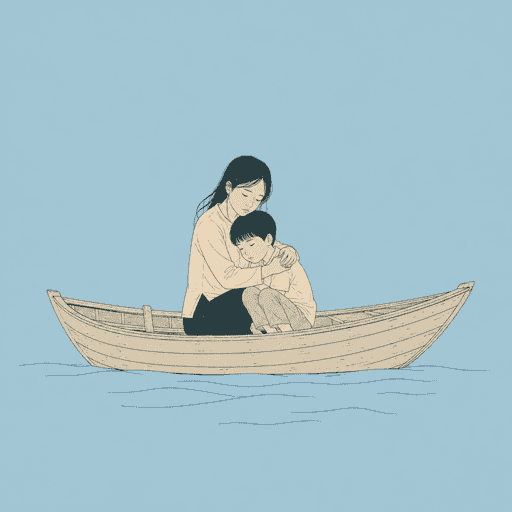
The final story, “The Boat,” follows 16-year-old Mai as she escapes Vietnam on a dangerously overcrowded fishing trawler. Alone, she is taken in by a woman named Quyen and her quiet six-year-old son, Truong. The journey is harrowing: A violent storm wrecks the boat, the engines fail, and the food and water run out. As passengers begin to die from sickness and thirst, Mai’s bond with Truong deepens, particularly after he develops a severe fever. Quyen, overwhelmed by despair, withdraws, leaving Mai to care for the boy. Truong’s fever breaks, but he dies unexpectedly in the night. Just as a fishing crew sights land, Mai must help the devastated Quyen carry her son’s body to the back of the boat, where it is thrown overboard to the circling sharks.

Get in-depth, chapter-by-chapter summaries and analysis from our literary experts.
- Grasp challenging concepts with clear, comprehensive explanations
- Revisit key plot points and ideas without rereading the book
- Share impressive insights in classes and book clubs