The Boat
A modern alternative to SparkNotes and CliffsNotes, SuperSummary offers high-quality Study Guides with detailed chapter summaries and analysis of major themes, characters, and more.
Summaries & Analyses
Quizzes
NEWReading Tools
Themes
Content Warning: This section of the guide includes discussion of graphic violence, illness, death, and child death.
The Illusion of Escape
Characters across Le’s collection are perpetually in motion, fleeing oppressive regimes, violent pasts, failed relationships, or lives that no longer seem bearable. However, The Boat repeatedly challenges the idea that changing one’s surroundings can also change one’s identity. While its characters cross borders, oceans, and continents, they remain shaped by memories, loyalties, and losses that cannot simply be abandoned. The stories argue that escape is rarely an act of erasure. Instead, the past continues to inhabit the present, making every new beginning also a confrontation with what has been left behind.
Several characters attempt to escape their cultural or familial identity through creative or professional reinvention, only to discover how persistent the past remains. In “Love and Honor…,” the narrator, a Vietnamese Australian writer in Iowa, consciously avoids his heritage in his work. His friend notes that instead of exploiting “the Vietnamese thing,” he writes about “lesbian vampires and Colombian assassins, and Hiroshima orphans” (10). This deliberate artistic choice is a form of escape, an attempt to forge an identity separate from the “ethnic lit” box he feels pressured to fill. However, the arrival of his father, a survivor of the Mỹ Lai massacre, forces a direct confrontation with this legacy. The narrator’s attempt to write his father’s story becomes an attempt to bridge the emotional chasm between them, but his father ultimately burns the manuscript, asserting that the trauma is his alone to remember or forget. The narrator cannot escape his history through art; he is reminded that it is a fundamental part of him, whether he chooses to write about it or not.
In other stories, the dream of a new location as a sanctuary is portrayed as a fantasy that cannot withstand the harsh realities of a character’s circumstances. Juan Pablo, the teenage assassin in “Cartagena,” clings to an idealized image of the Caribbean coast as a paradise of freedom and beauty. His friend Luis, who has been there, describes it as a place where “everything is nothing like here” (30). This vision of Cartagena is a mental escape from the brutal violence and moral decay of his life in Medellín. However, he remains trapped by his duties as a sicario and his sense of obligation to his mother and his friend Hernando. His reality is defined by the immediate cycle of violence, not a distant, idealized shore. Similarly, in “Tehran Calling,” Sarah travels to Iran to flee the heartbreak of a recent breakup. She hopes the radical change in scenery will provide a distraction and a new sense of purpose. Instead, the unfamiliar political landscape only magnifies her emotional isolation. Although the circumstances surrounding the two characters are very different, both discover that physical distance offers little relief from unresolved inner conflicts. Their attempts to escape become journeys that expose, rather than resolve, what continues to haunt them.
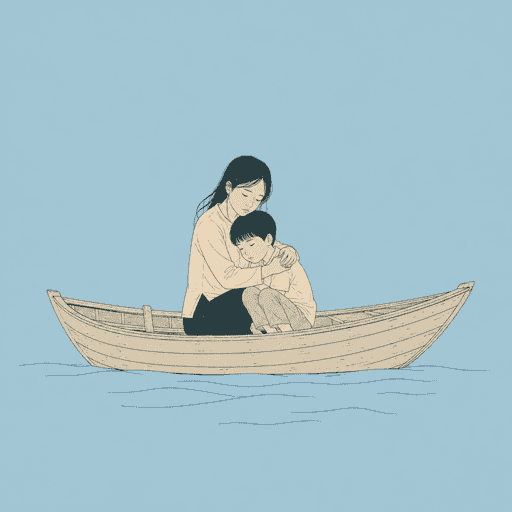
Even the most literal and desperate attempts at physical escape are shown to be incomplete, as the psychological and emotional weight of what is left behind travels with the characters. The title story, “The Boat,” depicts the harrowing physical journey of refugees fleeing Vietnam, but the voyage itself becomes saturated with memory. As the boat drifts into the “fields of the dead” (233), the whispered voices of refugees who drowned before them turn the ocean into a vast memorial where history refuses to remain buried. For Mai, the journey is inseparable from memories of the parents she has left behind, particularly her father, whose time in a Communist re-education camp continues to shape her thoughts throughout the voyage. Even as land finally appears on the horizon, the death of Truong demonstrates that arrival cannot erase what has been sacrificed to reach it. Across the collection, Le does not deny that people can survive, relocate, or begin again—even in some of the most dangerous situations. Instead, he suggests that every new beginning carries the emotional weight of what preceded it. Escape may change a person’s circumstances, but it can never completely sever the bonds of memory, identity, and loss that continue to define who they are.
The Sacrifice of Innocence for Survival
Throughout The Boat, innocence is portrayed as a fragile state that rarely survives prolonged exposure to violence, political oppression, or displacement. Across the collection, characters are repeatedly placed in extreme circumstances where ordinary moral expectations give way to the immediate demands of survival. Some become participants in violence, while others simply lose the emotional security or ethical certainty that innocence requires. The collection suggests that extreme circumstances accelerate adulthood, forcing both children and adults to confront experiences for which they are unprepared. Survival often demands sacrifice that innocence cannot survive.
This loss is most striking in the collection’s child protagonists, whose lives are shaped by conflicts they neither created nor fully understand. In “Cartagena,” Juan Pablo becomes a sicario, or hitman, at the age of 14 to provide for his mother and protect himself. His violent profession forces him into a world where killing is a job, a change that begins when he is compelled to execute a captured businessman to solidify his bond with his friend Hernando, permanently replacing the possibilities of adolescence with the responsibilities of a killer. Similarly, in “Hiroshima,” the narrative’s youthful perspective reveals how completely wartime ideology can reshape childhood. She and the other children enthusiastically reenact military battles and imagine dying honorably as “shattered jewels” for the Emperor, never recognizing the tragedy of the ideals they have absorbed. Although Juan Pablo’s world is dominated by criminal violence and Mayako’s by nationalist propaganda, both children illustrate the same pattern: Innocence disappears because their environments leave no room for it to survive—not because they willingly abandon it.
Adults are equally transformed by prolonged exposure to violence, though their loss of innocence often appears as disillusionment rather than naivety destroyed. In “Love and Honor…,” the narrator’s father survives the Mỹ Lai massacre only to later fight alongside the South Vietnamese army supported by the same Americans responsible for the atrocity. His decision is driven less by political conviction than by the emotional devastation left in the massacre’s wake. He tells his son, “I had nothing but hate in me, but I had enough for everyone” (25). This statement reveals how hatred becomes a tool for survival forged through overwhelming trauma. The story suggests that innocence is ultimately lost through the emotional change that violence imposes, leaving individuals unable to return to the moral certainty they once possessed.
The collection’s title story, “The Boat,” emphasizes how innocence is often surrendered to necessity. As hunger, dehydration, and disease consume the refugees aboard the boat, ordinary expressions of compassion gradually become impossible. The sick are isolated, the dying are ignored, and the dead are cast overboard with grim efficiency as the survivors struggle simply to remain alive. The story’s emotional climax arrives after Truong dies just as land is finally sighted. Mai helps the devastated Quyen carry his body to the stern before leading her to the bow, so she does not witness the burial. The men throw the boy’s body “as far behind the boat as possible so he would be out of sight when the sharks attacked” (272). The act is horrifying precisely because it is both compassionate and brutally pragmatic. No one aboard the boat is simply cruel; rather, survival has forced them into choices that innocence could not imagine. Across the collection, Le ultimately argues that the greatest casualties of conflict, alongside those who die, are those who live long enough to discover that survival often requires surrendering the simplicity, certainty, and humanity they once believed could endure.
The Burden of Familial Legacy
Throughout the collection, family is portrayed as an inheritance of memory, sacrifice, obligation, and unresolved pain. Children repeatedly find themselves shaped by experiences they did not live through yet cannot escape, while parents transmit the emotional consequences of war, displacement, regret, and loss. Whether expressed through silence, sacrifice, or expectation, these inherited burdens influence the choices characters make long after the original events have passed. Le emphasizes how familial legacy is never confined to one generation, but instead history continues to shape the present through the intimate relationships between parents and children.
The trauma experienced by parents creates an emotional distance that their children struggle to penetrate, defining their relationships through a legacy of pain rather than connection. This is the central conflict in “Love and Honor…,” where the narrator cannot connect with his father, whose identity was forged by surviving the Mỹ Lai massacre. This horrific experience has turned his father into a man of “proverbs and regulations” rather than an emotionally available parent (13), creating a gulf between them. The narrator attempts to bridge this distance by writing his father’s story, an act of empathy and interpretation. However, his father rejects this effort by burning the manuscript, reinforcing the idea that his trauma is incommunicable and his own to bear. The legacy passed to the son is not the story itself, but the painful silence that surrounds it.
In other stories, parental sacrifice places children under obligations that shape the course of their entire lives. In “The Boat,” Mai’s journey as a refugee is a direct consequence of her parents’ decision to use their life savings to send her away from Vietnam. This sacrifice, intended to secure her future, thrusts her into immense peril and leaves her haunted by the family she left behind. Throughout the voyage, memories of her parents—especially her father after his release from a Communist reeducation camp—remain inseparable from her struggle to endure the crossing. Likewise, Juan Pablo’s life in “Cartagena” is defined by his determination to provide for his mother. Becoming a teenage sicario is a response to familial obligation within a world that offers few alternatives. This responsibility, which he accepts without question, traps him in a violent world from which he cannot escape, demonstrating how a child’s life path can be dictated by the needs of a parent. In both stories, parental love demands extraordinary sacrifice that children continue to carry, showing how one generation’s attempts to protect the next can become burdens the next generation must bear.
Le also explores familial legacy through parental absence, showing what parents fail to provide can shape their children as much as what they do. In “Meeting Elise,” Henry spends 17 years haunted by the decision to abandon his wife and infant daughter. His paintings become increasingly consumed by images of Elise, showing how his artistic life has been built partly upon an emotional void he never resolved. When he finally attempts to reconnect with his daughter, the encounter ends in rejection, confirming that the legacy he has given her is one of absence and unresolved pain. Her refusal to see him confirms that this void, created by his own choices, cannot be easily mended. Across the collection, Le ultimately suggests that children inherit the silences, sacrifices, and absences that remain, carrying those unseen legacies into lives shaped by histories that began even before they were born.

Unlock every key theme and why it matters
Get in-depth breakdowns of the book’s main ideas and how they connect and evolve.
- Explore how themes develop throughout the text
- Connect themes to characters, events, and symbols
- Support essays and discussions with thematic evidence