Tom's Crossing
A modern alternative to SparkNotes and CliffsNotes, SuperSummary offers high-quality Study Guides with detailed chapter summaries and analysis of major themes, characters, and more.
Summaries & Analyses
Quizzes
NEWReading Tools
Book Club Questions
Content Warning: This section of the guide includes discussion of graphic violence, racism, child death, illness, and death.
General Impressions
Gather initial thoughts and broad opinions about the book.
1. How did the polyphonic style of this novel affect your reading experience? Did you find it immersive, or did it create a distance from the story?
2. Mark Z. Danielewski is famous for his unconventional 2000 novel, House of Leaves. If you’ve read it, how does Tom’s Crossing compare in its approach to storytelling and design? For those new to his work, did this book make you curious to explore his other experimental fiction?
3. The book is explicitly subtitled “A Western,” yet it works hard to subvert many of the genre’s classic tropes. In your view, does the novel succeed as a modern Western? What parts of the story felt traditional, and which felt like a complete reinvention of the genre?
Personal Reflection and Connection
Encourage readers to connect the book’s themes and characters with their personal experiences.
1. The friendship between Tom and Kalin is the heart of the story, built on a shared love for horses. Compare them to a relationship in your own life, which centers around a shared interest. Did your relationship transcend your initial interest?
2. Allison invents a “curse” that if Kalin ever touches a gun, he will lose what he loves most. What do you make of the power of such warnings or family stories? Have you ever encountered a personal or family superstition that held significant weight in your life?
3. Kalin’s entire perilous journey is driven by a deathbed oath made to Tom. How did you feel about the immense weight of this promise? Have you ever made a commitment to someone that you felt morally obligated to keep? Why was this the case?
Societal and Cultural Context
Examine the book’s relevance to societal issues, historical events, or cultural themes.
1. The narrative consciously revisits the violent history of the American West, including the massacre of Indigenous Timpanogos people. How does rooting this modern feud in a deeper history of colonial violence change your understanding of the classic Western frontier myth?
2. Old Porch’s fabricated story about his son’s death is quickly accepted by law enforcement and the media. What does the novel suggest about how powerful people or groups can shape a public narrative to their advantage? Does this reflect any contemporary issues you see regarding information and media?
3. The Porch-Gatestone feud is a multi-generational conflict that the characters seem destined to inherit. In what ways does the story explore how cycles of conflict, trauma, and vengeance are passed down through families or communities?
Literary Analysis
Dive into the book’s structure, characters, themes, and symbolism.
1. The novel’s final lines reveal that Landry is the narrator, speaking from beyond death and still carrying the loaded Colt Peacemaker. How did this final twist reframe the entire story for you? What does it suggest about the theme of storytelling as an act of justice or vengeance?
2. What role does the mountain landscape play in the story? How does it transform from a physical setting into a moral and spiritual battleground for the characters?
3. Tom’s ghost is a constant presence, guiding Kalin, bargaining with other spirits, and eventually undergoing a mystical transformation. What is the significance of including these supernatural elements in an otherwise gritty Western?
4. This story draws a parallel to Annie Proulx’s “Brokeback Mountain,” which also explores a complex male bond in a Rocky Mountain setting. How does the friendship between Tom and Kalin, based on empathy and shared purpose, compare to other portrayals of masculinity you’ve seen in Western literature?
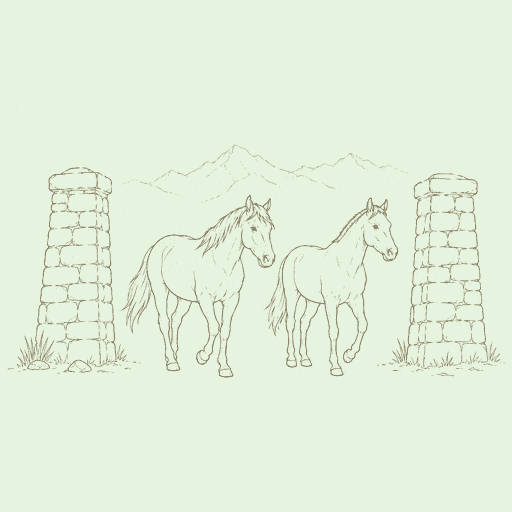
5. The horses Navidad and Mouse are central symbols in the novel. How does their journey to the idealized freedom of Tom’s Crossing mirror the internal journeys of the human characters?
6. Kalin begins the story defined by his nonviolence and ends it as the agent of a bloody shootout at Pillars Meadow. Does his fulfillment of the curse feel like a tragic failure, a necessary sacrifice, or something more complicated?
Creative Engagement
Encourage imaginative and creative connections to the book.
1. Chapter 22 describes a Houston art gallery exhibit dedicated to the events of 1982. If you were an artist contributing to this show, which scene or character from the novel would you choose to depict? What medium would you use, and what feeling would you hope to evoke?
2. The transcriber’s final note insists that Tom’s Crossing is real and invites readers to add their own stories. If you were to add another perspective to this “shattered” narrative, whose voice would you choose to include?
3. Imagine you could rewrite the ending at Pillars Meadow. What is another way Kalin could have honored his oath and saved the horses without resorting to the violence that ultimately severs his connection to them? How would this change the meaning of his journey?

Get in-depth, chapter-by-chapter summaries and analysis from our literary experts.
- Grasp challenging concepts with clear, comprehensive explanations
- Revisit key plot points and ideas without rereading the book
- Share impressive insights in classes and book clubs

Featured Collections
Books on Justice & Injustice
View Collection
Books that Feature the Theme of...
View Collection
Challenging Authority
View Collection
Colonialism & Postcolonialism
View Collection
Coming-of-Age Journeys
View Collection
Fear
View Collection
Friendship
View Collection
Good & Evil
View Collection
Grief
View Collection
Mortality & Death
View Collection
Nature Versus Nurture
View Collection
Power
View Collection
Revenge
View Collection
Safety & Danger
View Collection
Teams & Gangs
View Collection
The Future
View Collection
The Past
View Collection
Truth & Lies
View Collection
Valentine's Day Reads: The Theme of Love
View Collection