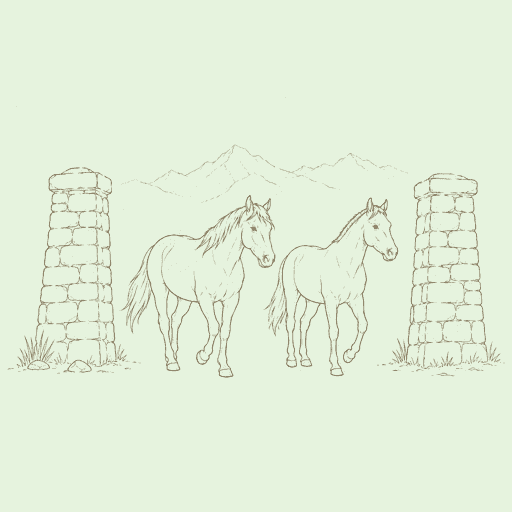
Tom's Crossing
Tom's Crossing
A modern alternative to SparkNotes and CliffsNotes, SuperSummary offers high-quality Study Guides with detailed chapter summaries and analysis of major themes, characters, and more.
Summaries & Analyses
Quizzes
NEWReading Tools
Themes
Content Warning: This section of the guide includes discussion of death, child death, graphic violence, and racism.
Storytelling as a Tool for Vengeance and Justice
In Tom’s Crossing, storytelling is depicted as a powerful, partisan tool, used to enact violence, reclaim justice, and even seek vengeance against historical wrongs. The novel’s metafictional frame narrative immediately establishes this idea, presenting itself as a corrective to the multiplicity of other flawed accounts that it continually references in the telling of the story. By foregrounding the constructed nature of the narrative and explicitly defining stories as moral instruments, the book argues that the power to control a narrative is the ultimate means of shaping reality and settling old scores. The “truth” of an event becomes secondary to the justice that a well-wielded story can achieve.
The narrative opens by directly challenging the authority of other storytellers, positioning its own version of events as the definitive truth. The narrator, later revealed to be Landry who was herself a participant in the story’s events, dismisses accounts by figures like Abigail Fathwell and Darin Burdelong as “gross mistellins” for their failure to properly center her brother Tom’s role in the story (25). Landry’s direct address to the reader serves as a statement of intent: The entire novel is an act of narrative reclamation. This is further reinforced by the book’s copyright page, which describes the story as “shattered, scattered, recollected, and rearranged” (ii), openly admitting its constructedness. Rather than striving for an impossible objectivity, the narrator embraces subjectivity, claiming the right to assemble the story in a way that serves a specific moral purpose. The act of telling becomes an intervention, a deliberate effort to correct the historical record and restore a character to their rightful place at the center of the narrative.
The novel further develops this idea by framing storytelling as a Gatestone family tradition, an inherited tool for balancing the scales of justice. Tom explains to Kalin that this practice is rooted in a belief that narratives can correct the world’s moral trajectory. As Tom’s ancestor is quoted as saying, “Some say the universe bends toward Justice, but when it don’t, stories mend the trajectory” (30). This philosophy elevates storytelling from mere entertainment to a form of social and historical action. The concept is taken a step further when Tom’s ancestor expounds on the definition of stories as “the lexical fashionins of vengeance. At least the good ones are” (31). This explicit connection between narrative and retribution casts the entire book as an act of vengeance on Tom’s behalf, a rebalancing of the injustices that led to his death and the subsequent distortion of his story.
By presenting a world populated by competing storytellers, the novel illustrates the ongoing battle for narrative control. Within the immediate conflict of Kalin’s quest to reach Tom’s Crossing, Old Porch manipulates the official narrative to make Kalin look like a villain, driving the manhunt for him, as well as the ostracization of Allison from the Orvop community. As narrator, Landry also references events after the fact that show the community’s attempt to make sense of the narrative’s events, most prominently the art exhibits that take place in 2000 and 2031, where all the pieces depict some element of Kalin’s, Tom’s, and Landry’s story. In her telling of the story, Landry dismisses these other accounts as incomplete or misguided, centering her experience as the arbiter of moral value within the world the narrative creates. By seizing control of the narrative, Landry wields the ultimate power, akin to the Colt Peacemaker she holds onto after her death: This power gives her the ability to define justice, enact vengeance, and ensure that her version of the truth is the one that endures.
Redefining Masculinity Through Friendship
Tom’s Crossing subverts the Western genre’s traditional model of stoic, violent masculinity by championing an alternative rooted in empathy, cunning, and loyalty. The novel contrasts the aggressive, ego-driven behavior of the bully Lindsey Holt with the compassionate competence of Tom Gatestone and Kalin March. The deep friendship that develops between Tom and Kalin is founded on a shared, gentle connection with horses and a mutual respect that operates outside the rigid social hierarchies of their high school. Through their bond, the narrative proposes that true strength lies in sensitivity and intelligence, rather than brute force.
Kalin March’s character directly challenges the archetype of the tough, combative cowboy. When attacked by Lindsey, Kalin admits, “I never could fight” (16), framing nonviolence as one of his core character traits. This supposed weakness is immediately contrasted with his profound strength in the paddock. While the physically imposing Lindsey is thrown from the mare in under three seconds, Kalin is able to ride her with ease. He achieves this not through force but by “strokin her and whisperin in her ear” (21), demonstrating that empathy is more effective than domination. His success where others fail presents a new model of masculinity, where quiet understanding and gentle skill are more powerful than the performative toughness valued by his peers.
Tom Gatestone, despite his status as a popular rodeo champion, similarly rejects conventional aggression, opting for cleverness and humor to navigate conflicts. When he witnesses Lindsey beating Kalin, Tom intervenes with a “riot of laughter” (14), disarming the situation by mocking Lindsey’s clumsy kicking style. He turns the violent confrontation into an impromptu rodeo, a contest of skill that ultimately humiliates the bully without resorting to physical violence. Tom continues this pattern at school, protecting Kalin from Lindsey’s attacks not by fighting but by making loud, coarse jokes at Lindsey’s expense. The narrator highlights Tom’s “indefatigable cunnin” as his primary weapon (27), suggesting that intelligence and wit are superior forms of strength that can de-escalate conflict more effectively than fists.
The friendship between Tom and Kalin solidifies in a private world centered on their shared care for the horses Navidad and Mouse. Their secret rides into the foothills bond them outside the social pressures of Orvop High, where the popular athlete and the outcast newcomer would otherwise never interact. Their connection is built on mutual respect for each other’s skills and a quiet loyalty. Tom, recognizing Kalin’s poverty and talent, provides him with his father’s old boots, a symbolic gesture of acceptance that cements their bond. When Tom dies, Kalin promises to honor his dying wish, setting up the moral imperative that motivates his journey throughout the novel. This imperative extends to the tension surrounding Kalin’s potential for violence, which threatens to sever his connection to the horses he values. Near the end of the novel, Tom becomes the medium through which Kalin is warned about the consequences of wielding a gun to fight back the Porches. Tom’s and Kalin’s friendship, based on nurturing animals and sharing experiences, offers a powerful alternative to the competitive and often violent relationships that define masculinity in their community, suggesting that true male friendship is founded on sensitivity and shared purpose.
The Impact of History on Identity
In Tom’s Crossing, the past is portrayed as an active, deterministic force that shapes characters’ identities and fuels present-day conflicts. The narrative demonstrates that long-standing family feuds and historical injustices form part of an inescapable legacy that dictates behavior and relationships. Through the deeply rooted animosity between the Porch and Gatestone families, which is itself an echo of the region’s violent origins, the novel argues that characters are often compelled to reenact historical patterns, suggesting their fates are heavily influenced by a past they cannot escape.
The novel grounds its central conflict in the violent history of the region’s settlement, linking the characters’ personal struggles to a broader legacy of brutality. During their rides in the foothills, Tom educates Kalin on the founding of Orvop, detailing events like “the Battle Crick Massacre, Church field cannons firin chain shot, then the beheadins” (30). He explicitly connects this history to his own family, naming his ancestor, Alfred Gatestone, as a contemporary of the infamous Wild Bill Hickman, a key figure in the atrocities. This historical context frames the Gatestone-Porch feud as a continuation of the violence that marked the region’s founding. The present-day animosity is thus shown to be a modern manifestation of an older, deeper pattern of conflict.
The multi-generational feud between the Gatestones and Porches is the backdrop against which the plot moves, defining characters’ identities and driving their actions. Tom recounts a long and bitter history of “lawfare” between the two families (30), involving numerous disputes over land and property. This historical grievance has tangible and tragic consequences in the present. The most significant of these is the recent death of Tom’s older brother, Evan, while racing trucks against Egan Porch, an event that serves as a constant, painful reminder of the feud’s deadly potential. Even Tom’s decision to steal the Porch horses with Kalin is read as another act in the ongoing family war. As Tom tells Kalin, “We was all here pretty much from the start… and the whole time fightin” (30), framing his actions as an inherited role he is compelled to play. Although Kalin is an outsider to both families, his friendship with Tom drives an affinity for the Gatestone family that causes the Porches to see him as an enemy.
Although Tom often treats the feud with a characteristic sense of humor, his detailed knowledge of it and his actions reveal how deeply this history has shaped him. His delight in recounting the “near genealogical enmity” does not mask the fact that he is bound by it (30). His plan to take the horses to the Crossing is a direct engagement with this inherited struggle, framing Kalin’s journey as a mission to correct a historical injustice. The novel suggests that even for characters as free-spirited as Tom, the weight of history is a powerful force that ultimately dictates the path his life and the lives of those closest to him will take.

Unlock every key theme and why it matters
Get in-depth breakdowns of the book’s main ideas and how they connect and evolve.
- Explore how themes develop throughout the text
- Connect themes to characters, events, and symbols
- Support essays and discussions with thematic evidence